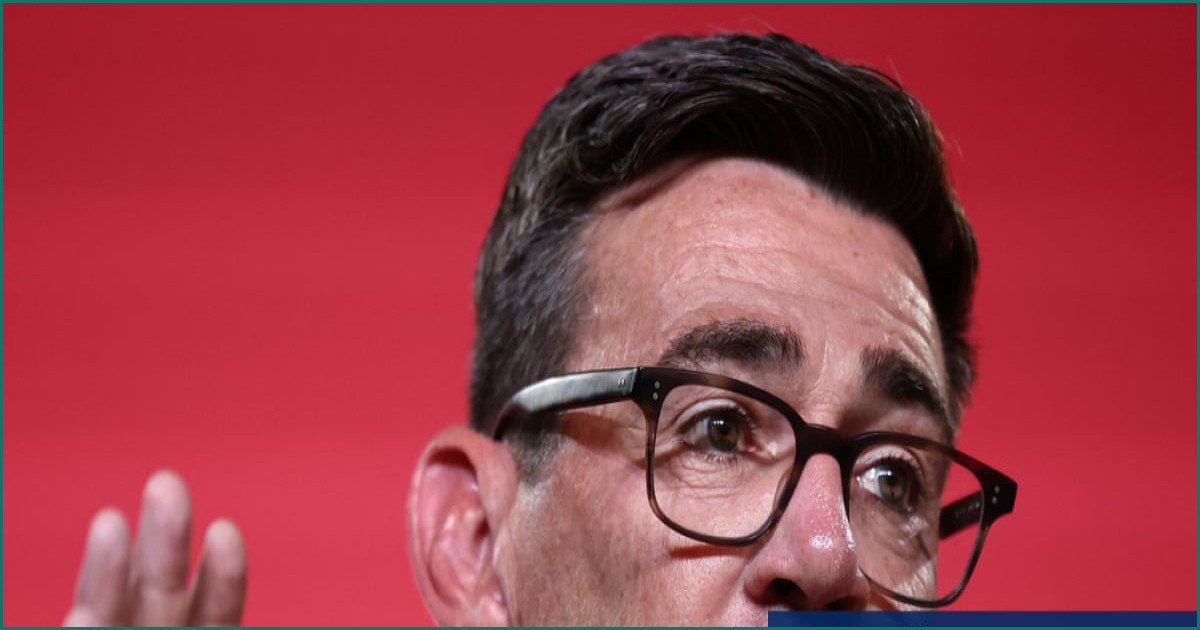
Andy Burnham has assumed the role of prime minister as Britain navigates a period defined by global economic instability, years of weak growth in living standards, underinvestment, and deep regional divisions. Having campaigned on a pledge to deliver “good growth in every postcode” by shifting power from Westminster to local communities, Burnham now faces the practical challenges of governing with constrained public finances and limited time before the next general election.
A core component of his economic agenda is a revitalized industrial strategy designed to support growth outside of London and the south-east. Burnham aims to safeguard sovereign manufacturing and production capability in critical sectors such as steel, defence, energy, food, and farming. This focus seeks to address the consequences of long-term deindustrialisation that has left many towns and cities struggling, a strategy aimed at stabilizing these regions and winning back voters considering a switch to Reform UK. Britain’s industrial base has dwindled from about 30% of the economy in 1979 to about a tenth today, yet pockets of strength remain in the old manufacturing heartlands. Supporting activity in these places is core to Labour’s industrial strategy. However, some experts warn that fetishising the industrial past is not the route to modern economic prosperity, given that the UK’s comparative advantages typically lie in service sector activities. High energy costs and competition from low-cost manufacturing hubs in Asia are also big headwinds.
Burnham has relied heavily on Manchester’s economic revival for his political philosophy, branding it as “Manchesterism.” Analysts highlight the city’s success has been driven by private investment into knowledge-intensive business services, rather than reopening its cotton mills. As the most centralised G7 country for tax and spending policy, and among the most economically unequal in the developed world, Burnham has promised the “biggest rebalancing of power the country has ever seen,” including a new hub for No 10 in Manchester and handing tax powers to regional leaders. This week, the Organisation for Economic Cooperation and Development said devolution could play a key role in growing the UK economy by driving up the output of underperforming regions. It noted that a coherent approach to align skills policy, infrastructure, innovation, finance, and governance was an “essential” component for improving productivity. However, others warn that devolution does not guarantee growth, could create inefficiencies, and requires financial firepower that local government currently lacks after a decade of cuts.
Addressing the cost-of-living crisis is an immediate priority, with Burnham promising “breathing space” for families. Households and businesses have faced soaring costs driven by energy price shocks from wars in Ukraine and the Middle East, with inflation locked above the 2% target for five years. After more than a decade of stalling real wage growth, household incomes fell during the last Conservative parliament for the first time in modern history. The Joseph Rowntree Foundation warns this could happen again without a change in course. While some Labour insiders believe the Iran war is having a smaller impact than feared—noting the July increase in the Ofgem energy price cap was smaller than after the 2022 Russian invasion—prices remain significantly higher than before the Covid pandemic. Others are urging Burnham to take radical steps, such as an affordable energy guarantee, rent controls, cheap bus fares, and an expansion in free school meals. He has also spoken of the need for greater public control over key utilities including water, energy, and transport.
The labour market faces challenges as unemployment has risen to the highest levels since the outbreak of the Covid pandemic, with young people bearing the brunt. Business leaders blame tax increases and the Iran war for hitting hiring confidence. Furthermore, the number of young people not in employment, education, or training has risen above a million for the first time in a decade, accounting for 13.5% of all 16- to 24-year-olds. Burnham plans to strengthen technical education and the apprenticeship system, while awaiting reports from Alan Milburn’s investigation into youth worklessness and Stephen Timms’ review of disability benefits, both of which have called for welfare reform.
Defence spending is another significant fiscal hurdle. Burnham must find an extra £4.7bn over five years for defence in his first budget, following Keir Starmer’s announcement of £15bn extra in military funding without a fully identified funding source. The Treasury expects £10.3bn to be raised by “reallocating budget” from across government departments. Long-term, Labour has committed to spending 3.5% of GDP on defence by the middle of the next decade, though the Office for Budget Responsibility warns the UK is on an “unsustainable” trajectory. Additionally, Burnham has pledged to oversee the “biggest council house building programme since the postwar period.” He linked the loss of almost 1.5m council homes since the 1980s to a rise in social housing waiting lists. While Labour has pledged £39bn to social and affordable homes and a target to build 1.5m new homes, official figures show the last time more than 300,000 homes were built in a single year in England was 1969.
To manage these ambitions, Burnham has signaled his commitment to fiscal discipline, promising his agenda will be “backed with sound public finances and the discipline of our current fiscal rules.” Retaining the borrowing and debt constraints drawn up by Rachel Reeves will limit his options but is seen as key to avoiding a market backlash that could drive up the UK’s £100bn a year bill for servicing national debt. While Reeves had put the UK on a faster path to cutting borrowing than other G7 economies, the UK’s borrowing costs remain elevated due to global market conditions and looming spending pressures.
Ministers are however increasingly alarmed over a longer-term shift in youth employment, amid rising mental ill-health, the impact of social media and AI disruption. Against this backdrop, the number of young people not in employment, education, or training has risen above a million for the first time in a decade; accounting for 13.5% of all 16- to 24-year-olds.
The biggest challenge for Burnham, as for previous prime ministers, will be how to pay for his plans. The role of his chancellor will also be crucial, with Shabana Mahmood, the home secretary, tipped to secure the role over Ed Miliband.