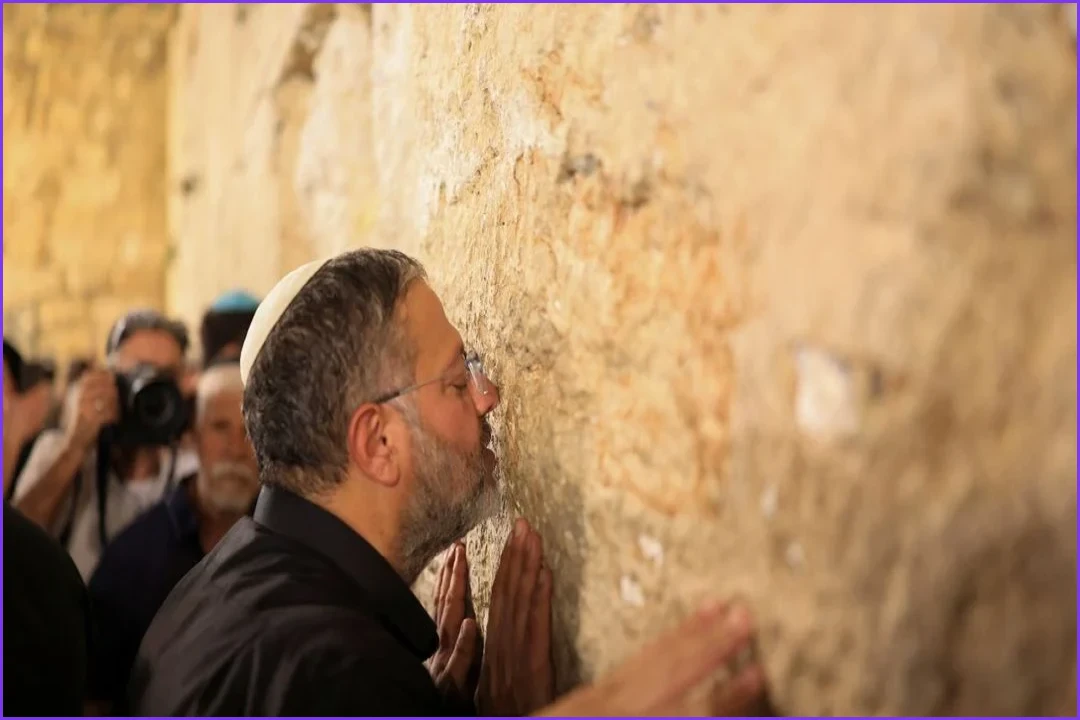
Several Arab nations have strongly condemned a provocative visit to the Al-Aqsa Mosque compound in occupied East Jerusalem by Israeli National Security Minister Itamar Ben-Gvir and groups of illegal Jewish settlers.
The incursion, which occurred under the protection of Israeli police, drew sharp rebukes from Qatar, Saudi Arabia, Kuwait, and Jordan. Qatar denounced the raid as "an unacceptable provocation" to Muslims globally, warning that it risks fueling further instability in the region. Saudi Arabia condemned the move in the strongest terms and urged the international community to bring an end to unlawful Israeli practices.
Kuwait's Foreign Ministry labeled the incident a "provocative act" and a violation of international humanitarian law. The ministry also reaffirmed its support for an independent Palestinian state based on the 1967 borders, with occupied East Jerusalem as its capital.
Jordan, which plays a key role in administering the holy site, described the incursion as "a blatant violation of the existing historical and legal status quo at Al-Aqsa and a desecration of its sanctity." Amman warned against any Israeli efforts to enforce a temporal or spatial division of the site, emphasizing that the entire 14.4-hectare (144-dunum) compound is an exclusively Muslim place of worship. The site is managed solely by the Jordan-affiliated Jerusalem Islamic Waqf.
The diplomatic backlash coincided with reports that 992 illegal Israeli settlers entered the compound ahead of the Jewish holiday of Yom Kippur, a period during which such intrusions typically increase.
In a separate development, the Palestinian resistance group Hamas condemned Israeli Prime Minister Benjamin Netanyahu for visiting excavation sites and tunnels beneath the Al-Aqsa Mosque and the Al-Buraq Wall.
Hamas described Netanyahu's tour and accompanying statements as "a flagrant assault on its identity and status." The group declared that the mosque, including its courtyards, prayer halls, walls, and gates, remains an exclusively Islamic site, adding that excavations and Biblical narratives "will never succeed in altering the site's identity."