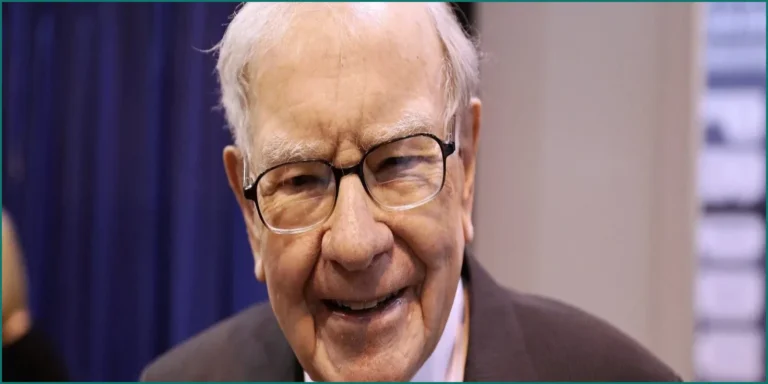
Sir Jim Ratcliffe, the billionaire founder of petrochemical giant Ineos and co-owner of Manchester United, has declared that he has lost confidence in the UK, describing the nation's economy as being "on the slide." Ratcliffe attributed the decline to a combination of high taxes and high immigration levels.
With an estimated fortune of around £15 billion, Ratcliffe has previously sparked controversy with his views on immigration. Although he supported Brexit, he has been a tax resident in Monaco since 2020. His departure from the UK follows other high-profile billionaires, including steel tycoon Lakshmi Mittal and hedge-fund manager Chris Rokos. Ratcliffe suggested that a "politics of envy" is driving wealthy individuals away from the country. "In America they applaud people who create wealth," he remarked. "Unfortunately the UK has got a bit of a green eye towards wealth at the moment." He added that "things would have to get better" before he would consider returning to the UK.
Ratcliffe directed sharp criticism at the government's energy policy, calling the decision not to invest further in North Sea oil and gas "insanity." He warned that the UK's gas storage levels are currently so low that the country could "run out of gas" if a severe cold snap occurs this winter. Ineos itself operates the Forties pipeline, which transports approximately 30% of the UK's North Sea oil. Ratcliffe argued that the government should be exploiting its natural resources. "We're shutting it down," he said, warning that "if you tax everybody to death, they're all going to leave. And that's what's happening." He also labeled the reliance on importing energy rather than producing it domestically as "absurd."
In response to the billionaire's criticisms, a government spokesperson stated that the administration is working to deliver growth and noted that business investment has risen over the past two years. Regarding energy security, the spokesperson expressed confidence, stating, "We have a diverse energy mix and are confident in our security of supply," adding that they do not foresee any issues with gas availability. While the government acknowledged that oil and gas will continue to play an important role "for decades to come," they emphasized that "the transition to homegrown clean power is the only way to deliver energy and financial security for families and businesses."
One of the major decisions currently facing the government is whether to approve further development at the Rosebank and Jackdaw oil and gas fields. Prime Minister Andy Burnham has advocated for a "pragmatic approach" to oil and gas, but the issue remains unresolved. Ratcliffe criticized the government's hesitation and argued that high taxes on North Sea operators are undermining the sector's viability. Although reforms to the tax on energy company profits are underway, they will not be fully implemented until 2030. While recent climate data and record heatwaves have strengthened arguments against further fossil fuel exploitation, political pressure has also mounted on the government to greenlight Rosebank and Jackdaw to secure UK jobs, tax revenues, and energy independence.
Addressing the warning about winter gas supplies, energy specialist consultancy Cornwall Insight noted that gas storage levels in the European Union currently stand at about 69%, compared to a typical average of 85% for this time of year. However, Adam Bell of the consultancy Stonehaven suggested that a severe shortage remains unlikely. "We are down compared to where we normally would be but not what I'd regard as catastrophic," Bell said, noting that the physical risk of running out of gas is relatively low, particularly if the Jackdaw field is approved. Bell identified policy decisions in the United States, which supplies liquefied natural gas (LNG) to the UK, as the primary source of uncertainty.
Ratcliffe delivered his remarks in Denmark during the launch of the EU's first carbon capture and storage (CCS) system in Esbjerg, located in the country's south-west. Ineos has invested in this project, which receives subsidies from the Danish government and the European Union. Under the Esbjerg system, captured carbon is transported in large, zeppelin-like tanks before being loaded onto a vessel named Carbon Destroyer 1 and pumped into a depleted offshore oil field nearly 200 miles away. Ratcliffe stated that he had hoped to establish a similar CCS project in the UK, but felt there was insufficient government support. In response, the Department for Energy Security and Net Zero (DESNZ) pointed out that the UK government has committed £21.7 billion for CCS projects over 25 years, though no such projects are currently operational in the UK. Critics of CCS argue the technology is overly expensive and that funding would be better directed toward renewable energy rather than supporting continued fossil fuel usage.
Beyond economic and energy policies, Ratcliffe lamented the broader decline of the UK, which he described as having once been "a fantastic place." He remarked, "We had the greatest empire in the world. We were a great people. We won two world wars." However, he argued that both immigration and welfare spending are currently too high, and that politicians have been reluctant to address these issues. Earlier this year, Ratcliffe drew widespread criticism after claiming the UK had been "colonised by immigrants," a comment for which he later apologized, saying he was sorry for "offending some people."