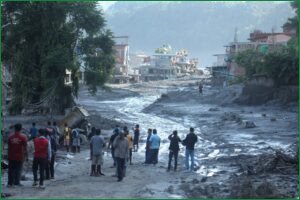
The death toll from the catastrophic flash floods and mudslides that struck the Nepal-China border 11 days ago has climbed to at least 1,385. Official data released on Sunday confirmed the rising fatalities, while search and rescue operations continue for the 5,519 people who remain missing. More than 13,000 people have been successfully rescued from the flood-hit areas so far.
According to Nepal's National Disaster Risk Reduction and Management Authority, approximately 5,000 people, including 589 foreigners, are still unaccounted for in Nepal. Chinese authorities reported that at least 43 people have been confirmed dead, while 519 others remain missing in Tibet. Across both nations, official figures indicate that 850 of the total missing individuals are foreign nationals.
The humanitarian situation is increasingly dire, particularly for expectant and new mothers. According to the Kathmandu Post, thousands of women are struggling to find female-friendly spaces to breastfeed, access proper nutrition, and reach emergency care. Mothers in shelter camps have reported unhygienic conditions, including poor food and water quality, as well as exposure to cigarette smoke and the smell of alcohol. There is also a lack of vaccination facilities for children in these camps.
A new mother identified as Pariyar, who fled her home in Trishuli on the morning of August 26, stated, “We are not getting food on time either. We are not getting enough to eat.” She noted that there is no special food for babies, forcing parents to feed infants the same heavy adult food available in the camps. Another mother, Sharmila Shrestha, who is sheltering in a crowded school classroom with her two children, complained that a proper place to stay would provide much-needed peace of mind.
The UN Population Fund estimates that approximately 4,430 pregnant women are living in the 15 municipalities across the hardest-hit districts of Rasuwa, Nuwakot, and Dhading. Projections suggest that around 500 births are expected in the coming month, with roughly 74 women potentially requiring emergency obstetric care. At Trishuli Hospital, the maternity ward has become an improvised outpost for crisis medicine. Basanti Pancha, the head of the department, reported that the hospital has performed nine deliveries since the floods but is struggling to keep pace with other medical needs. Women have been arriving with fevers, urinary tract infections, and concerns regarding reduced fetal movement. With road access to Kathmandu severely hampered by landslides and electricity unreliable, the hospital is forced to rely on a generator to power surgeries.