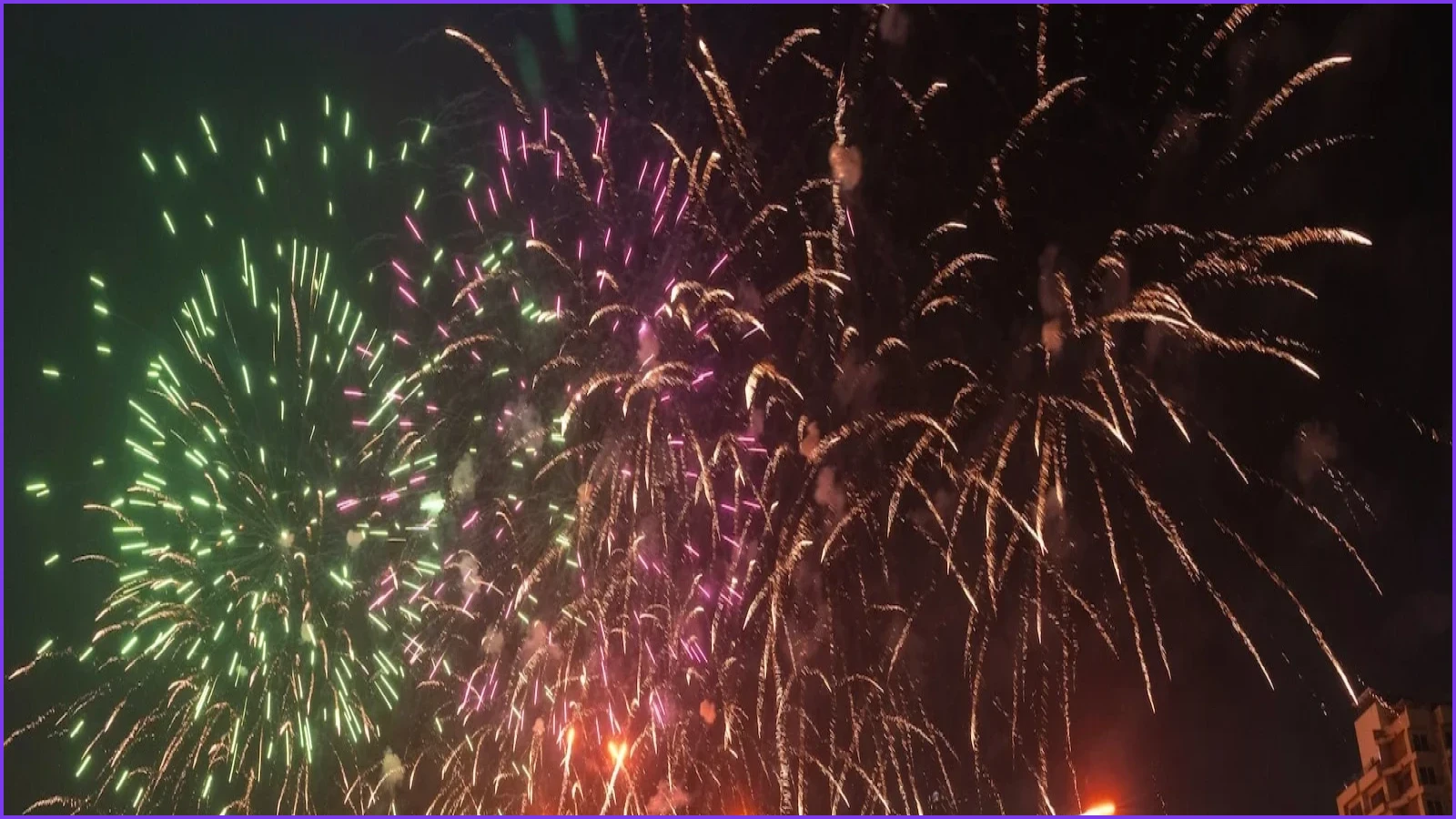
Across South Asia, particularly in northern India, the annual Diwali celebrations are arriving alongside the return of hazardous winter air. This seasonal overlap is raising significant concerns regarding public health and safety, as an estimated 1 billion people prepare to observe the holiday, which begins this Sunday. The festival, celebrated by Hindus and Jains with deep roots in ancient epics like the Ramayana, traditionally involves the setting off of fireworks, which experts warn can exacerbate already poor air conditions.
The issue of air quality is not unique to India. Throughout the winter months, regions in Pakistan and China frequently experience severe smog, a phenomenon caused by warmer air acting as a lid that traps colder air and pollutants near the ground. India’s air quality index turns pollution measurements into a health warning. AQI readings of 201–300 mean “poor,” 301–400 “very poor” and 401–500 “severe.” Severe levels can harm even healthy people. In South Asia, the problem is compounded by traffic, industrial activity, dust from construction, and the burning of crop residues and waste, all of which stagnate due to weak winter winds.
Shweta Narayan, a public health expert at the Global Climate and Health Alliance, noted that poor air quality is a persistent, year-round issue in the region, with firecrackers adding a sharp, dangerous burst of pollution to the existing atmospheric burden. To manage these risks, experts recommend a series of protective measures. Residents are encouraged to monitor local air quality index (AQI) readings through government or private websites. It is important to look for data from nearby monitoring stations, as citywide averages can often mask the higher pollution levels present in specific neighborhoods.
In Delhi, a city of over 20 million people, the situation is particularly critical; fine particle pollution levels averaged 19 times the World Health Organization's annual guideline last year. While city authorities have implemented temporary restrictions on construction, industry, and vehicles, and are pursuing a long-term transition to electric vehicles, public health experts argue that these measures often fail to address the root causes. Dr. Arvind Kumar, a chest surgeon at Medanta hospital and founder of the Lung Care Foundation, advises that individuals should avoid strenuous outdoor exercise during periods of heavy pollution, especially in the early morning hours when levels are typically at their peak.
For those who must go outdoors, Dr. Kumar recommends wearing properly fitted N95 or N99 masks. These respirators, available at pharmacies and online, capture at least 95% or 99% of airborne particles, respectively. Users must ensure a tight seal around the nose, mouth, and chin, noting that facial hair can compromise this protection. These masks should be replaced when damaged or dirty, and they are not suitable for children under the age of 2. Furthermore, those with pre-existing heart or lung conditions should consult a doctor regarding mask usage, as pollution can trigger asthma-like attacks, inflammation, and increase the risk of pneumonia, heart attacks, and strokes.
Indoors, the use of air purifiers equipped with high-efficiency particulate air (HEPA) filters can help reduce pollutant levels. Dr. Kumar suggests placing these devices in rooms where people spend the most time, such as bedrooms, and ensuring they have adequate capacity for the room size. While purifiers cannot eliminate all risks, they can recirculate cleaner air. He specifically advises against using machines that produce ozone, which can irritate the lungs. Additionally, households are encouraged to avoid incense, mosquito coils, and candles, and to use kitchen exhausts while cooking. Damp-mopping floors instead of dry sweeping can also prevent the stirring up of particles.
Beyond personal precautions, Narayan emphasized that systemic change is necessary to ensure long-term health. Because many people cannot afford air purifiers and those who work outdoors cannot simply stay home, she called for sustained government action to clean the air and provide affordable healthcare for those affected. As the festival approaches, many are turning to electric lights as a cleaner alternative to firecrackers, aiming to celebrate without contributing to the toxic smoke that impacts entire neighborhoods. Sibi Arasu can be followed on X at @sibi123. Reach him at sarasu@ap.org.
Check pollution levels on government or privately run websites before heading outdoors. Look for data from a nearby monitoring station and the time of its last update. A citywide average can conceal a polluted neighborhood.
Place the purifier where you spend the most time, such as the bedroom. Keep its airflow clear and run it consistently.