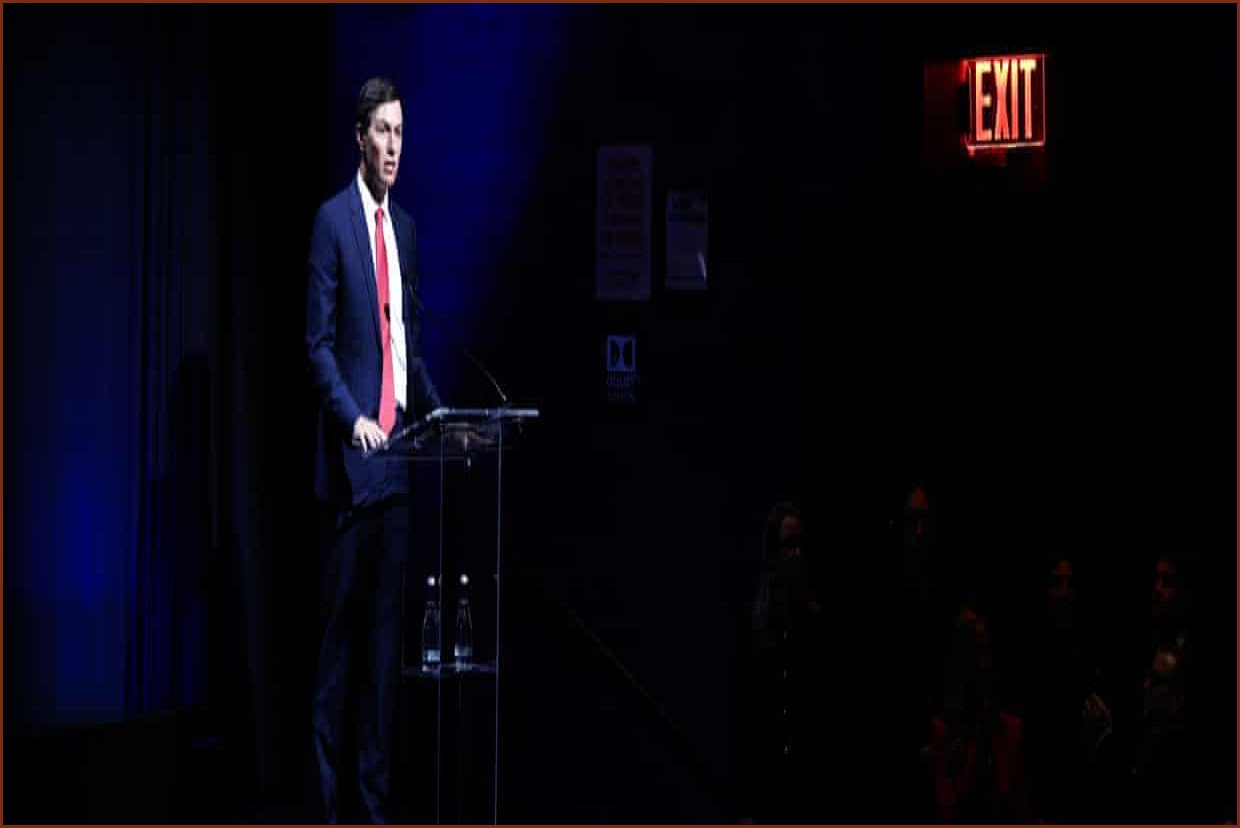
A newly published book detailing alleged financial arrangements between Jared Kushner and Middle East leaders during Donald Trump's first presidency has sparked intense political controversy, drawing fierce denials and legal threats from the former senior White House adviser. Written by author Matthew Cole, Princes and Thieves: Jared Kushner and Mohamed bin Zayed’s Secret Plot to Remake the Middle East was released in the United States this week after an excerpt appeared in Vanity Fair last Thursday. In response, Kushner denounced the book’s assertions as "completely insane," threatened legal action against publisher Simon & Schuster, and demanded a full retraction from Vanity Fair.
Rejecting every charge in statements published on his website and social media platform X, Kushner argued that the author failed to produce a single piece of evidence to back up the assertions. He highlighted the extensive oversight he faced while serving in the Trump administration alongside his wife, Ivanka Trump, as close presidential advisers. Kushner noted that during the period in question, he was among the most scrutinized figures globally, undergoing intense press coverage, multiple congressional inquiries, and a special counsel probe.
He emphasized that he voluntarily provided over 30 hours of testimony during those investigations and that none of the book's allegations ever surfaced because, in his words, "none of these events ever happened."
Legal representatives for Kushner have similarly dismissed the book’s primary allegations. On X, former Trump administration lawyer Chad Mizelle, identifying himself as Kushner’s attorney, characterized the core claims as categorically false, writing that the alleged bank accounts simply do not exist and calling the book's claims egregious and defamatory. Additionally, attorney Brito told Cole that Kushner held no financial relationships with any foreign countries or leaders, pointing out that complete financial disclosures are publicly accessible through Kushner's Office of Government Ethics (OGE) Form 278e filings.
Brito stated explicitly that "there are no accounts and never were." Direct requests for comment sent to Mizelle, Kushner’s legal counsel at Clare Locke, and the Saudi Arabian and Emirati embassies yielded no response.
Cole’s reporting relies heavily on confidential interviews and anonymous sources, without reproducing images of emails or primary documents, though the text contains extensive explanatory footnotes. Among the book's most significant claims is that Ali Al Shamsi, the top intelligence official in the United Arab Emirates, referred to Kushner as "the most expensive employee we’ve ever had." According to the author, Emirati prince Mohamed bin Zayed (MBZ) and Saudi Arabian prince Mohammed bin Salman (MBS) sought in early 2017 to secure unprecedented access by proposing a bank account that the two leaders and Kushner would use to fund projects and foreign policy goals benefiting President Trump.
Cole writes that while an initial idea to finance Trump’s planned border wall with Mexico did not materialize, MBZ and MBS initially, and later MBZ alone, deposited at least $2 billion across at least two banking institutions for Kushner.
The book categorizes these alleged financial holdings into "Alpha" and "Beta" slush funds. The "Alpha" account, reportedly set up at First Abu Dhabi Bank—the largest bank in the UAE—contained roughly $750 million meant to serve as a foreign policy fund overseen by Kushner and MBZ to resolve the Israel-Palestine conflict, though Cole asserts it was eventually drained by failed schemes, cutting off Kushner’s access.
The "Beta" account allegedly held approximately $1 billion. Citing a source briefed on the matter, Cole reports that at the suggestion of Israeli Prime Minister Benjamin Netanyahu, MBZ moved the Beta account to the Israeli Central Bank by way of Azerbaijan, described as a preferred route for money laundering.
The book states that while it remains unclear how Kushner utilized the funds or whether the Israeli government permitted him access after Trump’s first term ended, a person with knowledge of the money alleged the allocation was intended for Kushner's personal benefit. Cole also quotes a source describing such off-the-books funds as routine Gulf government corruption, stating that a billion or two is minor for Emirati and Saudi leaders if it achieves their desired political influence.
Cole further alleges that the accounts were partially managed by Kushner using an iPhone that was hacked by Russian and Dutch intelligence agencies, though the Dutch government declined to comment when asked about the alleged breach. Despite these financial ties, Cole writes that the New Jersey real estate scion was not fully trusted by Gulf leaders, operating in a high-stakes arena where blackmail, torture, and state-sanctioned killings were employed. The book references the 2018 murder of Saudi journalist Jamal Khashoggi in Turkey on the orders of MBS, as well as the 2019 killing of Emirati poet and journalist Habib Al Sayegh by agents of MBZ.
The two Gulf princes allegedly envisioned a reorganized Middle East where Israel would be integrated and diplomatically recognized by Gulf Arabs and the broader Arab world, Palestinians would accept a prosperity-focused peace, Islamic extremism would be defeated, and Iranian influence would retreat through persuasion or force. Nearly a decade later, the region remains embroiled in conflict: the US and Israel prepare new strikes eight months into a war with Iran, Saudi Arabia remains engaged against Houthi rebels in Yemen, and Israel has killed over 74,000 Palestinians in Gaza following the Hamas attacks of October 7, 2023.
The book also re-examines Kushner’s real estate transactions, including how he secured Qatari financing for the 666 Fifth Avenue property in Manhattan, allowing him to profit despite the bitter regional rivalry between Qatar and the Saudi-Emirati bloc, claims of conflict of interest that Kushner has consistently denied. Attention has also focused on a $2 billion investment made by the Saudi sovereign wealth fund into Kushner’s private equity firm, Affinity Partners, shortly after Trump left office in 2021.
Cole quotes an unnamed Arab official and Affinity investor who stated that payments to Kushner were made not because of his investment acumen, but to keep him and his father-in-law happy.
Cole observes that while close ties with MBZ, MBS, Qatari Emir Al Thani, and Netanyahu aided Kushner as he shuttled between capitals, little record exists of what his investors were negotiating with him. Even without an official government title, Kushner continues to influence US foreign policy, recently traveling alongside New York real estate magnate Steve Witkoff to pursue peace negotiations for Ukraine on terms favorable to Russia. In the epilogue, Cole notes that Kushner declined multiple interview requests for the book after first being contacted with written questions in May 2026 and receiving two subsequent follow-up emails.