Narendra Modi's government has experienced a significant humbling with the resignation of Education Minister Dharmendra Pradhan, a loyal ally, following a massive youth-led protest movement. The government, which has largely operated with impunity since 2014 and resisted public pressure, was forced to accept the minister's resignation less than 24 hours after Modi expressed confidence that the uprising would not destabilize his administration.
The protests were spearheaded by a Gen Z movement calling itself the Cockroach Janta Party (CJP). The movement mobilized millions of young people across the country in response to a leaked crucial exam paper that necessitated a resit for 2 million students and was linked to over a dozen suicides. The CJP's primary demand was accountability, leading to Pradhan's resignation, though the protests quickly evolved into a broader fight for democracy.
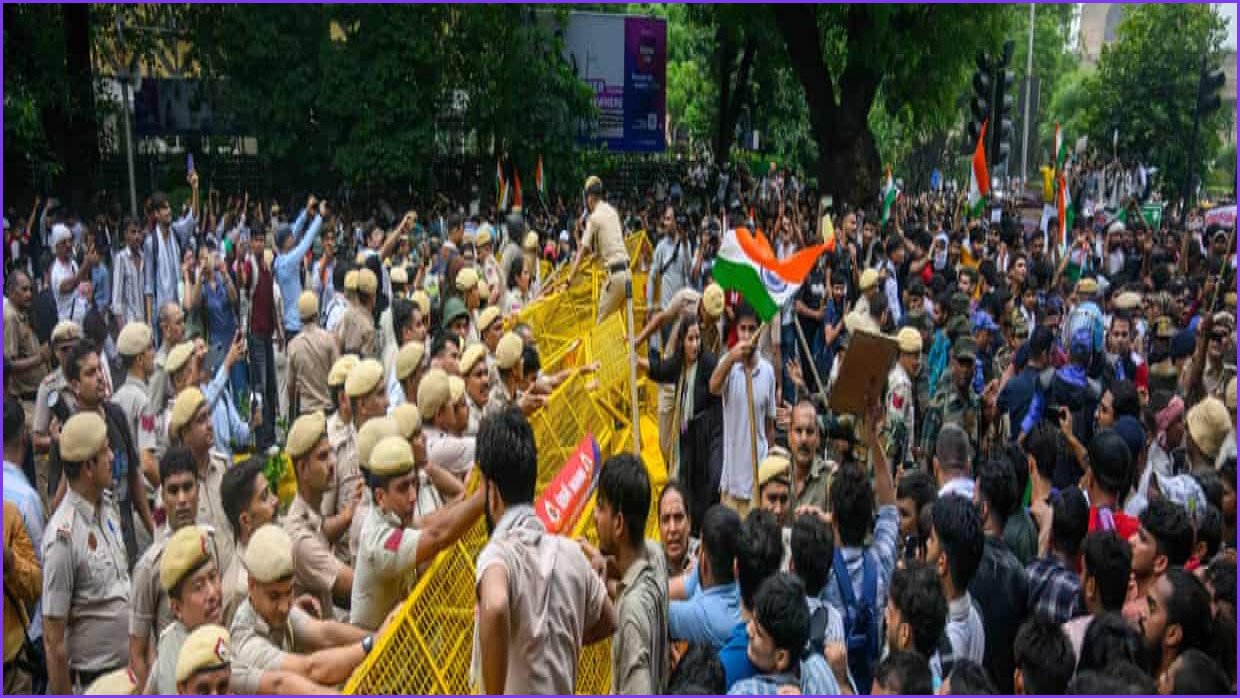
On Saturday, the historic Jantar Mantar site in Delhi, a focal point for the demonstrations, saw an unprecedented number of participants, with unrest spreading to other cities, including those governed by Modi's Bharatiya Janata party (BJP). This marks a notable shift, as the government has historically been adept at controlling the online narrative through its organized IT cell, which typically mobilizes to counter criticism.
However, the CJP effectively countered the government's digital strategy with millions of Gen Z memes and reels that flooded social media platforms like Instagram. These posts fearlessly criticized Modi and the government, turning the tables on the administration's attempts to directly engage with youth online. Modi's late-night Instagram address on Friday, thanking the public for their "thoughtful suggestions," was met with further ridicule.
The government also lost its grip on mainstream television news channels, which have been widely perceived as mouthpieces for the BJP's rightwing Hindu nationalist ideology over the past 12 years. Initially, these channels ignored the protests or suggested they were funded by foreign entities and Pakistani terror groups. In response, protesters used social media to expose these narratives, leading to Modi's conspicuous absence from airwaves as the protests escalated.
Analysts suggest that a crackdown on the protests was untenable due to the public outcry against police violence on protesters earlier in the week. Ashutosh Varshney, a professor of international studies at Brown University, noted that the online space was “totally conquered by the protesters and regime-loving media was seriously delegitimised.” He added, “The anger was so comprehensive there was no option left but for Pradhan to go.”
Varshney further commented that this event signifies more than just the loss of a minister; it represents the first time in 12 years that the Modi government has lost control of the political narrative. He described the government as “repressive,” aiming for obedience and stifling critical discussion, but stated that “the climate of fear has collapsed.”
The resignation of Pradhan, a key minister who helped the BJP secure crucial seats in Odisha, could also impact Modi's authority within his cabinet. Political columnist Pratap Bhanu Mehta warned that “Modi knows once you start firing your most loyal ministers, it sets up the incentives for defections in other ministers as well.” He suggested that if ministers begin to hedge their bets for a future without government backing, “that’s when you are in trouble.”
Prior to this unrest, Modi had seen electoral successes, including the BJP's first win in West Bengal. The party had appeared to recover from the 2024 general election setback, where it lost its outright parliamentary majority. Meanwhile, the opposition had struggled, with allegations of BJP impropriety falling on deaf ears.
The emergence of the CJP has revitalized not only India's youth but also its political opposition. The Congress party, for instance, has had its most successful week in years, mobilizing protests and disrupting parliamentary proceedings. Its leader, Rahul Gandhi, was notably detained by police outside Modi's residence in solidarity with the students.
Analysts believe that dissent, which had been suppressed for years, has been re-galvanized as an effective tool for government accountability. Mehta observed, “After a long time, there’s an assertion of political agency across different sections of society. And the minute you see that agency out in the street, it empowers lots of other agents.”
The CJP movement's political impact will be further tested in the upcoming state elections in Uttar Pradesh, India's most populous and politically significant state, early next year. The BJP's ability to retain power in this heartland state is considered crucial for its prospects in the 2029 general election.
The CJP's future political mobilization strategies remain to be seen, though leaders and supporters emphasize this is just the “beginning,” particularly concerning education reform. Abhijeet Dipke, the CJP founder, has prior experience as a political organizer, but his personal ambitions are not yet public.
However, analysts highlight the CJP's crucial role in reopening democratic space and fostering the possibility of a new form of political opposition that reflects the voices heard on the streets. Saurav Das, a CJP spokesperson, stated that the movement encourages its members to enter politics, aiming to increase youth participation. He argued that current politics is dominated by older generations focused on self-interest, failing to address the needs of younger people, and that political engagement is the necessary answer.