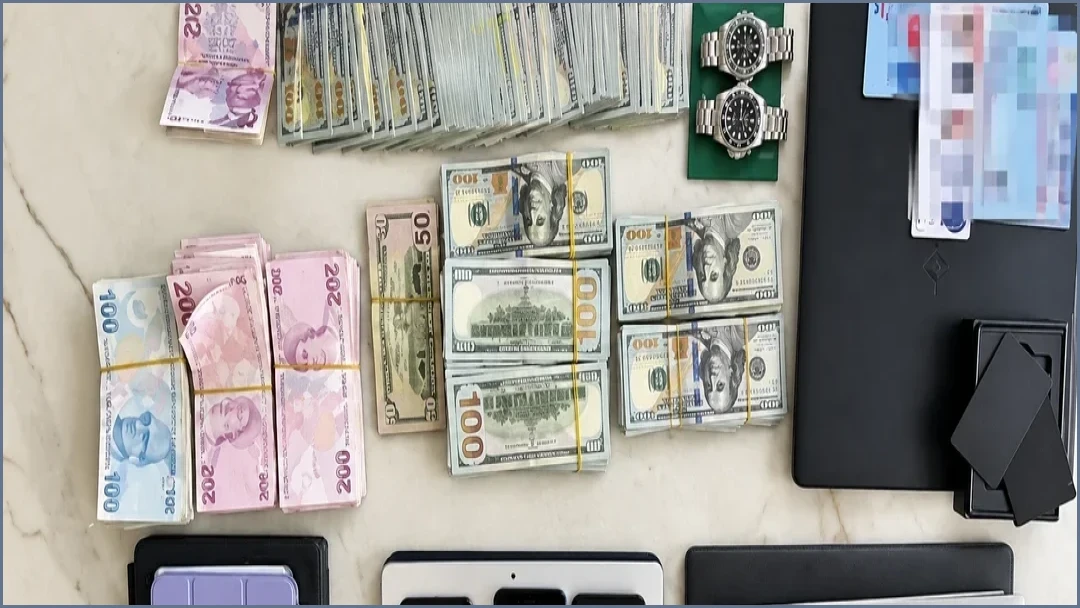
Turkish authorities, working in coordination with Interpol, have launched a massive crackdown on an international fraud network linked to Israel. The operation, which targeted more than 40 scam offices across the country, resulted in the detention of 201 high-level suspects and the seizure of significant digital evidence. Among those taken into custody were 15 Israeli citizens who reportedly held key management positions within the criminal organization.
The coordinated action involved simultaneous operations at 286 addresses across Istanbul and Mugla, impacting 28 companies and 42 call centers. Turkish Justice Minister Akin Gurlek confirmed the operation, noting that the network utilized call centers to entice foreign nationals with advertisements on social media promising lucrative returns through forex and cryptocurrency investments.
Intelligence gathered by Turkish officials indicates the network has operated a global fraud empire for over a decade, with roots tracing back to the early 2010s. This industry gained notoriety under the term "The Wolves of Tel Aviv," following investigative reporting in 2016. Despite a 2017 ban on domestic binary options in Israel, experts suggest the networks merely relocated their operations offshore to countries including Georgia, Ukraine, Belarus, Bulgaria, Azerbaijan, Greece, and eventually Türkiye, while maintaining headquarters in Tel Aviv.
The Organized Crime and Corruption Reporting Project (OCCRP) previously exposed two cells of the network, which reportedly defrauded at least 32,000 individuals out of more than $275 million. The scam targeted investors across Asia, Africa, and Europe, while explicitly barring agents from targeting citizens in Israel and the United States.
The recruitment process for the network was highly structured. Regional operators established front companies in commercial plazas to disguise ownership, actively recruiting speakers of various languages including Hindi, Japanese, French, and Spanish. Recruits were hired as "conversion agents" to secure initial funds and "retention agents" to extract further losses. New hires underwent one-week training programs, adopting code names and fabricated backstories, such as claiming to be Oxford graduates, to build rapport with victims. Candidates were even subjected to polygraph tests to ensure they had no ties to law enforcement.
Operational security was strictly enforced. Offices prohibited personal cell phones and utilized loud music to mask background conversations. Employees were forbidden from speaking Hebrew on the premises, and external visitors, including cleaning staff, were strictly barred from entering office areas. To avoid detection, scammers used spoofed phone numbers that matched the victim's local country code and directed targets to bogus platforms operating under fake financial licenses from countries like South Africa. When complaints against a brand mounted, the network would simply abandon the platform and migrate victims to a new one.
The fraud relied on simulated market environments where interfaces displayed fictitious gains to encourage trust and small initial withdrawals. Once victims deposited larger sums, withdrawals were blocked, balances were manipulated into the negative, and victims were pressured for more money under threat of legal action. Turkish officials noted that billions of dollars were routed back to Israel through cold wallets and cryptocurrency exchanges, with the network reportedly leveraging Israeli intelligence and mafia groups for logistical support.