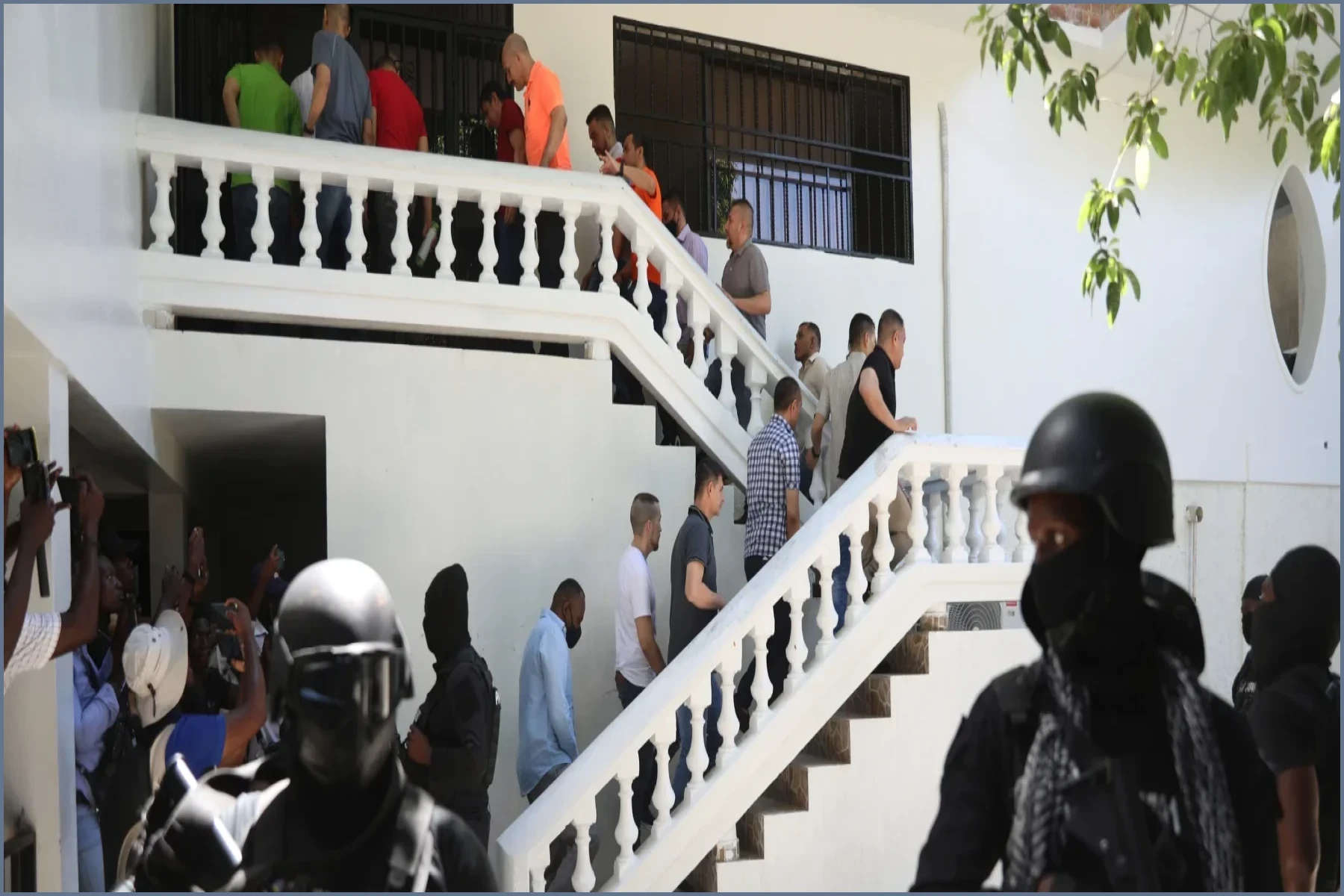
Eighteen suspects arrested in connection with the July 2021 assassination of Haitian President Jovenel Moïse have been extradited to the United States. The transfer, which took place on Sunday, marks the conclusion of a highly prolonged and troubled judicial process in Haiti for a killing that plunged the Caribbean nation into deep instability.
The suspects will stand trial in Florida, according to Jason Reding Quiñones, the U.S. Attorney for the Southern District of Florida. Writing on the social media platform X, Quiñones described the development as the next major phase in the pursuit of accountability. He emphasized that federal authorities will follow the evidence wherever it leads, targeting those who financed, facilitated, supported, or committed crimes to execute the plot. Quiñones noted that even five years after the assassination, defendants are still being brought before American courts, and the investigation remains active.
Although Quiñones did not publicly identify the 18 individuals, and a spokesperson for the U.S. Department of Justice did not immediately comment, the group of suspects previously held in Haiti waiting for trial is known to include 17 Colombian soldiers and Joseph Badio. Badio, a former employee of Haiti's Ministry of Justice who worked in an anti-corruption unit, is considered a central figure in the conspiracy. He was arrested in Haiti in October 2023 after evading authorities for more than two years. Defense attorneys in the U.S. representing other suspects have previously characterized Badio as the mastermind behind the operation, which they claim initially aimed to arrest the president before turning into an assassination.
The Haitian Ministry of Justice and Public Security confirmed the transfer in an official statement, explaining that it surrendered the suspects "to allow for their trial." The ministry stated that the Haitian government decided to strengthen its cooperation with American judicial authorities to bring the proceedings to a successful conclusion, acknowledging that the domestic legal process in Haiti "continue to face significant difficulties."
The extradition caught relatives of the suspects off guard. In a telephone interview from Colombia, Diana Marcela Arbeláez Llano, the wife of one of the detained Colombians, expressed shock at the sudden transfer. She stated that families "never imagined that the United States would have taken them so suddenly," leaving them in "a state of total uncertainty." Arbeláez added that all the detained Colombian suspects are very ill due to the notoriously inhumane conditions inside Haitian prisons. While she expressed hope that their health might improve under U.S. custody, she remained deeply concerned about their situation and hopes they will have a fair opportunity to prove their innocence.
The legal process within Haiti has been severely hampered since the July 2021 attack, during which President Moïse was shot 12 times at his private residence and his wife was wounded. Multiple Haitian judges appointed to the case have resigned after receiving death threats, and powerful gangs seized control of the downtown Port-au-Prince courthouse where suspects were being interrogated. In October 2025, after a local court of appeals ordered a third investigation into the assassination, Haitian justice officials formally requested assistance from the United States and Canada. Relatives of the Colombian suspects had frequently complained about these persistent delays and the collapse of the Haitian judicial system under the weight of gang violence.
Furthermore, some of the suspects have maintained that they were misled. Authorities have previously stated that certain individuals believed they were participating in a coup rather than an assassination. The Colombian soldiers detained in Haiti testified that they were subjected to beatings, threatened with death, and coerced into signing confession documents written in a language they could not understand.
Meanwhile, the U.S. government has continued its own robust prosecution of the conspiracy. According to Quiñones, a total of 30 individuals have been indicted in connection with Moïse's killing. Brett Skiles, the FBI Special Agent in Charge, confirmed that multiple arrests were executed both in the United States and abroad on Sunday. Skiles stated that the FBI and its partners "remain steadfast in ensuring that all individuals who allegedly sought profit from the assassination of a head of state are held fully accountable."
The U.S. judicial system has already secured several convictions. In May, a Florida jury convicted four defendants: Arcángel Pretel Ortiz, Antonio Intriago, Walter Veintemilla, and James Solages. All four had pleaded not guilty but were found guilty of conspiring to kill or kidnap Haiti's elected leader and providing material support to the plot. Ortiz and Intriago were principals of CTU (Counter Terrorist Unit Federal Academy and Counter Terrorist Unit Security), while Veintemilla was a principal of Worldwide Capital Lending Group. Both companies were based in South Florida. At least five other suspects have pleaded guilty in federal court and are currently serving life sentences, including a retired Colombian army officer and a Haitian-Chilean businessman who previously served as a U.S. government informant.
Other key figures remain in the legal pipeline. Christian Sanon, a Haitian-American citizen, is still awaiting trial in the U.S. Prosecutors allege that the conspirators initially selected Sanon to replace Moïse as president. Under the alleged agreement, once Sanon assumed power, he was expected to award lucrative contracts to CTU for infrastructure projects, security forces, and military equipment. Meanwhile, other key suspects remain at large. Dimitri Hérard, the former head of security at Haiti's National Palace, is a key fugitive who escaped custody two years ago when a powerful federation of gangs stormed Haiti's two biggest prisons.