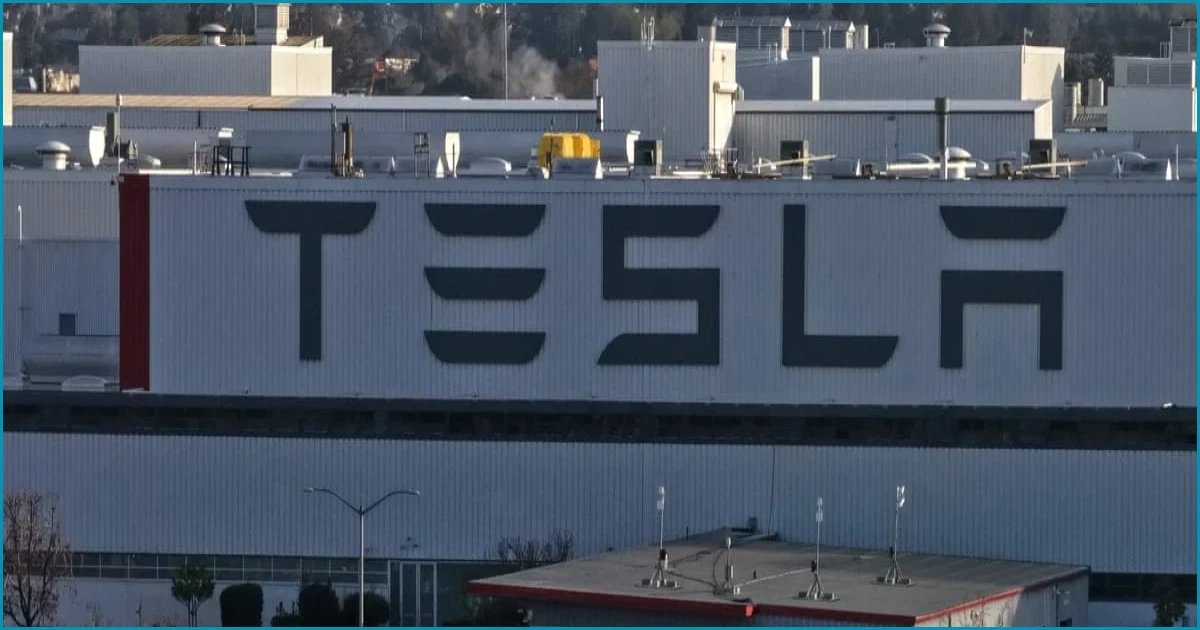
A significant bench trial began on Monday in California, as the state government pursues a lawsuit against Tesla over allegations of systemic racial discrimination at the company’s flagship Fremont factory. The legal action, brought by the California Civil Rights Department, claims that Black employees were subjected to daily bullying, racial slurs, and unequal treatment regarding pay and promotions, while management allegedly failed to take meaningful corrective action.
During opening statements, Brett Watson, a lawyer for the state, presented photographic evidence documenting racist graffiti found throughout the facility. The images showed the N-word, swastikas, the Confederate flag, white supremacist logos, and phrases such as “go back to Africa” scrawled on workplace benches, lunch tables, lockers, and bathroom walls. According to court documents, workers reported hearing racial epithets as often as 50 to 100 times per day. In one specific incident, a Black employee alleged he was asked by a colleague, “You want to hang from a tree?”
Watson argued that these experiences were not isolated incidents but rather a pattern of “rampant racism” that remained unchecked for years. He noted that employees had nicknamed the factory “the plantation,” “a slaveship,” and “The Elon Slave Labor Association,” the latter being a play on the company’s name. The lawsuit, filed in February 2022, alleges that Tesla violated California’s Fair Employment and Housing Act by maintaining a racially segregated environment where Black workers were terminated more frequently and promoted less often than their white counterparts.
The state is seeking both financial damages and injunctive relief, which could compel Tesla to overhaul its internal labor policies and practices. The trial, which is being heard by Judge Peter Borkon without a jury, is expected to continue through the end of October. Legal experts noted that the outcome could have sweeping consequences for the company, as the state is not bound by the mandatory arbitration agreements that typically restrict individual employee lawsuits.
Tesla has denied all allegations of wrongdoing, labeling the lawsuit “misguided.” Tyree Jones, the lead lawyer for the company, defended Tesla by emphasizing its role as a major employer that provides thousands of jobs in California. During his opening statement, Jones repeatedly used the N-word, asserting that he was not using it as a racial slur but rather referencing the way some Black individuals greet one another. He argued that the state was attacking the company for the actions of individuals, stating, “The state is blaming the employer, when it’s the victim.” Tesla maintains that it has consistently disciplined and terminated employees who engage in misconduct.
This case is one of dozens of discrimination lawsuits filed against the company, including a federal action by the Equal Employment Opportunity Commission. In 2022, a federal jury awarded former employee Owen Diaz $137 million in a similar harassment case, though the award was later reduced by a judge. While CEO Elon Musk has faced accusations of promoting white supremacist conspiracy theories, he is not expected to testify in this trial and has not publicly addressed the current proceedings.
Watson said Black employees at Tesla experienced “rampant racism” that was left unchecked for years, and that workers referred to the factory as a “slaveship”, “the plantation” and “The Elon Slave Labor Association” – spelling out TESLA. One Black worker told state lawyers that he heard racial slurs as often as 50-100
Musk, who joined Tesla in 2004 and became the CEO in 2008, has also been accused of racist behavior, including promoting white supremacist conspiracy theories like “white genocide”. The CEO also tends to broadcast his thoughts on X, a social media platform he owns, fixating on anti-immigrant content and theories that t