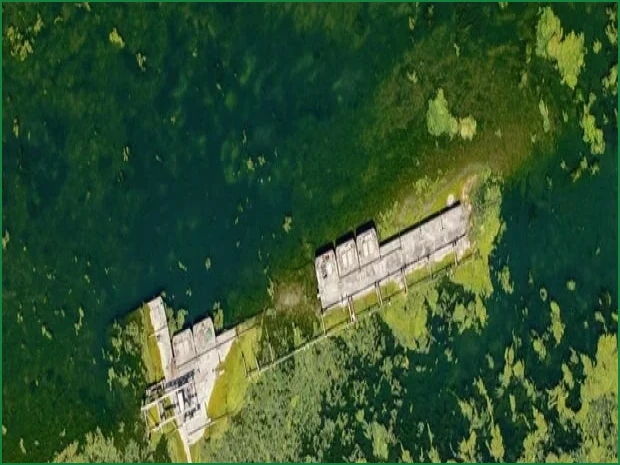
As of August 4, 2026, at 3:23 PM EDT, a severe drought has caused water levels on the Danube River, Europe's second-longest waterway, to plummet to record lows, revealing the hulks of dozens of World War II German battleships and even the remains of an ancient woolly mammoth. This dual emergence highlights both historical secrets and contemporary crises, as the low water levels also threaten power plants and disrupt vital river traffic across Central and Eastern Europe.
Near the Serbian port of Prahovo, where the river separates Serbia and Romania, at least 20 World War II wrecks of various sizes are now visible from the banks. Among them is a rusty hull with a broken mast, once flying the Nazi flag. These ships, some still laden with weapons, were part of Nazi Germany's Black Sea fleet. Historians note that up to 200 German warships were deliberately scuttled in September 1944 near Prahovo in the Danube gorge. The Germans sank them as they retreated from Romania and Soviet forces advanced deeper into Europe, aiming to slow the Soviet advance in the Balkans before Nazi Germany surrendered in May 1945.
The appearance of these old warships serves as a stark reminder of ongoing challenges. While Communist Yugoslav authorities previously removed some vessels, most have remained due to the explosives they carry. The Serbian government, with financial support from the European Union, has long sought solutions for these dangerous submerged relics. Today, authorities are primarily focused on maintaining traffic flow on the Danube, which traverses 10 nations, as the dropping water levels create hazardous conditions for navigation.
Residents of Prahovo attest to the difficulties. Ivica Gavrilovic, who has lived by the Danube his entire life, noted high public interest in the wrecks but difficult access, stating, "People still don't know how to access the ships themselves." Krsta Brandic, another local, observed the severe impact on commerce, saying, "As you can see, the (big) ships can't pass anymore." Experts attribute the unusually hot weather and the resulting low water levels to global warming and other contributing factors. This isn't the first time these historical artifacts have resurfaced; sunken Nazi ships, complete with explosives, emerged in 2024 following a blistering summer drought, and dozens of scattered vessels appeared near Prahovo in 2022 when water levels hit previous record lows.
Further downstream, the receding Danube has also unveiled an extraordinary paleontological discovery in Bulgaria. Near the northeastern city of Ruse, bone fragments have been found that Nikolay Nenov, director of the Regional Historical Museum, believes "very likely" belonged to a woolly mammoth from the Ice Age. Specialists have identified a jawbone, fragments of tusks, part of a shoulder blade, and a femur with its articular head among the well-preserved remains. Nenov highlighted the importance of the discovery, noting that unlike many previous finds, these bones were "concentrated in the same place," indicating they belonged to a single, young animal. The dark color of the bones suggests the mammoth spent considerable time in a marshy environment. Woolly mammoths, known for coexisting with early humans who hunted them for food and utilized their tusks and bones as tools, died out approximately 4,000 years ago. Scientists have been recovering fragments of mammoth tusks, bones, teeth, and hair for decades.