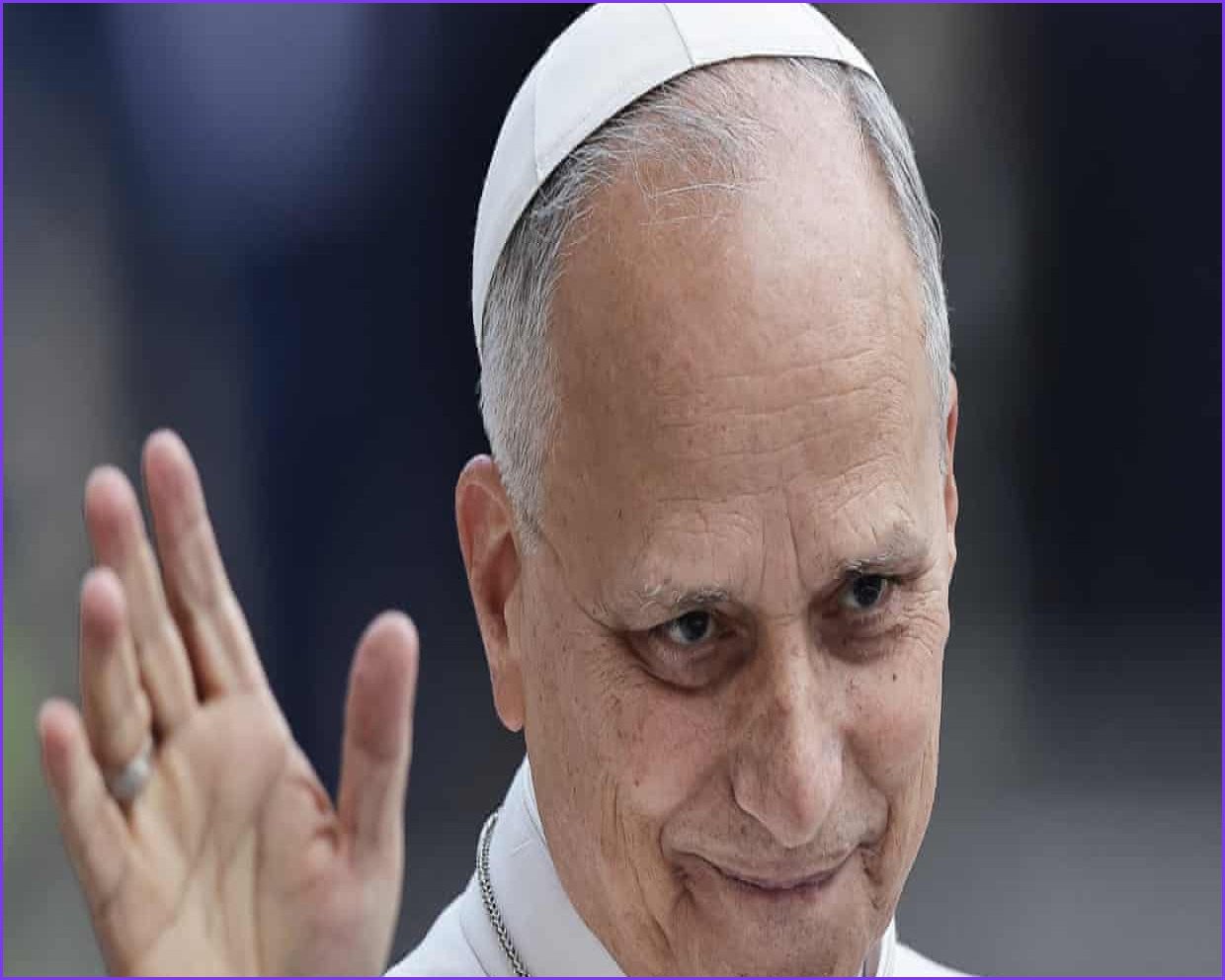
Preparations are underway at the Cottolengo Don Orione, a Catholic-run home for disabled people in Claypole, about 26 kilometers from Buenos Aires. Residents, including several in wheelchairs, are rehearsing their positions outside the sanctuary while workers paint buildings and plant trees in the garden. The choir is practicing ahead of Monday, November 9, when the facility will mark the first full-day stop of Pope Leo XIV’s visit to Argentina.
The papal visit to the home, which cares for roughly 400 residents with disabilities, occurs amid growing strain over state funding cuts implemented by Argentine President Javier Milei. Fernando Montero, the coordinator of the facility, stated that the government suspended deliveries of medications, special foods, and diapers starting last November, leaving the dispute in court. Montero observed that the pope and Milei hold opposing worldviews, explaining that the pontiff emphasizes human dignity regardless of economic productivity, whereas Milei operates as a hyper-capitalist focused strictly on rewarding competitive market outcomes.
Pope Leo XIV’s three-day itinerary in Argentina forms the middle leg of a three-nation South American tour that began in Uruguay on Friday and will conclude with six days in Peru. It marks the first papal journey to Argentina since Pope John Paul II visited in 1987. His predecessor, the Argentine-born Pope Francis, never returned to his homeland during his entire pontificate.
The stopover presents potential friction for President Milei, a far-right libertarian economist who campaigned with a chainsaw to symbolize drastic state budget reductions. In 2020, Milei publicly criticized Francis as an imbecile and the representative of the Evil One on Earth, accusing him of promoting communism and declaring social justice to be theft. Milei has stated that he apologized for those remarks when he met Francis at the Vatican in February 2024.
Following his inauguration in December 2023, Milei enacted deep public spending reductions intended to lower high national inflation. The economic adjustments have had a significant social impact. According to estimates by the thinktank Mate, retirees receiving minimum pensions—who account for 63% of all pensioners—have lost approximately 30% of their purchasing power. During a weekly retirees' protest outside Congress last Wednesday, one demonstrator displayed a cardboard sign reading, "Save us Pope Leo XIV – Milei is killing us."
Concerns over social hardship were echoed last month by Buenos Aires Archbishop Jorge García Cuerva, who noted that Leo XIV would encounter a divided country with a high concentration of impoverished citizens. Tensions between church leaders and the state have also centered on federal assistance for disabled individuals. On April 1, Argentina’s conference of bishops addressed a formal letter to Health Minister Mario Lugones to warn of the serious crisis facing care institutions across the nation. Although the ministry conducted follow-up meetings with bishops in April and on October 5, the funding issue remains unresolved as Milei continues to clash with Congress over budget legislation.
Ideological divergences between the pontiff and the president also extend into technology policy. In May, Pope Leo XIV called for global efforts to disarm artificial intelligence. Conversely, Milei has rejected regulatory limits on AI, submitting bills to facilitate data center construction throughout Argentina and to grant legal status to non-human corporations. Federico Sturzenegger, a government minister tasked with state deregulation, acknowledged using AI tools to draft legislative proposals.
Milagros Miceli, a sociologist and computer scientist leading the Critical AI Lab in Berlin, noted that the contradiction between the leaders' approaches is evident. Miceli welcomed the papal visit, emphasizing the importance of prioritizing human dignity over technology-driven market values. Juan Grabois, a left-wing Peronist deputy and social leader who formerly served in the Vatican’s Dicastery for Promoting Integral Human Development, similarly remarked that absolute market deregulation and algorithmic power have become core policy objectives for the Milei administration.
Government officials have attempted to downplay expectations of political discord. Sandra Pettovello, the minister supervising social policy, asserted recently that the pope would not use the trip to comment on domestic political matters. However, Amnesty International sent a letter to the pontiff outlining serious concerns regarding executive decisions affecting fundamental human rights in Argentina.
President Milei is scheduled to welcome Pope Leo XIV at the airport on Sunday. Following his visit to the Claypole disability home on Monday, the pope will travel to Buenos Aires for meetings with business leaders and trade union representatives. On Tuesday, he will celebrate Mass on the grounds of FAdeA, a state-owned military aircraft manufacturer in Córdoba where employees have repeatedly staged protests against government cuts. Juan Cruz Esquivel, director of the Barometer of Religions and Beliefs at the University of Buenos Aires, stated that the pope’s schedule clearly reflects core social themes that directly challenge the administration's policy direction.
Mariano Oberlin, a Catholic priest serving an impoverished neighborhood in Córdoba, anticipated that the ideological divide would be handled diplomatically. Oberlin noted that Pope Leo XIV consistently presents Catholic social doctrine as a central pillar of his ministry without seeking direct confrontation, leaving the government with little room to reinterpret his emphasis on human rights and brotherhood.
The visit also reflects shifting relationships between religious institutions and Latin American social movements. Grabois noted that social activism in Argentina drew closer to the Catholic Church under Francis, whose social views were heavily influenced by cardboard pickers known as cartoneros and residents of impoverished neighborhoods called villeros. Grabois added that Francis originally took notice of Leo due to his active support for indigenous movements in Peru.
Despite this alignment among certain social groups, other civil rights organizations maintain critical perspectives on church doctrine. On Saturday, the day prior to the pope's arrival, the LGBTQIA+ community gathered in Buenos Aires for the 35th annual Pride March. María Rachid of the march's organizing committee observed that while former Pope Francis offered comforting statements to many families, official church dogma regarding non-traditional families has remained unchanged under both pontiffs.
Additionally, the visit comes as religious demographics in Argentina undergo noticeable shifts. Studies by the University of Buenos Aires indicate that 57.7% of Argentines currently identify as Catholic and 17.4% as evangelical, compared to 76.5% Catholic and 9% evangelical nearly two decades ago. Last week, Milei attended the opening of an evangelical temple in Neuquén, delivering a political address in which he pledged to run for re-election next year. Esquivel noted that while Catholicism remains the dominant religion in Argentina, its historic cultural monopoly and direct sway over the national legislative agenda have diminished.
Even so, public interest in the papal visit remains high, with many Argentines anticipating a message focused on humanitarian concerns. Grabois emphasized that against a backdrop of severe economic hardship, many citizens, including previously anticlerical activists, view Pope Leo XIV and his predecessor as prominent global figures consistently defending human dignity.