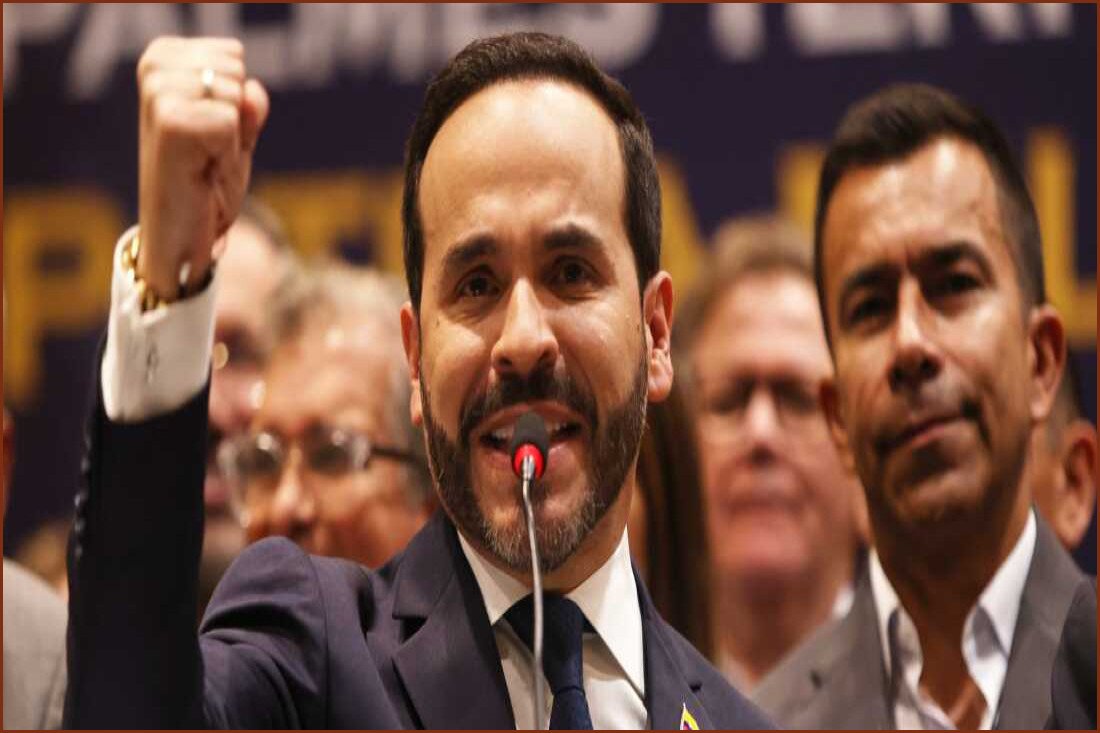
Colombia is bracing for the inauguration of President-elect Abelardo de la Espriella this Friday, with security forces operating under high alert to prevent potential unrest and attacks by rebel groups. In a significant departure from established tradition, the 48-year-old former criminal defense lawyer has scheduled his swearing-in ceremony in the southwestern city of Cali rather than the capital, Bogotá. The location was specifically chosen due to the region's history of drug violence and persistent attacks from rebel groups.
To facilitate the event, which will be attended by approximately a dozen heads of state, authorities have deployed 11,000 troops. Security measures are extensive, including a total ban on drones and strict prohibitions on privately owned vehicles on city roads throughout Inauguration Day.
Among the high-profile international figures expected to attend are Argentina’s Javier Milei, Ecuador’s Daniel Noboa, and Chile’s José Antonio Kast. They will be joined by U.S. Acting Attorney General Todd Blanche, FIFA President Gianni Infantino, and King Felipe VI of Spain. De la Espriella, a conservative political outsider who has received praise from President Trump, campaigned on a platform of restoring state control.
During a recent address, he emphasized that a fundamental priority of his administration is to exert control over the nation's territory, warning that failure to secure cities and rural areas would jeopardize Colombia's sovereignty.
His administration intends to shift away from the "Total Peace" strategy pursued by outgoing President Gustavo Petro, which critics argue allowed armed groups to rearm, regroup, and expand their influence during government-granted ceasefires. De la Espriella has pledged to end peace negotiations with Colombia's rebel groups and instead confront them with greater military force.
His policy agenda includes the construction of large-scale prisons and the resumption of aerial spraying and drone usage to destroy illegal coca crops—a practice suspended over a decade ago due to environmental concerns.
Elizabeth Dickinson, a Colombia analyst at the International Crisis Group, noted that while this represents a significant rightward shift, there is a risk that completely abandoning future talks could be counterproductive. She pointed out that the conflict involves an estimated 27,000 individuals in various armed and criminal groups who will eventually need a route back into normal life.
Winning the election by approximately 250,000 votes, de la Espriella defeated left-wing candidate Iván Cepeda by roughly one percentage point. His victory aligns with a broader conservative trend in South America, following similar electoral outcomes in Peru, Chile, and Ecuador. These leaders have sought closer alignment with the Trump administration on issues such as immigration and anti-drug policies.
De la Espriella has expressed support for the Trump administration's campaign of military strikes against vessels suspected of carrying drugs in the Caribbean and eastern Pacific, an operation in which more than 200 people have been killed.
He is also expected to speed up the extradition of rebel leaders wanted in the United States on drug charges and has already begun aligning Colombia's foreign policy with Washington by cutting diplomatic ties with Cuba and restoring relations with Israel.
Domestically, the incoming president faces a daunting economic landscape, with plans to reduce government spending by as much as 40% to address a budget deficit that doubled during the Petro administration. As part of this austerity drive, he has already announced plans to close 14 Colombian embassies in Europe, Africa, and the Caribbean. However, political analyst Sergio Guzmán warns that de la Espriella will need to build a majority in a fragmented Congress to enact his deeper reforms.
Furthermore, he faces ongoing domestic friction from Petro, who has refused to acknowledge the election result and claimed, without providing credible evidence, that the vote count was rigged.
Analysts suggest these unsubstantiated fraud allegations could fuel protests among Colombians concerned that his anti-crime policies might lead to human rights abuses by security forces. Guzmán noted that while Petro will likely remain a constant nuisance, de la Espriella appears ready for a fight, both rhetorically and potentially on the streets.
Some 11,000 troops have been deployed to the city to ensure the safety of the new president and the roughly dozen heads of state attending the inauguration.