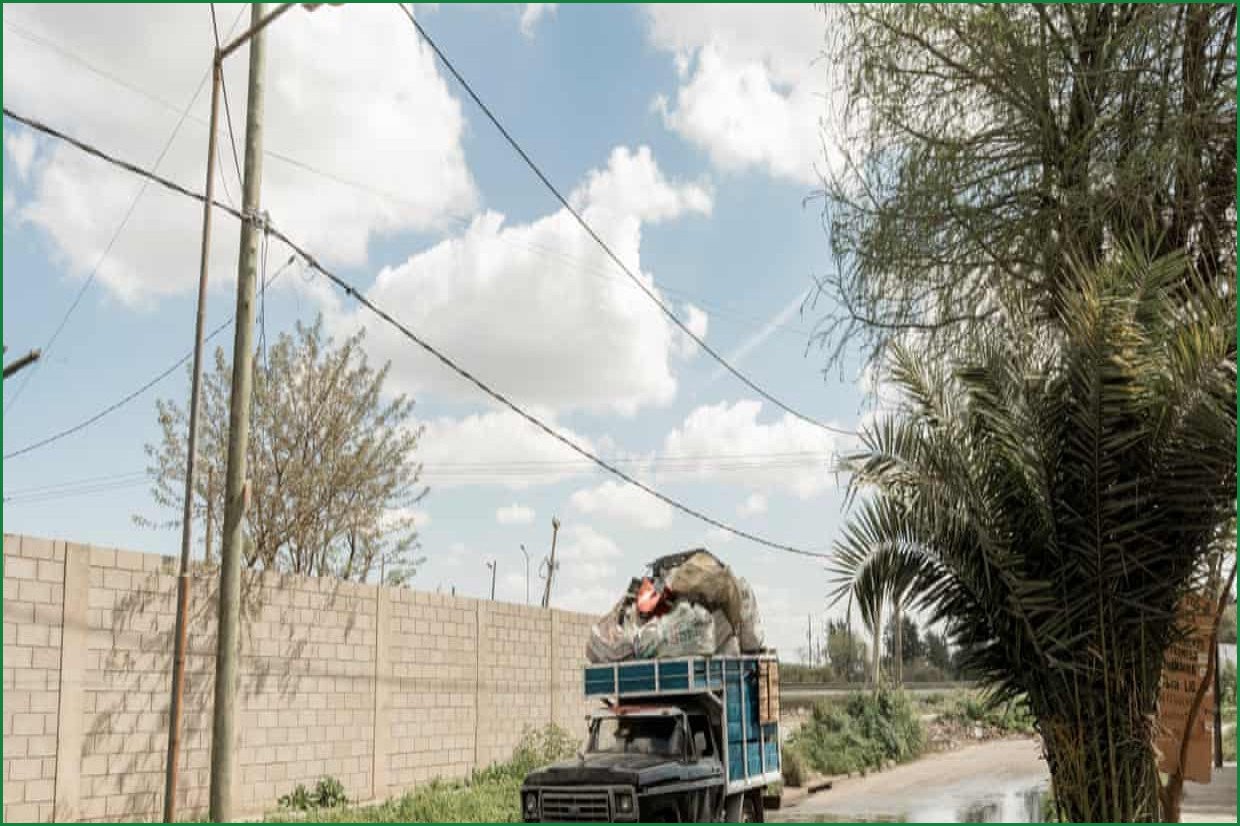
Twenty-three years ago, María Monges looked around her flooded neighborhood and decided that immediate action was necessary. Her community, Costa Esperanza, was founded in 1998 in the San Martín district of Buenos Aires province. Situated on the banks of the Reconquista, Argentina’s second most-polluted river, the neighborhood took its name from the fictional setting of the popular Argentine youth telenovela Verano del 98. However, the harsh reality of the area has always been far from the idyllic coastal town depicted in the television series.
Now 61, Monges recalls the early days of their efforts, noting that all the local streams were completely blocked with rubbish, dead dogs, and other unsanitary waste. Determined to make a change, she began knocking on doors to mobilize her neighbors. By 2005, she secured tools, uniforms, and training from the provincial government. Today, Monges leads 9 de julio, a workers’ cooperative that cleans the streams feeding into the river from Monday to Friday. Despite their daily efforts, rubbish continues to appear constantly.
The Reconquista River spans 51 miles (82km) through the northeastern part of Buenos Aires province, running through 18 municipalities. An estimated 4 to 5 million people live within its basin. The river eventually flows into the Luján River, which connects to the wider Río de la Plata estuary. Since at least the 1970s, the waterway has served as a dumping ground for untreated sewage, industrial waste, and landfill leachate. The state sewage company operates on its banks, alongside homes lacking proper infrastructure that discharge waste directly into the water. Additionally, numerous factories in San Martín, a district known as "the Industrial Capital," dump their industrial waste into the river.
Natalia Gavazzo, an anthropologist and researcher at the National Scientific and Technical Research Council, points out that the pollution impacts the water, soil, and air, leaving local residents without access to clean drinking water due to contaminated aquifers. Gavazzo directs the Migrantas en Reconquista project, which supports socio-environmental strategies led by local women. She emphasizes that these women are not merely victims, but are key agents of mitigation and adaptation who hold vital knowledge for their community's survival. Gavazzo also notes a stark global and local imbalance, stating that while the global north produces emissions, the south pays the price, a dynamic mirrored locally as waste from gated communities ultimately flows into poorer neighborhoods.
The pollution of the Reconquista occurs against a backdrop of wider regional environmental challenges. The river is part of La Plata, a massive basin system connecting waterways across Argentina and Uruguay. According to a recently released World Meteorological Organization (WMO) State of Global Water Resources report, major parts of the La Plata basin experienced below-normal water levels between 2021 and 2025 due to persistent multi-year drought. This includes the Paraguay River, which has registered its lowest levels since 2020, with its 25 driest months since 1991 occurring after that year.
Addressing these issues remains a monumental regulatory challenge. Juan Borús, a recently retired hydrologist from the National Water Institute, explains that governments must tackle each source of pollution individually. However, he notes that this is an extremely costly and painstaking task, and companies discharging complex effluents have a long history of evading environmental regulations.
In 2001, the Buenos Aires province established the Reconquista River Basin Committee (Comirec) to clean up the waterway. However, its impact has been limited. Reports from early 2026 indicate that the section of the river running by Costa Esperanza still suffers from severe deterioration. Patricio Carmona, a biochemist specializing in environmental analysis, notes that high levels of E. coli and low oxygen levels make the river unsuitable for aquatic life and pose a serious health risk to the local population.
The physical consequences are felt daily by local residents. Lorena Batista, a 47-year-old neighbor who works at the National Institute of Industrial Technology, describes the smell as acidic, while Zulma Monges, María’s daughter, calls it nauseating. The stench worsens significantly during the summer, forcing residents to keep their windows closed. Neighbors have historically suffered from skin conditions such as hives, rashes, sores, and scars, alongside respiratory and gastrointestinal illnesses. However, Zulma notes that skin conditions have decreased since her mother's cooperative began its regular cleanup operations.
Community life has adapted around these environmental struggles. Grocer Rosa Valencia explains that discussing these issues and organizing monthly meetings to address accumulated rubbish or water cuts with local government representatives has become an integral part of the neighborhood's culture.
Other initiatives are also emerging to address the ecological crisis. The School of Habitat and Sustainability at San Martín University is working on developing artificial wetlands to filter out persistent pollutants and restore local biodiversity. Meanwhile, a coalition of local organizations called Foro por la Recuperación del Río Reconquista is campaigning to establish an ecological preserve, pointing out in a petition that the area was once a large marshland with beaches before the landfill was constructed.
Zulma Monges recalls stories from older generations who used to fish and spend weekends surrounded by abundant wildlife in the area. While the region is now heavily overpopulated, the community continues to maintain the remaining green spaces. Showing a photograph of a recently cleared stream, Zulma emphasizes that the area is beautiful when kept clean, adding that the ultimate goal must be to stop the rubbish from reaching the neighborhood in the first place.