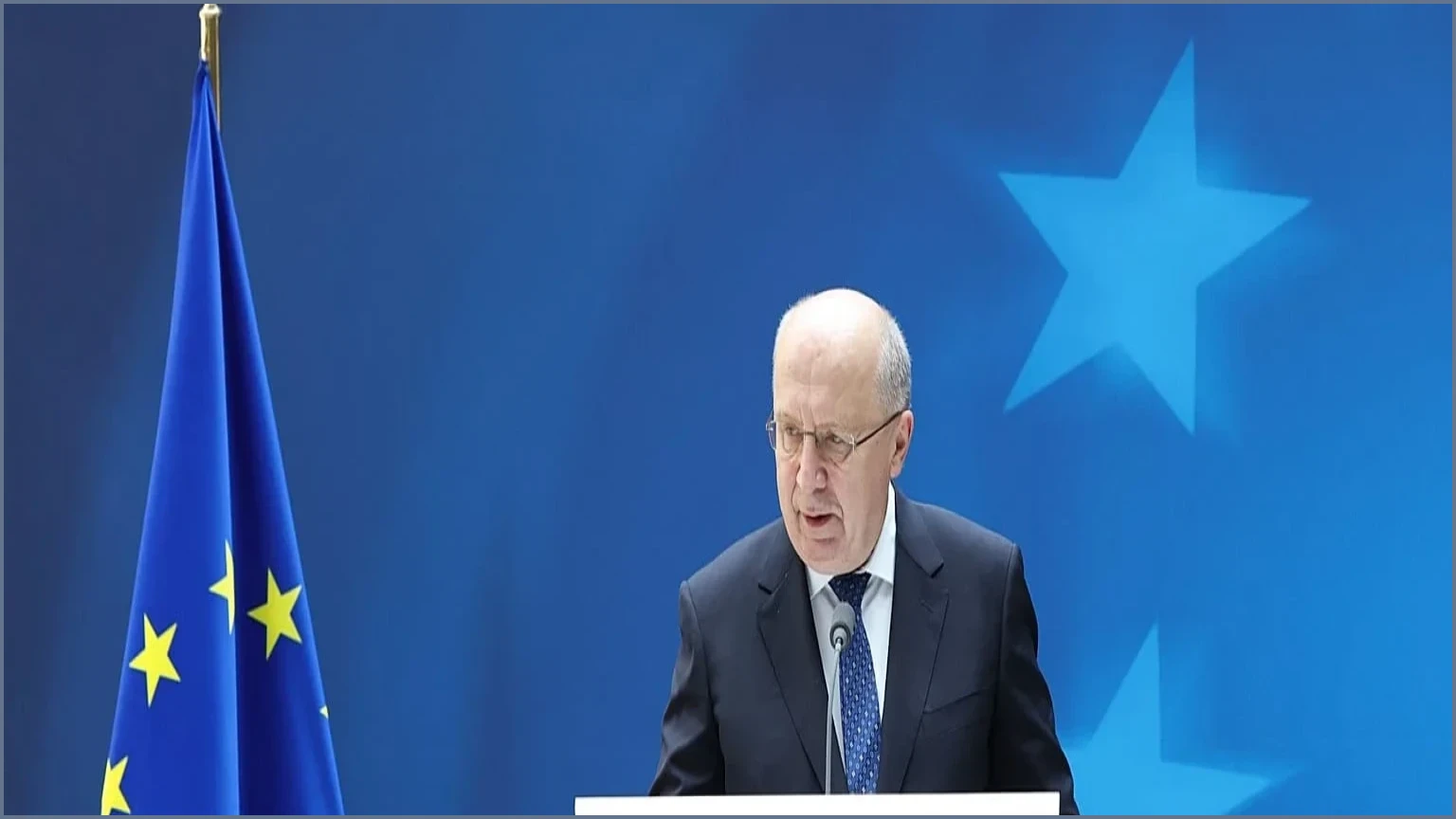
European Commissioner for Defence Andrius Kubilius has announced that the European Union is developing an anti-hybrid warfare playbook, aiming to establish a framework that forces Russia to pay a “painful price” for its provocations. Speaking to the current affairs programme Europe Today, Kubilius emphasized that the Commission is actively designing strategies to assist member states that have been disproportionately affected by hybrid threats.
He noted that this initiative aligns with the vision shared by the Commission president.
This initiative follows a commitment made by European Commission President Ursula von der Leyen during her State of the European Union address on Wednesday. In her speech, she outlined the necessity for a new mechanism capable of addressing hostile actions that exist in the “grey zone” of warfare—incidents that fall short of traditional armed aggression but clearly threaten national security.
Examples of such threats, which have increasingly troubled Europe's Eastern flank, include weaponised migration, cable-cutting, and recent drone incursions.
The push for a stronger response gained momentum last month when five Baltic European Commissioners urged the EU executive to provide more robust support for the region. To address these concerns, President von der Leyen proposed the Emergency Security Protocol.
This mechanism is intended to complement NATO's Article 4, allowing any member state to trigger a coordination process among all EU members to mitigate impacts and deter further escalation.
Beyond immediate security protocols, the Commission is also exploring the creation of a European Security Council. This proposed leaders' format would institutionalize cooperation between EU member states and like-minded partners, including the United Kingdom, Ukraine, Norway, and Canada.
The goal is to address major geopolitical challenges, specifically an increasingly aggressive Russia and the retreat of the United States from Europe's security architecture.
While leaders like Ukrainian President Volodymyr Zelenskyy are already regular participants in European Council meetings, this new framework would provide a dedicated platform for security discussions. Von der Leyen noted that the format is increasingly urgent given the nature and scale of current risks.
Concerns regarding potential duplication of existing structures, particularly the 77-year-old NATO, have been addressed by European Commissioner for the Economy Valdis Dombrovskis. He stated that the European Security Council is intended to “complement NATO” rather than compete with it, noting the urgent need to bolster drone defense capabilities as the conflict in Ukraine evolves.
A NATO official confirmed that the alliance welcomes efforts by European allies to strengthen shared security, reiterating that NATO remains the “bedrock of our collective defence” and that the two organizations will continue to coordinate on priorities such as defense industrial production and support for Ukraine.
The big question is how the group would not duplicate the efforts of the 77-year-old NATO, of which 23 EU countries are members.