President Xi Jinping recently conducted an inspection tour in Shanghai’s Huangpu District, visiting the historic heart of the city known for its 19th-century British-built architecture along the Bund. While the visit included meetings with local citizens and Communist Party of China (CCP) officials, the focus remained on general living standards rather than addressing the broader, systemic issues plaguing the nation's housing market. Xi chose the district specifically for its symbolic significance as the birthplace of the CCP, where the party’s First National Congress was held at No. 76 Xingye Road in the summer of 1921.
Despite the high-profile nature of the visit, Xi provided no new strategies or insights to mitigate the ongoing property crisis. This lack of direction mirrors the recent July meeting of the Politburo, which acknowledged the severity of the situation by stating that it is necessary to attach great importance to the difficulties and challenges in economic performance. However, the leadership offered no substantive solutions beyond recommending that officials continue to utilize existing policies.
The current state of the Chinese real estate sector remains dire. Economists like Rogoff have highlighted that the collapse in housing prices represents a massive loss in household wealth, as Chinese citizens typically hold over 70 percent of their wealth in property. This decline has caused consumers to feel significantly poorer, leading to a direct reduction in consumption. The market's sensitivity is such that, according to Deutsche Welle, officials directed private data providers in November 2025 to cease the publication of home sales figures.
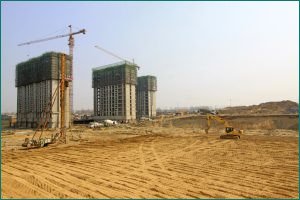
Data from China Real Estate Information indicated a 42 percent year-on-year drop in new home sales by the top 100 builders in October 2025, marking the largest monthly decline in 18 months. Furthermore, reports from earlier this year noted that while property prices in Shanghai have shown signs of rebounding, the national market continues to struggle with an enormous overhang of 90 million empty or unfinished apartments. For millions of Chinese homeowners, the situation has become a tragedy, as many find themselves unable to sell or refinance properties while facing significant debt. As of now, the leadership has yet to offer a clear path toward resolving the sector's financial instability.
You have reached the limit of 2 free articles this month.
The problem has not improved much since. In May, the New York Times reported that although “property prices in Shanghai, in particular, are rebounding, the national market still faces an enormous overhang – 90 million empty or unfinished apartments.”