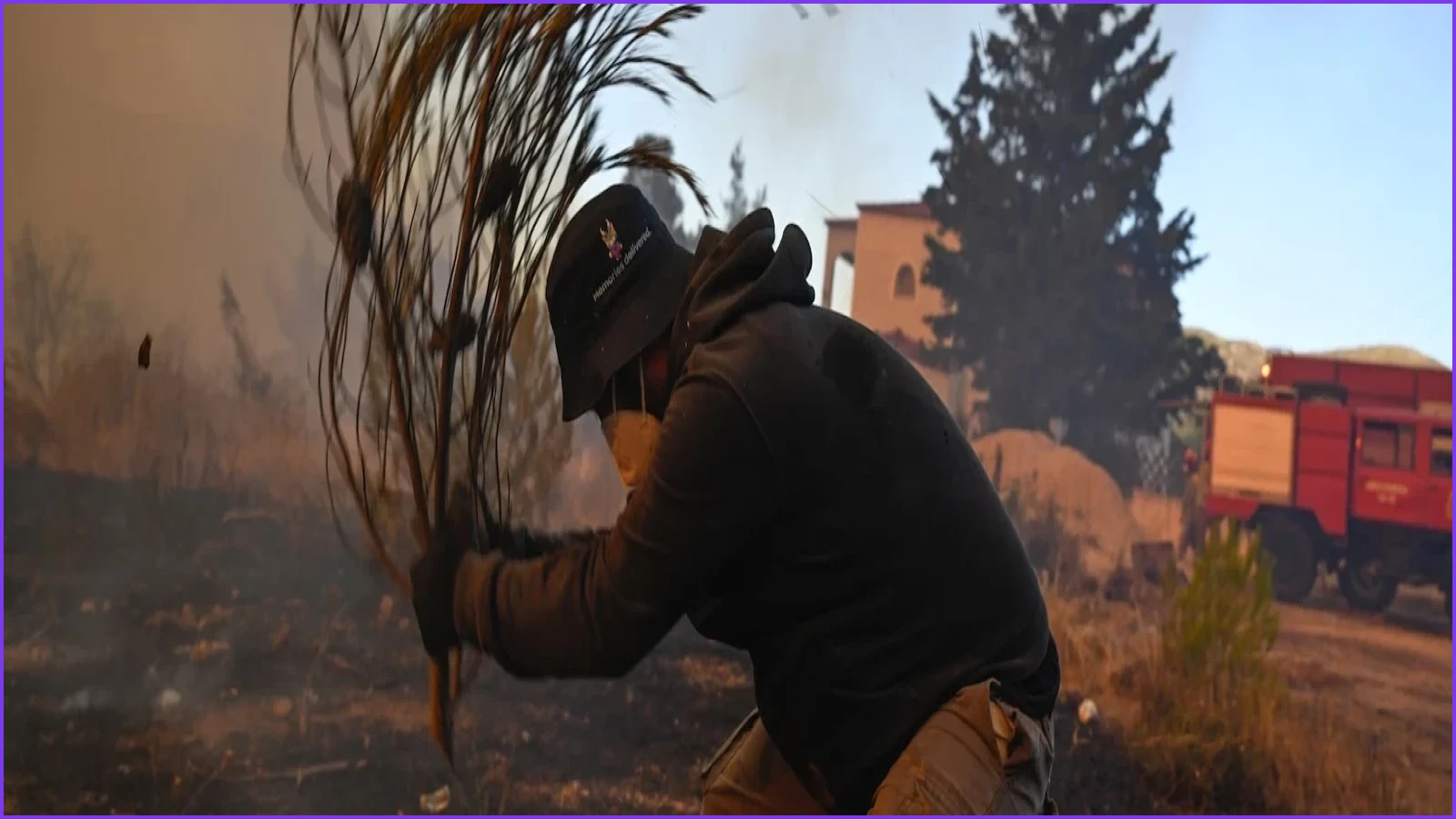
A fleet of 12 water-dropping planes and 11 helicopters returned to the skies on Monday to combat a significant wildfire burning west of Athens. The renewed aerial effort follows a tragic midair collision between two firefighting helicopters on Sunday, which resulted in the deaths of two crew members—one Greek and one Danish national. Two other individuals, all of whom were privately chartered operators, were hospitalized following the incident. The firefighting efforts over the weekend had been severely hindered by powerful gales, but easing winds on Monday allowed for the full deployment of the aerial fleet around the seaside resort of Porto Germenos, where multiple evacuations have been ordered.
Fire Service spokesman Yiannis Artopios described the situation as difficult, noting that while conditions have improved due to the easing winds, authorities remain cautious. "To put it in a headline: conditions are better but we are pressing forward because there are still multiple points of activity," Artopios said. "This is a difficult fire that has troubled us." The blaze, which has forced the evacuation of more than 1,000 people, including more than 250 rescued by boats from local beaches, was reportedly triggered by a faulty power line from a wind farm. Authorities have since arrested two contractors on charges of negligent arson.
Approximately 500 firefighters have successfully halted the fire's immediate advance, yet officials maintain that the regions surrounding Athens remain at high risk. The event highlights the recurring threat of summer wildfires across the Mediterranean, a region experiencing increasingly long heat waves. According to the European Union’s Copernicus climate service, Europe is the Earth’s fastest-warming continent, heating at more than twice the global average since the 1980s. These rising temperatures and prolonged droughts leave vegetation drier and more combustible, allowing fires to spread faster and burn with greater intensity.
Meanwhile, in France, authorities have allowed thousands of evacuees to return to their homes and holiday accommodations following the containment of a massive wildfire. This blaze, which burned approximately 420 square kilometers (162 square miles), represents the largest civilian evacuation in France outside of wartime, with more than 224,000 people having fled the area. While the fire destroyed 183 homes in the municipality of Le Porge and impacted the Cap Ferret peninsula, campsites in the area remain closed. A separate wildfire in Provence, which has scorched about 18 square kilometers (7 square miles), remains uncontained as 1,500 firefighters continue to reinforce fire lines in anticipation of stronger winds.