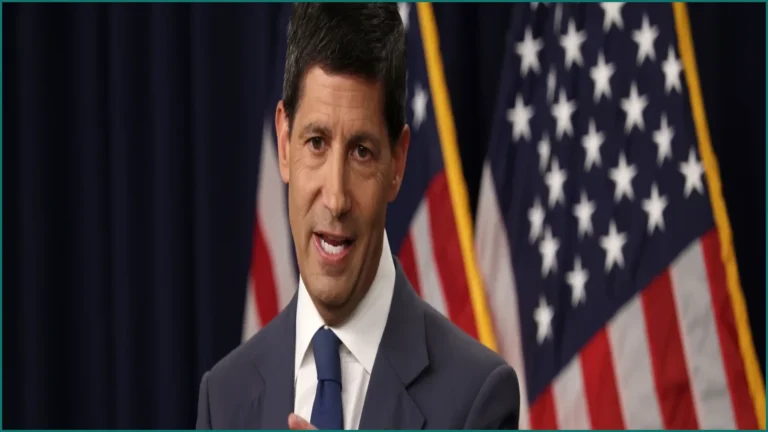
Business Secretary Jonathan Reynolds is set to hold urgent talks with Jaguar Land Rover executives and union leaders early next week, following the carmaker's decision to launch a voluntary redundancy programme that could result in thousands of job losses. The discussions, which will include JLR bosses and Unite union representatives, aim to find ways to mitigate the impact of the cuts, though the government has explicitly ruled out providing a financial bailout.
The Coventry-based manufacturer, which employs approximately 30,000 workers across its UK operations and another 10,000 overseas, confirmed it is opening a voluntary redundancy scheme for salaried staff and management team members. While JLR has declined to specify the exact number of positions affected, reports suggest that as many as 4,000 white-collar jobs could be eliminated. The company stated that the move is designed to simplify its business structure, improve overall efficiency, and build stronger resilience against ongoing market pressures, including a drop in sales and the impact of tariffs.
Speaking on the Sunday with Laura Kuenssberg programme, Reynolds emphasized that the government's talks would focus on minimizing job losses rather than rescuing the company. He described JLR as a massive British success story but noted that direct employment levels naturally fluctuate throughout a major company's business cycle. Reynolds stated that the upcoming discussions must focus on ensuring the workforce is appropriately structured to keep the business competitive. While he made it clear that public funds would not be used to bail the firm out, he left the door open to supporting future long-term investments. Reynolds also confirmed he has been in contact with West Midlands Mayor Richard Parker to discuss support for the affected workforce and the business.
The announcement has drawn sharp criticism from trade union leadership and political opponents. Unite General Secretary Sharon Graham warned that a perfect storm has been hanging over the UK automotive industry for a significant period. She criticized successive administrations, stating that death by a thousand cuts has been allowed to occur without sufficient government intervention. Graham added that intensive discussions had been underway over the weekend to establish mitigation strategies for the threatened roles. Meanwhile, Liberal Democrat business spokesperson Sarah Olney argued that the impending redundancies lay bare that the government's core growth mission is falling far short of its goals.
The job cuts come at a sensitive political moment, as Chancellor John Healey prepares to deliver a speech in the Midlands on Monday. Healey is expected to pledge a boost to economic growth by reforming how the government calculates the value of infrastructure investments, specifically in transport and housing. The West Midlands region is highly dependent on JLR, which is one of its largest employers.
The restructuring follows a devastating cyberattack in September 2025, which analysts have called the costliest cyber incident in British history. The breach completely paralyzed JLR's manufacturing operations for more than a month, preventing a single vehicle from leaving the production lines. This prolonged shutdown caused a 27% drop in the company's overall production, with the total cost of the attack and subsequent manufacturing losses estimated at £1.9bn. In June, JLR announced a recovery plan aimed at cutting £1.7bn in costs over the coming years, targeting fixed costs, materials, and warranties. The newly announced voluntary redundancy programme represents a significant escalation from July, when JLR indicated that fewer than 300 employees would leave under a separate cost-saving initiative.
The automotive industry is also grappling with the UK's strict electric vehicle sales mandates. Under current regulations, manufacturers must ensure a rising percentage of their annual sales consist of zero-emission vehicles, building toward an 80% target by 2030. When questioned about the policy's pressure on carmakers, Reynolds stated that one of his first actions as business secretary was to introduce greater flexibility for the sector. He noted that an active consultation is underway and expressed a willingness to adapt regulations to better align with consumer demand and industry capabilities.
The company did not confirm the numbers but the Times reported as many as 4,000 jobs may be lost due to the impact of tariffs and a drop in sales.
"It's not where it needs to be and that's why we're willing to change the regulation to work with where consumer demand is and the industry," he added.