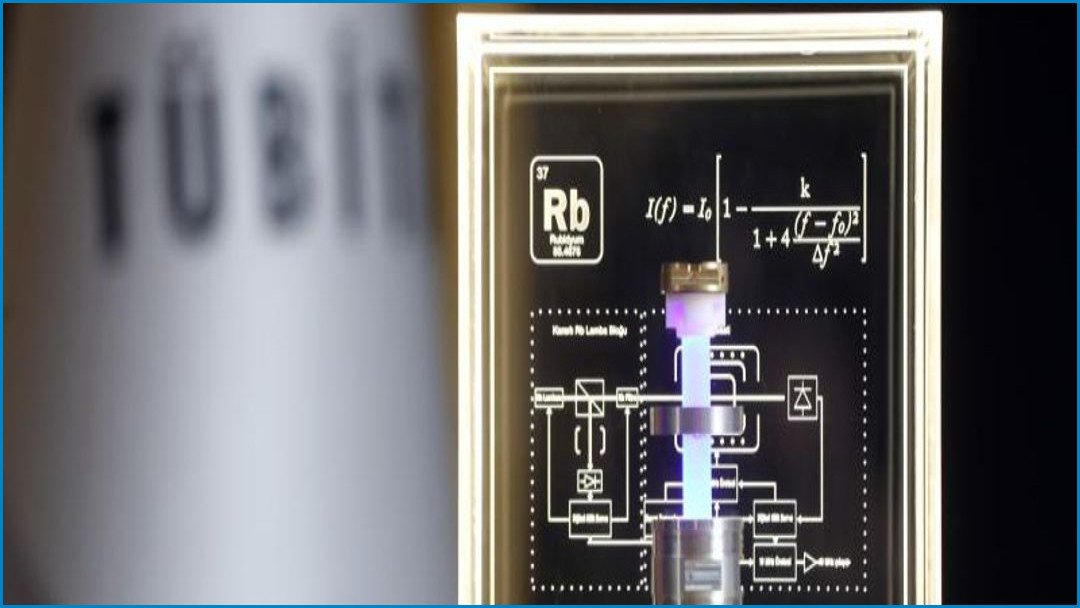
Türkiye has officially launched its first domestically developed rubidium atomic clock into orbit, marking a significant advancement for the nation's space capabilities. Industry and Technology Minister Mehmet Fatih Kacir announced on Thursday that the device, known as the Rubidium Atomic Frequency Standard (RAFS), was carried into space as part of the SpaceX Transporter-17 mission.
Kacir confirmed that the first signals from the spacecraft, which houses the high-precision instrument, have already been successfully received. The clock is a crucial component of the regional positioning and timing system, identified as a strategic objective within the country’s National Space Program. Atomic clocks function by measuring the constant resonance frequency of atoms as they transition between energy levels; in this case, a rubidium atom oscillates 6,834,682,610 times per second.
The project was spearheaded by the Turkish Space Agency, with the Scientific and Technological Research Council of Türkiye’s National Metrology Institute serving as the primary contractor. Additional contributions to the development were provided by the TUBITAK Space Technologies Research Institute and ITUNOVA. The clock is currently being tested on a CubeSat to gather essential data for future satellite systems, navigation applications, and communications infrastructure.
Highlighting the strategic importance of the launch, Kacir noted that this development will reduce foreign dependence for such critical technology. Until now, Türkiye has relied on procurement from abroad for these systems. Once the orbital validation process concludes, Türkiye will join the select group of nations possessing space-proven atomic clock technology. According to the Minister, the engineering and operational experience gained from this mission will further bolster the country's capacity to design and build next-generation satellites.