Allowing global temperatures to temporarily exceed international climate targets will inflict permanent and severe damage on Earth's icy regions, according to a major report backed by the United Nations. The findings challenge the notion that an inevitable period of temperature overshoot can be safely corrected later, warning that key snow and ice systems face irreversible destruction unless global heating is ultimately brought back below 1C.
Compiled by 80 international scientists under the auspices of the International Cryosphere Climate Initiative (ICCI) and the UN Environment Programme (UNEP), the publication directly refutes what authors term a "persistent myth"—that exceeding the Paris climate agreement's 1.5C target to reach 2C or 3C could be manageable or preferable to immediate, aggressive emission reductions. Because global average temperatures have already risen by 1.3C above pre-industrial levels, researchers acknowledge that some degree of target overshoot is virtually unavoidable as nations attempt to cap end-of-century warming. However, they stress that any period spent above 1.5C must be kept as brief as possible, followed by massive carbon removal from the atmosphere to bring long-term warming down to safer levels, ideally below 1C by the year 2150.
The study highlights that much of the resulting degradation to Earth's cryosphere—which encompasses all frozen water, including glaciers, sea ice, snow cover, polar oceans, and permafrost—will persist even if temperatures are subsequently lowered back to 1.5C. Sustained melting of glaciers and polar ice sheets will permanently elevate global sea levels and severely undermine fresh water security across the globe.
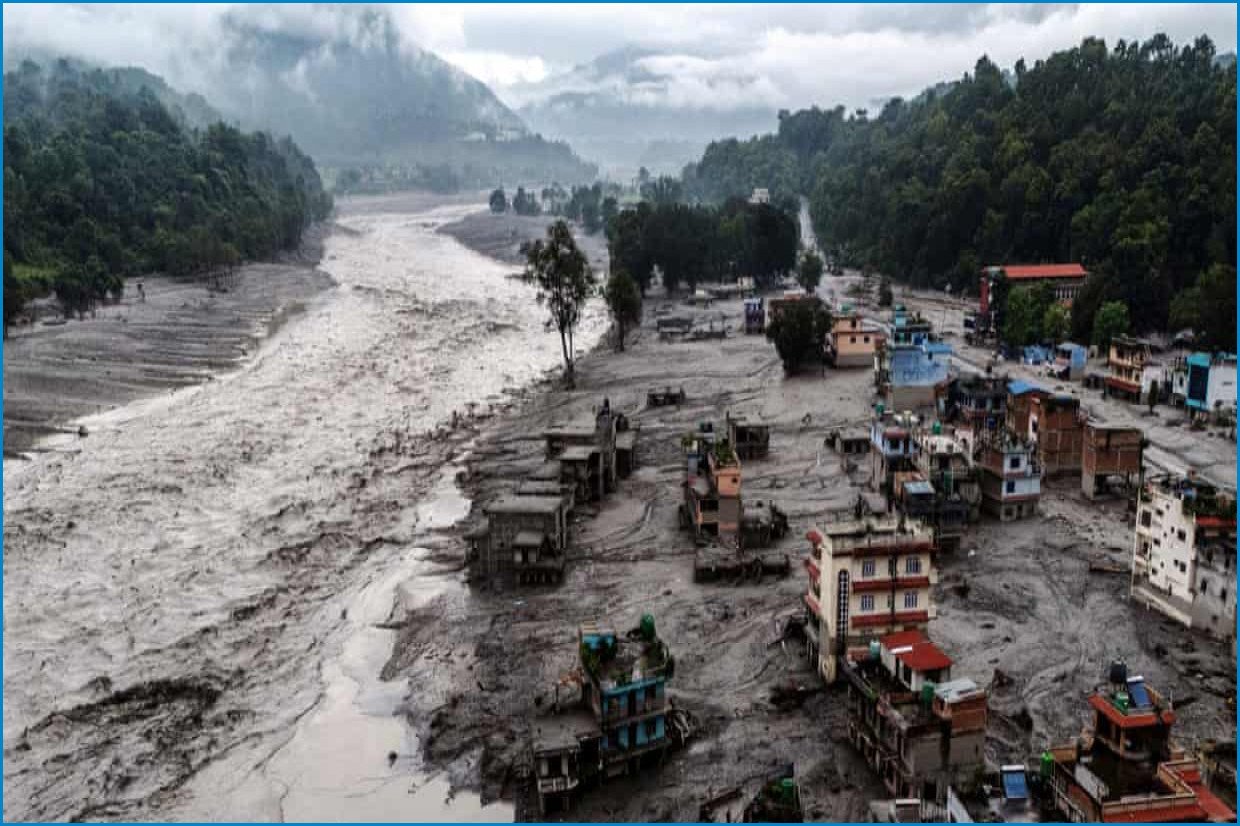
James Kirkham, an ICCI glaciologist and lead author of the report, described the cryosphere as one of the climate system's most sensitive components, pointing out that its destabilization carries worldwide repercussions. He noted that severe consequences are already manifesting, referencing a massive, deadly ice-rock avalanche on the Nepal-China border earlier this year that killed thousands of people and inflicted economic damage equal to 10% of Nepal's gross domestic product in a single disaster. Kirkham also cited local losses in Europe, explaining that Switzerland has lost 20% of its total glacier ice volume over just the past five years, while thousands of mountain glaciers globally are projected to disappear annually throughout the coming decade.
Released as diplomats and world leaders gather in Turkey for the 31st annual COP climate summit, the assessment documents rapid and accelerating decay across polar oceans and high-altitude regions. The melting of the Greenland and Antarctic ice sheets, which is currently taking place roughly six times faster than in the 1990s, threatens hundreds of millions of coastland inhabitants with continuous sea-level rise. Furthermore, the widespread thawing of permafrost risks unleashing massive quantities of trapped greenhouse gases into the atmosphere.
Even under optimistic restoration scenarios where global heating briefly overshoots before returning to 1.5C, the giant ice sheets covering Antarctica and Greenland will continue to shed mass for centuries. Scientists indicated that maintaining long-term stability for polar ice sheets requires limiting warming much closer to 1.0C or even lower. Mountain glaciers, which are still reacting to past industrial emissions, would retain only about 70% of their existing volume over centuries even if long-term temperatures were cooled back down to 0.8C.
Kirkham emphasized the long memory of solid water systems, explaining that while snow and ice respond rapidly to every fraction of a degree in temperature rise, most of these frozen systems will require centuries or millennia to recover after overshooting baseline targets, particularly if critical tipping points are crossed that trigger irreversible decay.
Under current global policy trajectories, which are projected to lead to 2.8C of warming, regional ice loss will be catastrophic. In areas such as the European Alps, the Rocky Mountains, Iceland, and Scandinavia, glacier mass is projected to drop below 10% of current levels. If warming were successfully limited to 1.5C, approximately 20% to 35% of glacier mass in those regions would remain. In the Hindu Kush Himalayas, a crucial water supplier for nearly a quarter of the world's population, existing policy pathways will leave only 41% of the region's glacier mass intact, compared to 83% preservation if global heating is capped at 1.5C.
The findings build on a UNEP evaluation released last month, which concluded that nations must reduce global emissions by 18% by 2030 and 45% by 2035 to retain a viable chance of avoiding a 1.7C rise above pre-industrial baselines, warning that no favorable outcomes exist if temperatures remain above 1.5C.
Evaluating the report's conclusions, Bill Hare, a climate scientist and chief executive of Climate Analytics who was not involved in the research, underscored the permanent scale of the crisis. He stated that ice sheets melting six times faster than three decades ago, mountain glaciers disappearing at record speed, relentlessly rising seas, and acidifying polar oceans are all irreversible on human timescales, carrying severe worldwide consequences that push environmental impacts past the limits of human adaptability. Hare added that government ministers and fossil fuel executives who have previously succeeded in diluting climate policy can look at the assessment to see how their actions have fundamentally damaged the planet.