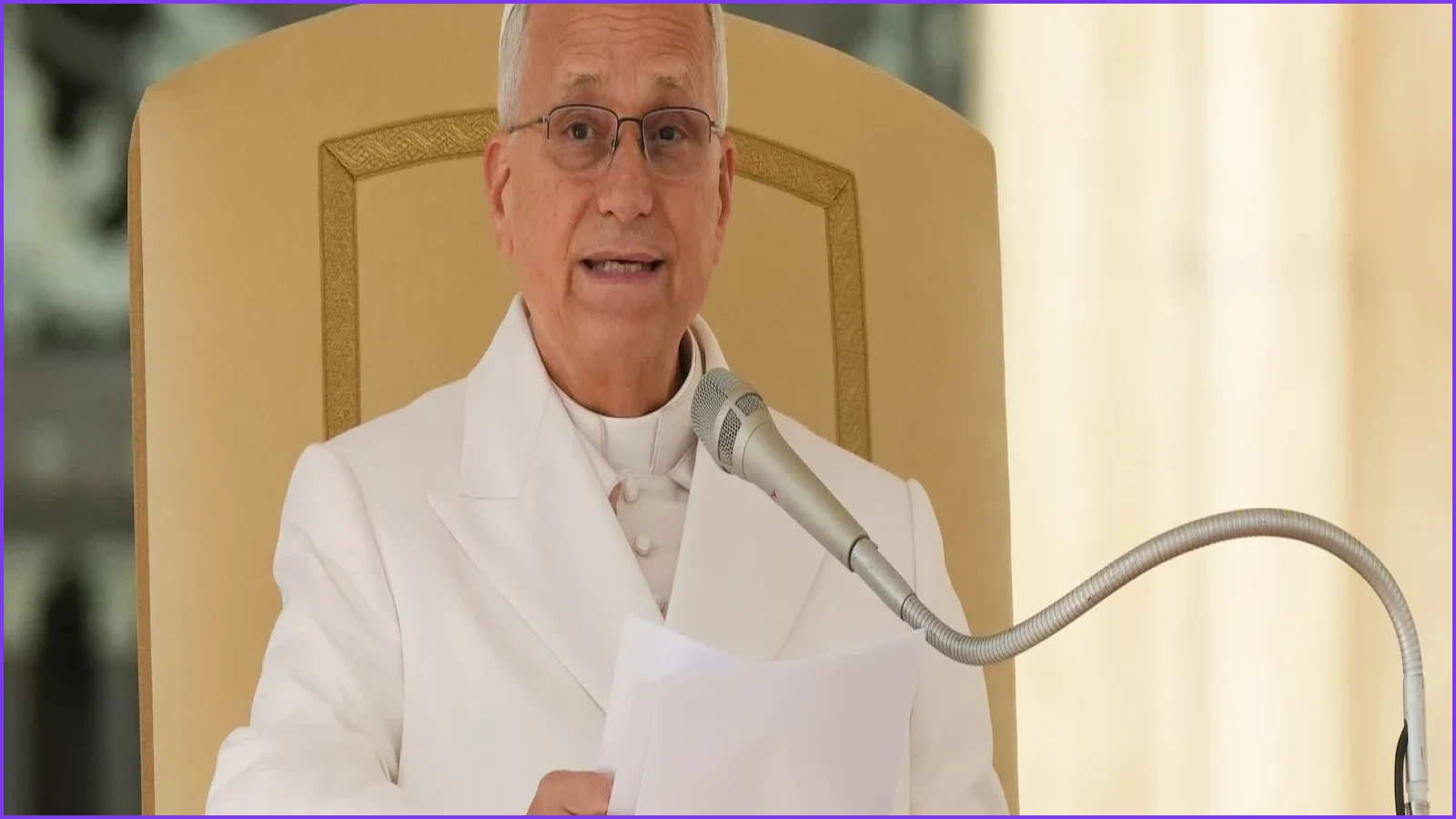
Pope Leo XIV is embarking on a 12-day journey from Nov. 6-17 to Uruguay, Argentina, and Peru, marking the longest and farthest international trip of his pontificate. The tour comes just three weeks after the pontiff underwent surgery on Oct. 13 to remove a cancerous tumor from his right lung, following clear medical authorization to travel. The visit represents a return to the continent where Leo spent two decades as a missionary priest and pastor, navigating a region where Catholic population proportions are shrinking despite holding roughly 40% of the world's 1.4 billion Catholics.
The journey begins in Uruguay, a deeply secular country where the constitutional separation of church and state is reflected in public holidays, with Christmas officially designated as "Family Day" and Holy Week observed as "Tourism Week." Vatican statistics indicate that nearly 77% of Uruguay's 3.5 million citizens are baptized Catholics, yet more than half of the population identifies as religiously unaffiliated—the highest rate in Latin America—and only a minor fraction regularly attends Mass. Leo will open his stay with a formal welcome ceremony at Plaza Independencia in central Montevideo, home to the monument of national independence hero José Gervasio Artigas.
While in Montevideo, the Pope will visit a parish in Casavalle, an impoverished neighborhood on the capital's outskirts heavily impacted by drug trafficking and gang violence, where local church initiatives partner with government agencies on housing and addiction recovery. He will also travel 375 kilometers (230 miles) from the capital to celebrate Mass in Paysandú, chosen for its accessibility to communities north of the Río Negro and its proximity to Colón, Argentina. On Nov. 8, Leo will mark the feast day of the Virgin of the Thirty-three, Uruguay's patron. Historical tradition states that 33 independence patriots possessed the small wooden Guaraní statue when declaring independence from the Brazilian empire in Florida on Aug. 25, 1825. Through these events, Leo seeks to emphasize that Uruguay's secular national history remains intertwined with its Catholic roots.
Moving to Argentina, Leo's visit unfolds against the backdrop of Pope Francis's legacy, who never returned to his homeland during his pontificate. Leo plans to formally honor his predecessor at the Buenos Aires cathedral and visit the federal prison where then-Cardinal Jorge Mario Bergoglio previously ministered to inmates. In the capital, Leo will hold a meeting with libertarian President Javier Milei, who once apologized for calling Francis "the representative of evil on Earth." However, Milei's stringent state spending cuts have created friction with Argentine church leaders, who criticize government reductions in disability support and the prioritization of fiscal austerity over social welfare.
These economic tensions will be highlighted when Leo visits the Don Orione care home in Claypole, south of Buenos Aires, a Catholic institution supporting over 400 people with disabilities. The facility faces severe operational difficulties stemming from state budget cuts, delayed government payments, inflation, and outdated funding rates. The Pope will also meet with corporate leaders, trade unions, workers, and social reps at the Argentine Catholic University, where labor representatives plan to detail issues surrounding rising unemployment, poverty, and eroded purchasing power. Official data shows Argentina's poverty rate reached 32.3% in the first half of 2026, affecting approximately 15 million people. Policy differences may also emerge regarding artificial intelligence; while Milei, an ally of Donald Trump, seeks deregulated AI investment, Leo has repeatedly warned of risks to humanity and advocated for strict global regulatory safeguards.
Leo will celebrate his primary Mass in Argentina at the Monumento de los Españoles in Buenos Aires, the site where St. John Paul II led prayers for peace on June 12, 1982, during the Falklands war with Britain. St. John Paul II, who also visited in 1987, was the only previous reigning pontiff to travel to Argentina. Pew Research Center data shows Argentina's Catholic population declined from 71% when Francis was elected to 58% in 2024. Despite this shift, a record of over 2.8 million pilgrims recently marched through rain to the Basilica de Nuestra Señora de Luján, the nation's patron sanctuary.
The culmination of the journey will take place in Peru, where Leo previously served for 20 years as a missionary priest and bishop in the diocese of Chiclayo, located in northern Peru near the Pacific Coast. The Pope will conduct Mass across his former pastoral stations, including the mountain village of Santa Cruz de Succhabamba, reflecting on how his time in the country shaped his ministry. In Lima, he will deliver a keynote address from the square in front of the cathedral focused on the future challenges and hopes of the Peruvian nation.
Peru's 34 million citizens currently face severe economic and social strain, including El Niño climate disruptions, rising crime rates, and widespread inequality, with 2025 statistics showing 25.7% of the population living in monetary poverty. Conservative President Keiko Fujimori, who assumed office in July promising strict law enforcement against extortion and homicides, also faces challenges from illegal gold mining and coca cultivation affecting Indigenous lands. In Cusco, the historic Inca capital, Leo will celebrate Mass in the central plaza where Indigenous hero Túpac Amaru II was executed in 1781 following an anti-Spanish uprising. Although Pew data shows Peru's Catholic population fell from 76% in 2013-2014 to roughly 67%, massive public turnouts are expected throughout his tour.