Until 2025, students from Brazil, Nigeria, Thailand, Turkey, Turkmenistan, and Zambia eagerly accepted full scholarships to attend Indiana University in Bloomington. The town, located in the midwestern United States, is known for its passionate support of the Hoosiers basketball and football teams and hosts the famous Little 500 bicycle race, which attracts more than 25,000 people. For prospective students, the school’s well-regarded academic programs were a major draw. Christoph Irmscher, who directed the Wells Scholars Program for 13 years, noted that there was a general sense that attending the university marked the beginning of a great new phase in people’s lives.
The atmosphere shifted in January 2025 when Donald Trump began his second term and launched a significant immigration crackdown. That year, Irmscher offered the Wells scholarship to a Black man from South Africa and a woman from Central America, but both declined the award. Irmscher, who grew up in Germany and arrived in the United States in 1993 on a Fulbright Program scholarship, explained that people are now cautious, weighing the benefits against the disadvantages and the risks involved in coming to the US. This hesitation has become increasingly common, leading to a sharp decline in international student enrollment over the last two years.
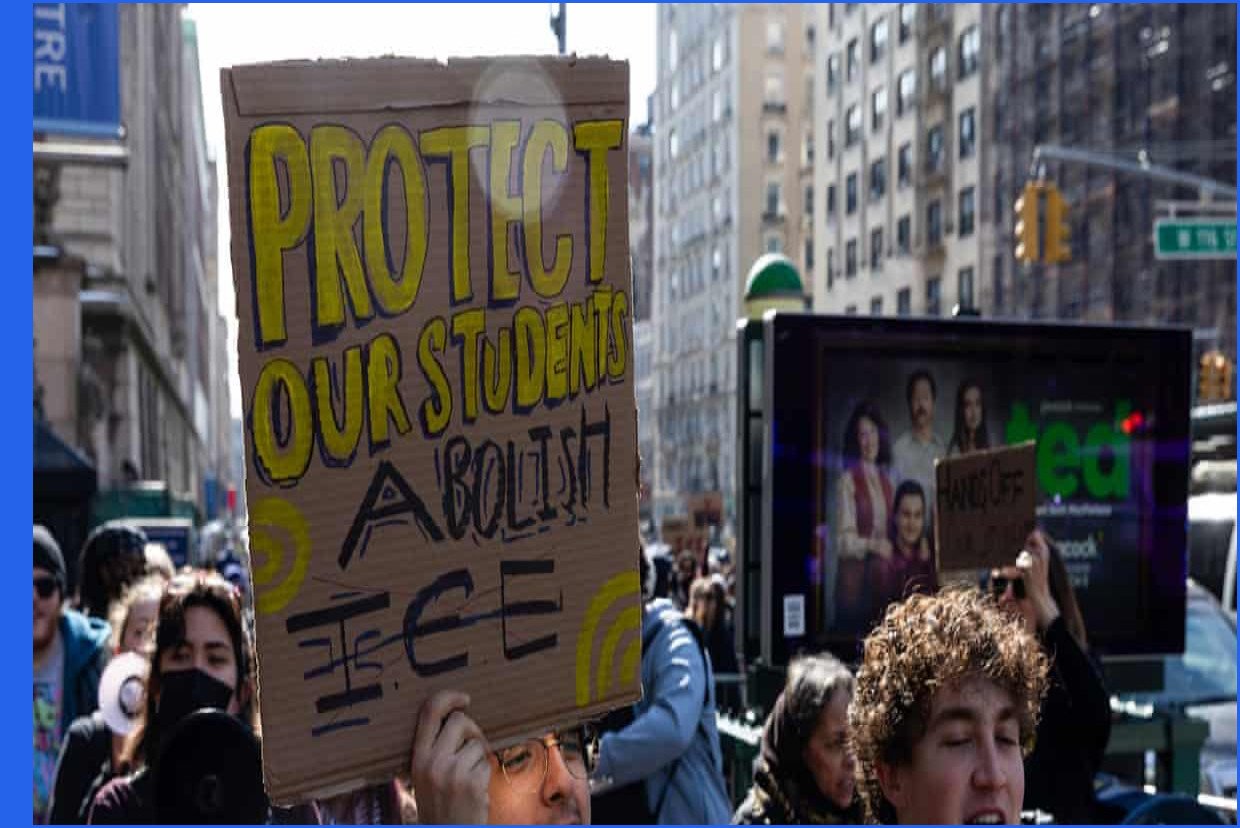
According to the Institute of International Education, there was a 15% decrease in foreign students studying for the first time at a US college or university in fall 2026 compared to the previous year, following an 18% dip in fall 2025. During the 2023 to 2024 school year, more than 1.1 million international students had come to the United States, marking a record high. However, interest has waned since the administration deployed Immigration and Customs Enforcement (ICE) agents across the country for raids and deportations. Images of masked officers in US cities have unsettled people both domestically and abroad.
Indiana University, Bloomington, saw its international student enrollment fall 15%, from 4,428 in fall 2025 to 3,768 this year. Additionally, the Republican-led state passed legislation requiring schools to conduct background checks on students from China, Iran, North Korea, and Russia. Irmscher, who stepped down from his position last summer, labeled the requirement “totally unnecessary” because the federal government already performs such checks on visa applicants. He added that social media clips of ICE agents have an enormous ripple effect on potential students who feel they might be targeted.
At Cleveland State University, international enrollment dropped 46%, falling from 1,542 in fall 2025 to 828 this fall. Provost Nigamanth Sridhar attributed this largely to difficulties in obtaining visas. In May 2025, the Trump administration ordered US embassies to stop scheduling visa interviews for foreign students while preparing to implement social media screening. Trump stated at the time that foreign students were taking spots from Americans at schools like Harvard. Sridhar estimated that the enrollment drop cost Cleveland State between $2 million and $4 million, noting that international students typically pay higher tuition than domestic students.
Beyond the financial impact, university leaders emphasize the loss of intellectual and cultural diversity. Sridhar, who came to the US from India in 1999, noted that international students bring a richness of viewpoints to the classroom. Irmscher recalled a student from Myanmar who organized a fundraiser with Burmese food after a 2025 earthquake, providing a perspective often inaccessible to students in landlocked America. The administration also attempted to restrict the path to immigration for students by introducing a rule in July 2026 that prohibited visa recipients from staying in the country for more than four years without federal approval. However, a federal judge recently blocked this rule, stating that the Department of Homeland Security was seeking to discourage the very educational opportunities that Congress intended to permit.
Veena Dubal, general counsel for the American Association of University Professors, argued that the system cannot function without these students. She noted that many international students, like her own parents who were biochemists and physicians, contribute immensely to their communities. While the Department of Homeland Security denied that its actions have driven away students, calling reports of the decline “misleading” and “not backed up by any real evidence,” the agency did not provide evidence of the “rampant fraud” it claims to be addressing. In October, the administration announced it would investigate nine universities for alleged visa fraud. Vice President JD Vance claimed that universities were using visas to undercut the wages of American graduate students. Despite these pressures, Dubal remains optimistic that higher education can overcome these challenges, suggesting that lawmakers should focus on lowering the cost of education to improve access for native-born Americans rather than pushing out immigrants.