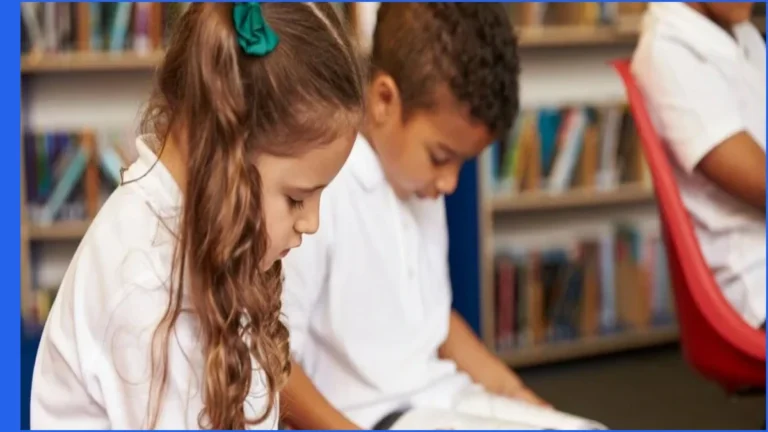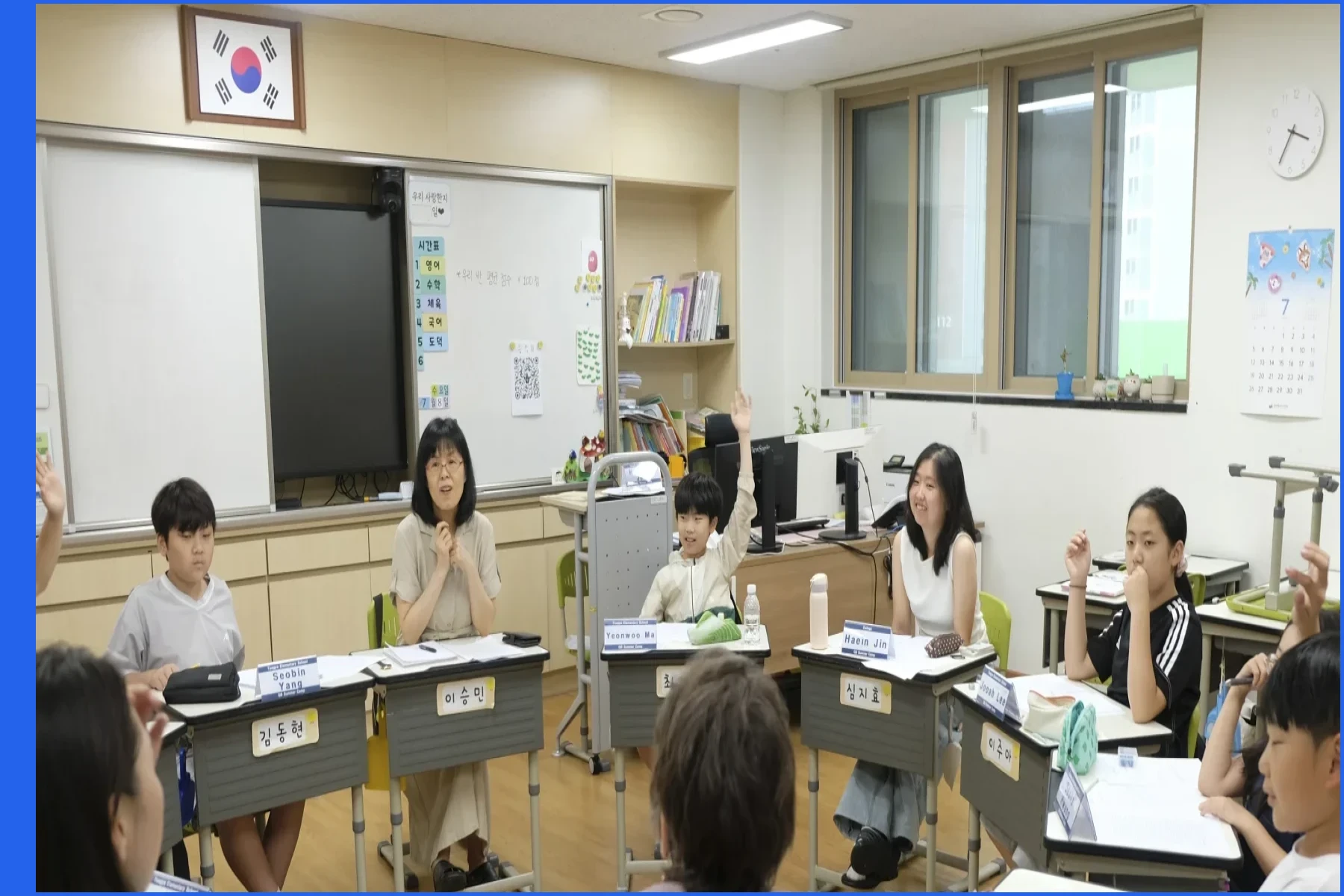
In the city of Chuncheon, located roughly 50 miles east of Seoul, a local public elementary school is challenging its students to move beyond rote memorization. At Toegye elementary school, students gather to discuss literature, such as Mary Shelley's Frankenstein. During a recent seminar, a teacher asked the students whether the Frankenstein monster could be considered human.
Student Ma Yeonwoo ventured that the creature might be called a human being with no soul. The discussion then shifted to whether artificial intelligence is human. Ma Yeonwoo responded that it is not, arguing that while AI is intelligent, it lacks the creativity inherent in human beings because it was created by humans.
This classroom approach is part of the "Great Books" educational model, a system pioneered by St. John's College in Annapolis, Maryland. Under this framework, teachers do not lecture; they only guide discussions.
There are no majors or elective courses. Students do not seek answers from outside sources such as the internet, relying instead on their readings, their own reasoning, and class discussions with their peers.
For students like Ma Yeonwoo, who says he enjoys debating with his classmates, this model is preferable. He notes that if only the teacher talks, the class gets one idea, but debating together allows them to gather many ideas.
The shift toward this model is a direct response to several concerning trends in South Korean education. Recent international assessments, such as the PISA tests, have indicated a post-COVID drop in reading skills among South Korean students, after decades in which they outperformed their American counterparts.
Furthermore, the rapid adoption of AI in education is significant; according to Organization for Economic Cooperation and Development (OECD) figures, 51% of South Korean students say they use AI chatbots to study at least once a week.
Students also face intense competition to pass college entrance exams, which piles pressure on them down to the pre-K level and prompts many families to send their children to cram schools or foreign schools to escape the system.
Lee Yonghwa, a professor of English language and literature at Incheon National University, co-founded South Korea's first "Great Books" program in 2019. He observes that the current educational system leaves students with no time to read and think because they are too busy memorizing facts to pass tests.
Lee laments that Korean students are even losing their old capacity to memorize facts because they collect them mainly from AI. He adds that if they cannot reason and think independently, they cannot judge the quality of the results that AI generates for them.
Chuncheon Mayor Yook Dong-han, who sought to introduce a new educational philosophy to the city, emphasized that he felt the limitations of the traditional system personally. Chuncheon, which draws visitors from Seoul to enjoy its mountains, lakes, rivers, and the local dish dakgalbi, established an academic partnership with St. John's College last year to promote the "Great Books" model.
Currently, the program has expanded to include 120 college students, some 770 younger students, and 40 teachers in training, according to Lee Yonghwa. Although the program is still in its infancy, Mayor Yook describes it as a "small but revolutionary achievement" that has generated interest among participating students exceeding his expectations.
Participating students explore a range of classic and contemporary works, including texts by Aristotle, Shakespeare, Euclid, and Korean authors such as Nobel laureate Han Kang. In one Chuncheon high school, students read Martin Luther King Jr.'s 1963 Letter from Birmingham Jail. They discussed King's ideas about what kind of laws are just and unjust, and which laws citizens should obey or disobey.
Lee Yonghwa says he was impressed that students connected King's letter to their own country, such as in 2024, when citizens and lawmakers defeated former President Yoon Suk Yeol's attempt to put South Korea under martial law.
This fits the purpose of the "Great Books" model, in which, as St. John's College President J. Walter Sterling wrote last year, each seminar table becomes a "miniature republic" where ideas clash but people cooperate, helping to "stitch the fabric of our democracy" before it unravels.
The limitations of their educational system motivates many South Koreans to look for alternatives, from education overseas, to educational experiments at home.