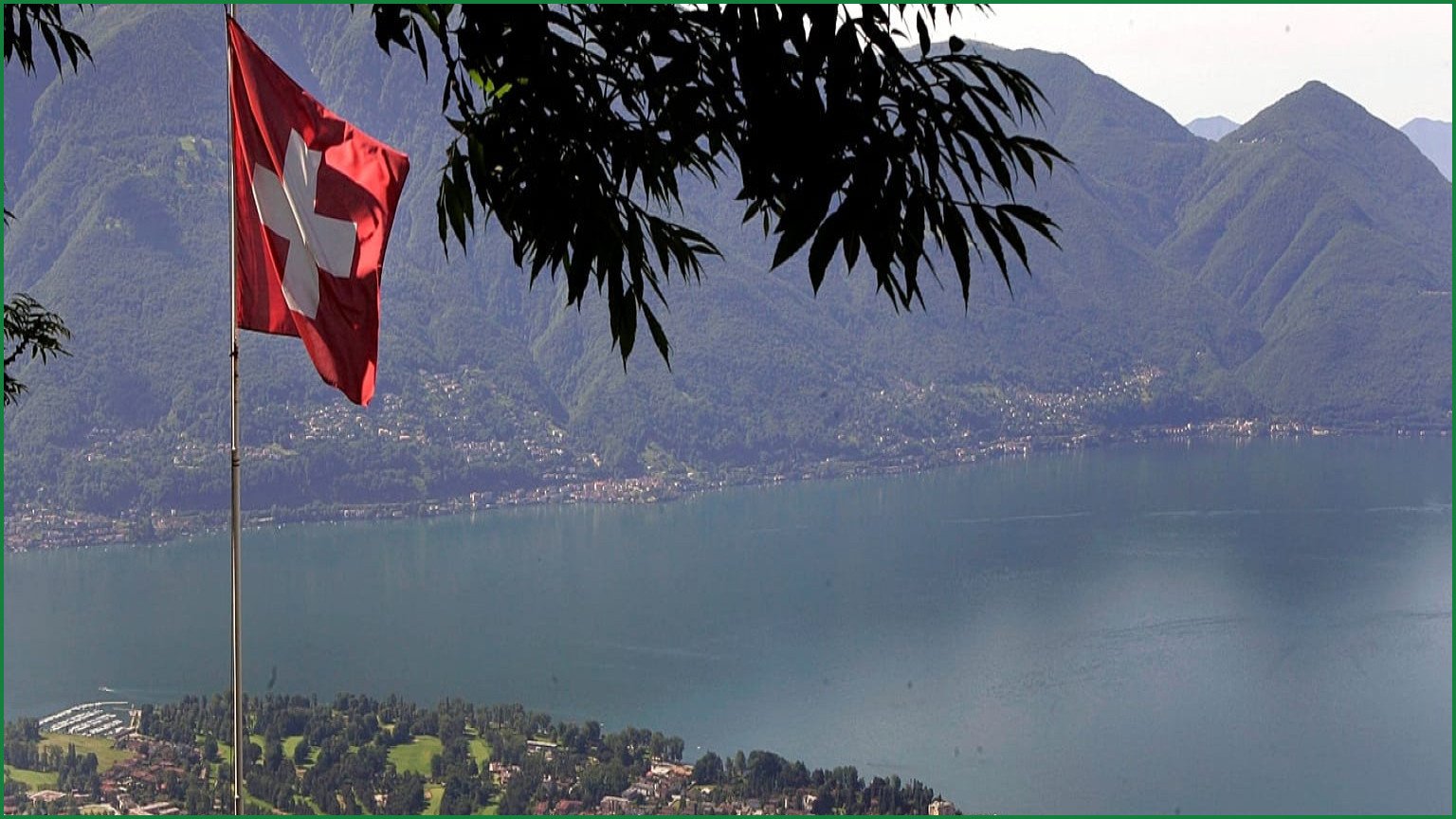
Switzerland has initiated an emergency intervention by opening the taps on Lake Lugano to provide critical support to Lake Maggiore. This decision, which involves increasing water flows from the Ceresio towards Ponte Tresa, serves as a stark indicator of the precarious water situation currently unfolding across northern Italy. By temporarily raising the discharge from 3 to 8 cubic metres per second, authorities aim to bolster the levels of Lake Maggiore, primarily to guarantee essential water supplies for the rice fields located on the surrounding plains.
The measure was finalized during an urgent meeting of the Italian-Swiss Bilateral Consultation Body, which oversees the regulation of Lake Maggiore’s levels and the management of water resources within its basin. Convened by the Italian Ministry of the Environment and informed by data from the Po River Basin Authority, the meeting saw the Italian delegation—comprising representatives from the ministry and the Lombardy and Piedmont regional authorities—formally accept the Swiss proposal. While the intervention by Canton Ticino is temporary and subject to ongoing reassessment, it highlights a fundamental, underlying problem: the available water supply is no longer sufficient to meet the simultaneous demands of agriculture, domestic supply networks, rivers, lakes, and ecosystems.
This "short blanket" scenario forces authorities to make difficult strategic choices, as increasing the provision for one sector inevitably reduces what remains for others. The situation at Lake Maggiore is particularly illustrative of this tension. As early as July, the Po River Basin Authority warned that the lake was nearing its minimum operating level, placing immense strain on the agricultural sector in Piedmont. The crisis is not limited to irrigation; in various parts of Italy, the scarcity has begun to jeopardize drinking water supplies for households.
Although Lake Maggiore is a transboundary basin shared by Italy and Switzerland, its regulation is not managed through a strictly joint authority. The lake level is controlled by the Miorina dam at Sesto Calende on Italian soil, with day-to-day operations handled by the Ticino Consortium. Nevertheless, Italy and Switzerland maintain close coordination through the bilateral body because fluctuations in the lake's level have significant cross-border consequences. The current support mechanism is complex, as Lake Lugano is linked to Lake Maggiore via the River Tresa, creating an interdependent system where water resource management requires constant international cooperation.
The impact of the drought is particularly severe in Piedmont. By mid-July, regional authorities reported that approximately 100 municipalities had issued ordinances to restrict water use, particularly in mountain areas and isolated hamlets. In roughly 50 municipalities, home to a combined population of 25,000, local authorities have resorted to using water tankers to replenish reservoirs serving the public supply networks. Data from Arpa Piemonte confirms the severity of the situation, showing surface water resources at 37 per cent below the seasonal average. During the first ten days of July, many gauging stations reported deficits exceeding 40 per cent, and at Isola Sant'Antonio, the Po River recorded an average flow of just 62 cubic metres per second—a 75 per cent drop from its historical reference value.
Extreme weather has further aggravated these conditions. June 2026 in Piedmont saw temperatures approximately 3.5 °C above the seasonal average, leading to increased evapotranspiration and rapid water loss from soil and vegetation. The crisis is widespread, as the permanent observatory on water use in the Po River District raised its water stress assessment from "medium" to "high" at the end of July. Flows in the Po have consistently fallen below low-water thresholds, with "extreme" conditions documented at Cremona. By July 21, the Basin Authority reported that 50 municipalities in Lombardy and 32 in the Marche region were struggling, with many relying on tankers, while critical situations were also noted in Veneto.
The environmental consequences extend to the Po Delta, where reduced river flows increase the risk of saltwater intrusion. As freshwater levels decline, saltwater pushes further inland, threatening ecosystems, farming activities, and critical water supply infrastructure. This reality underscores that the emergency is not merely about the total volume of water, but about the equitable distribution of a shrinking resource. With agriculture requiring significant irrigation during the hottest months, the rice fields of Piedmont and Lombardy remain among the most exposed sectors, facing a clear risk of crop losses.
Addressing these challenges requires increasingly sophisticated agreements between regions and nations. The release from Lake Lugano is a concrete example of using a resource from one basin to support another in distress. However, the crisis is not confined to the North; vulnerability remains high across Italy, particularly in Mediterranean areas and regions dependent on reservoirs. According to ISPRA, which monitors water stress, a "high" scenario exists when preventive measures are insufficient to avoid system damage. Experts emphasize that relying on rainfall is no longer a viable strategy. Future resilience will depend on building more reservoirs, improving network efficiency, reducing losses, reusing treated wastewater, adopting less wasteful irrigation systems, and implementing long-term planning that accounts for the increasing variability of water availability.