A quarter of a century after the September 11 attacks, Islamist extremist violence in Africa’s Sahel region is projected to reach historic highs in 2026 following major offensives by groups affiliated with al-Qaida and Islamic State. New statistics compiled by the conflict monitor Armed Conflict Location and Event Data (Acled) highlight the steady expansion of these organizations across parts of Africa, presenting a stark contrast to their diminished influence in other parts of the world.
The data compiled by Acled focuses on the core areas of Islamic militancy in Mali, Burkina Faso, and Niger, which form a vast and highly contested zone in the strategic Sahel region. According to the non-profit organization, violent incidents involving jihadist groups in these three nations have escalated from just 63 in 2016 to 2,845 in 2025. In 2026, 2,145 events have already been recorded, putting the region on track to surpass an annual total of 3,000 violent incidents if current trends persist.
This surge in the Sahel occurs even as global deaths from terrorism have dropped to their lowest levels since 2008. The 2026 report of the Global Peace Index noted earlier this year that terrorism has become more geographically concentrated, with the Sahel continuing to record some of the highest death tolls globally. The United Nations recorded more than 9,000 deaths from security incidents across Burkina Faso, Mali, and Niger in 2025.
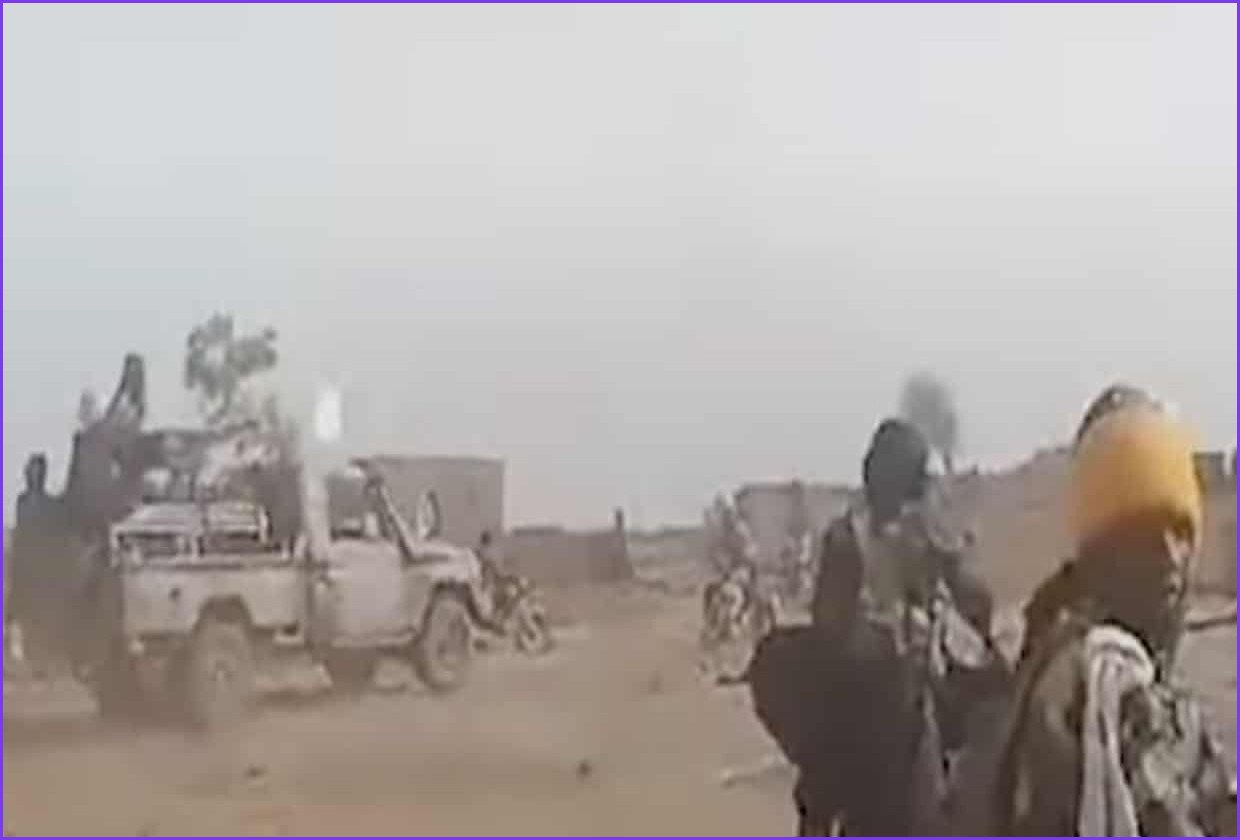
In Mali, the security situation deteriorated significantly in April during a joint offensive launched by the al-Qaida-linked Jama’at Nusrat ul-Islam wa al-Muslimin (JNIM) and the Tuareg-dominated rebel group Azawad Liberation Front (FLA). The coalition targeted government forces, strategic towns, and their Russian auxiliaries using car bombs, drones, ambushes, and raids, inflicting heavy casualties. During the fighting, Mali’s defense minister was killed in a suicide attack on his residence in the garrison town of Kati, located nine miles northwest of the capital, Bamako, while the head of military intelligence was also killed. The offensive also struck Mali's international airport, and rebels seized the strategic city of Kidal—a former FLA stronghold—after government soldiers fled and Russian mercenaries surrendered, reversing a symbolic victory achieved by Mali's ruling junta three years ago.
Since that offensive, JNIM has continued to expand its territorial control in Mali, killing additional soldiers and Russian mercenaries in recent weeks while broadening its operations into neighboring countries. Much of the ongoing violence involves clashes between rival militant groups, alongside multiple killings carried out by government armed forces and Russian mercenaries.
In neighboring Burkina Faso, JNIM has claimed more than 130 attacks in 2026, pushing closer to the capital, Ouagadougou. In Niger, the group claimed at least 17 attacks but remained significantly less active than its rival, Islamic State in the Greater Sahara (ISGS), according to a recent United Nations report based on intelligence supplied by member states.
Security experts note that JNIM has largely distanced itself from al-Qaida’s historical focus on attacking the United States and Western allies. "In the Sahel, Islamic State and al-Qaida now command big areas but these are very localised groups. Not a single attack in Europe or the US has been planned in the Sahel," said Ulf Laessing, a senior analyst at the Konrad Adenauer foundation in Berlin. Laessing observed that while Africa barely featured in al-Qaida's strategic planning 25 years ago, when the focus was entirely on Afghanistan and Iraq, the continent has now become its main area of operations.
Other prominent militant groups on the continent include al-Shabaab, which has controlled large rural areas of Somalia for many years. Additionally, loosely linked Islamic State groups remain active in the Democratic Republic of Congo, Mozambique, Chad, and Nigeria, where they were targeted by US airstrikes last year. While al-Qaida’s propaganda has welcomed this African expansion, analysts point out that territory in Mali and Somalia has major limitations as a base for launching long-range international terrorist campaigns.
This localized focus contrasts sharply with the peak of al-Qaida's global influence after 9/11, when its affiliates threatened governments across the Middle East and inspired lethal attacks in Europe. Currently, the UN report describes al-Qaida's senior leadership as "marginalised" and notes that its capability and intent to conduct external operations remain "unclear." There has been no formal announcement of a successor to Ayman al-Zawahiri, the veteran Egyptian militant killed by a US strike in Kabul in 2022. Instead, the de facto leader is believed to be 66-year-old Saif al-Adel, who is thought to have resided in Iran since 2002 and has not made any public statements. Other leaders are believed by Western intelligence services to be based in Afghanistan, where the group has rebuilt a limited infrastructure.
The most active al-Qaida affiliate outside of Africa is Yemen-based Al-Qaida in the Arabian Peninsula (AQAP), which the UN report called "the vanguard of the global al-Qaida movement." AQAP remains one of the few affiliates committed to al-Qaida's original campaign against the US. In May, AQAP’s media channels released a video urging Muslims in Europe and the US to carry out local attacks. While AQAP maintains an estimated 2,000 fighters in the mountains between Abyan and Shabwa, its activity has declined by approximately 70 percent, falling from 63 events in the first seven months of 2025 to 19 during the same period in 2026, according to Acled data.
Analysts have contrasted the tens of thousands of militants currently mobilized by groups like JNIM and al-Shabaab with the far more limited manpower available to al-Qaida prior to the 9/11 attacks, highlighting the shifting capabilities and localized intentions of the modern movement.