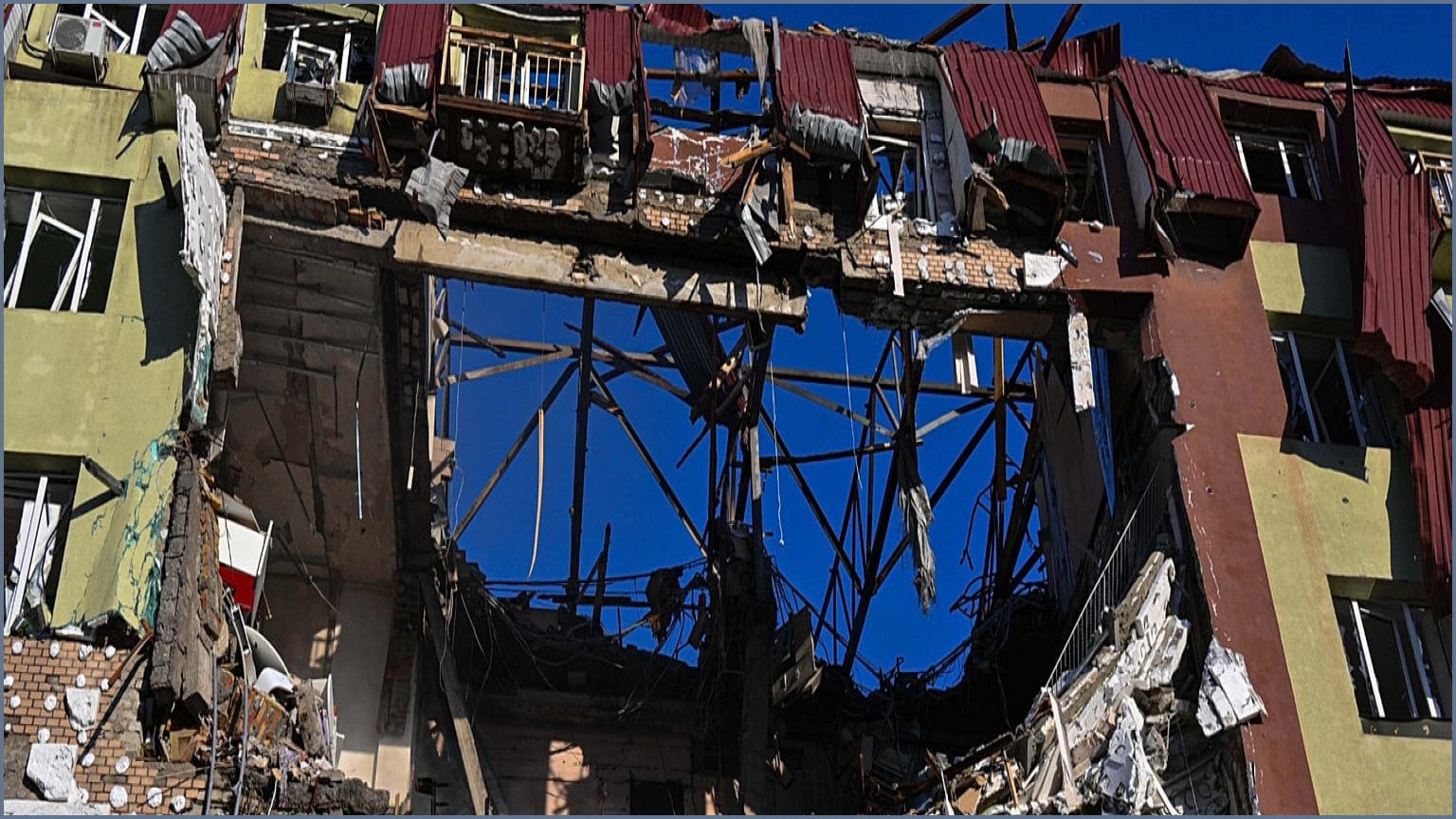
Russia's overnight large-scale aerial assault on Ukraine on Thursday highlighted Moscow's growing reliance on the "Banderol," a low-cost loitering munition engineered to deplete and overwhelm Ukrainian air defenses. According to Ukraine's Air Force, these weapons were intercepted during a wider barrage that also featured conventional cruise missiles and Shahed-type drones.
First documented on the battlefield in the spring of 2025, the Banderol—officially designated as the S8000—has quickly evolved into a frequent tool in Russia's offensive arsenal. The weapon occupies a unique niche, combining the characteristics of a cruise missile with those of a jet-powered attack drone. While it is significantly cheaper to build and carries a lighter payload than standard cruise missiles, it still demands the deployment of sophisticated and expensive Ukrainian air-defense systems to bring it down.
This economic asymmetry presents a severe challenge for Kyiv. Russia can manufacture and deploy Banderols at a fraction of the cost of traditional missiles, forcing Ukrainian forces to exhaust their limited and highly expensive interceptor stockpiles. Furthermore, the Banderol is launched without the use of strategic bombers, meaning Ukrainian defenders do not receive the early warnings typically provided by the takeoff of heavy Russian aircraft.
Manufactured by the Russian UAV developer Kronshtadt JSC, the loitering munition is primarily launched from Orion reconnaissance drones built at the same facility, though it has also been adapted for use on Mi-28 helicopters. The weapon has a maximum speed exceeding 500 km/h and an operational range of up to 500 km. Because of this relatively short range, Russian forces deploy them from occupied Crimea to target Ukraine’s southern Odesa region. Vladyslav Vlasiuk, Ukraine's Presidential envoy for Sanctions Policy, noted that these specific missiles are now used in approximately 80% of Russian strikes targeting Odesa's critical infrastructure.
In terms of destructive capability, the Banderol is equipped with a 114kg fragmentation warhead containing up to 50kg of explosives. This payload is far smaller than those of Russia's heavy Kh-101 and Iskander-K cruise missiles, which carry warheads weighing between 400kg and 500kg. However, the weapon’s strategic value is defined by defense economics. While a standard Russian cruise missile costs around €685,000 to manufacture, a Banderol is estimated to cost between €42,500 and €127,500, depending on its specific components.
This price range places the Banderol on par with the Iranian-designed Shahed drone, which has been a staple of Russian aerial campaigns since 2022. Yet, the Banderol presents a much more complex intercept challenge. While Shahed drones are increasingly neutralized by low-cost interceptor drones, the faster Banderol requires sophisticated short- and medium-range air defense systems, man-portable air-defense systems (MANPADS), or fighter jets. Consequently, Russia can utilize Banderols not just for direct strikes, but as decoy-like assets designed to stretch and distract the air defense systems needed to counter heavier missiles.
Guided by satellite navigation alongside an autonomous backup system, the Banderol can be disrupted by electronic warfare. Despite Western sanctions and export controls aimed at crippling Russia's military supply chains, the weapon's construction underscores Moscow's ongoing access to foreign technology. According to Ukraine's military intelligence agency (HUR), the Banderol relies on a Chinese-manufactured jet engine, a Japanese battery, and electronic components that are predominantly made in the United States.