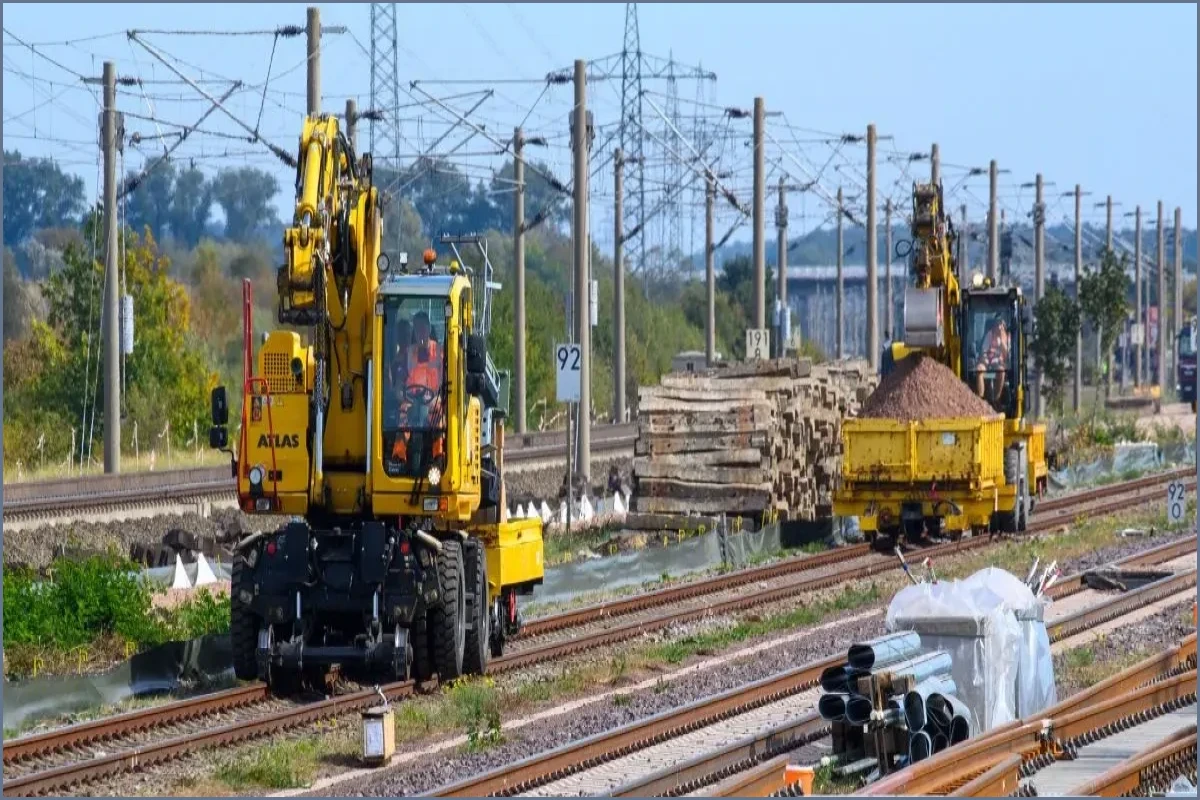
Deutsche Bahn has launched a major renovation project on the heavily used Berlin-Hanover rail corridor, initiating a period of significant travel disruptions, timetable changes, and longer journeys that will last until December 2027. The extensive modernization effort affects not only passengers traveling between Berlin and Hanover but also those commuting to North Rhine-Westphalia, western Germany, and international destinations. To accelerate the timeline, Deutsche Bahn plans to conduct construction work continuously during the day, at night, and over weekends. While preliminary work began in September, the main construction phase is now underway, prompting the rail operator to advise passengers to verify their travel details using local transit operators or the DB Navigator app before every trip.
Long-distance travelers face substantial delays. Intercity Express (ICE) and Intercity (IC) trains that typically travel the direct route are being rerouted through Braunschweig or Magdeburg, which adds approximately 60 to 80 minutes to total travel times. This detour also slows down direct services between North Rhine-Westphalia and Berlin. Furthermore, the Amsterdam-to-Berlin service, which operates four times daily, is being diverted via Hamburg, increasing the journey by about 70 minutes.
Travel patterns between Frankfurt and Berlin are also disrupted. Deutsche Bahn advises passengers on this route to check connections carefully before departure, as some services are being rerouted through Fulda and Erfurt, while other trains will terminate early at Braunschweig instead of continuing to the German capital.
Regional passengers are not exempt from the construction impacts, though many regional lines will remain operational. On several sections, replacement bus services will step in. For instance, weekend passengers on the RE50 line (connecting Hildesheim, Braunschweig, and Wolfsburg) and the RE30 line (connecting Hanover and Wolfsburg) must transition to replacement buses between Fallersleben and Wolfsburg, while trains will continue running on the unaffected portions of those routes.
Specific stations will experience more severe service cuts. Wolfsburg will completely lose its long-distance rail connections during the initial phase of the project, which is scheduled to last at least until the end of 2026. Travelers heading to or from Wolfsburg will need to rely on regional trains or alternative transit links. Similarly, Stendal is temporarily losing its IC and ICE stops, requiring passengers to transfer at other stations. Near Hanover, S-Bahn passengers must prepare for the complete suspension of the S4 line between Hanover and Hildesheim throughout the entire 2027 timetable year.
For those sections where replacement buses are deployed, Deutsche Bahn has promised high-quality vehicles. The company stated that these buses will be fully accessible and equipped with modern amenities, including Wi-Fi, USB charging ports, and integrated onboard passenger information systems. However, residents living near the construction zones, particularly in the Wolfsburg area, may experience elevated noise levels due to around-the-clock work.
This massive overhaul of the Berlin-Hanover line is part of Germany's broader "general renovation" initiative, a nationwide program designed to upgrade dozens of heavily trafficked rail corridors. The project involves renewing hundreds of kilometers of track, upgrading overhead wires, switches, signaling systems, and noise barriers. Additionally, approximately 25 stations along the corridor will undergo modernization, receiving improvements such as enhanced lighting, clearer signage, and step-free platform access.
Specific engineering tasks include replacing deteriorated concrete track sections in the vicinity of Stendal and continuing electrification work on the parallel Lehrter Stammbahn route. This project follows the completion of other high-profile rail renovations, including the "Riedbahn" line near Frankfurt and the Berlin-Hamburg corridor. Although passengers face a long period of frustration, Deutsche Bahn emphasizes that the ultimate goal of these upgrades is to deliver a significantly more reliable, punctual, and high-capacity rail network for the future.
READ ALSO: The app that wants to help you avoid Deutsche Bahn delays
Across the corridor, hundreds of kilometres of track are being renewed, along with overhead wires, switches, signalling systems and noise barriers. Around 25 stations will be modernised, with improvements including better lighting, clearer signage and step-free access to platforms and trains.