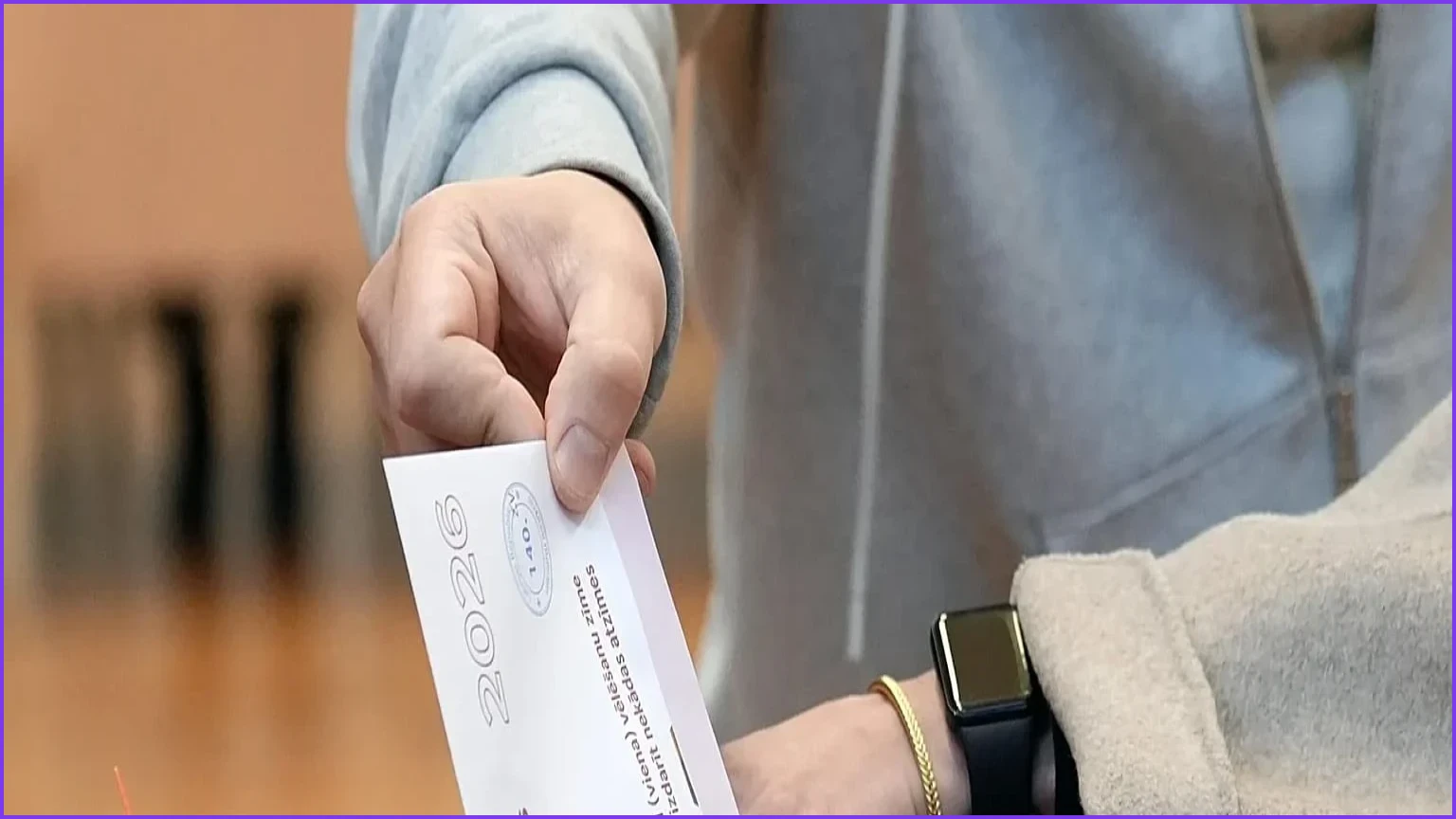
Latvia's centre-right United List party, led by Prime Minister Andris Kulbergs, has secured a historic victory in the country's parliamentary election, reinforcing its pro-European and pro-Ukrainian trajectory.
With more than 99.9 percent of the votes counted, preliminary results show the United List leading with 35.4 percent of the vote, according to state television. This translates to 42 seats in the 100-seat parliament, marking a record-breaking achievement for a single party in the post-independence history of the Baltic nation.
Kulbergs, who assumed the office of prime minister in May, stated that the outcome exceeded expectations and aligned with exit poll projections. He remarked that the results show people truly want change, which he defined as economic growth and a secure future for Latvia's children.
Despite the prime minister's strong performance, his current governing coalition will not survive in its present form. One coalition partner is projected to lose its parliamentary representation entirely, while other members performed worse than anticipated. Meanwhile, populist parties made significant gains, bolstered by support from Latvia's Russian-speaking minority, after a campaign heavily focused on anxieties regarding neighboring Russia and the rising cost of living.
Security remains a dominant issue in Latvian politics more than four years after Russia's invasion of Ukraine. Latvia, an EU and NATO member since 2004, views Russia as its primary security threat and has significantly boosted its defense budget in response. Kulbergs emphasized this geopolitical reality, noting that as Europe's external border, Latvia must maintain a strong economy and a robust border region as its primary task. Other domestic debates during the campaign centered on low wages, a struggling healthcare system, high living costs, and long-term population decline.
Most political groups set to enter parliament advocate for high military spending and continued support for Kyiv. The notable exception is the Sovereign Power party, which opposes military aid to Ukraine and further defense hikes. Having campaigned primarily on the cost-of-living crisis, Sovereign Power is on track to finish third. However, opponents have labeled the party pro-Russian, and major political factions have ruled out forming a coalition with it.
Latvia First, a conservative party led by a real estate magnate frequently compared to U.S. President Donald Trump, is poised to take second place. Both populist factions capitalized on shifting political alignments within the Russian-speaking minority, who make up a third of the population. Historically, these voters supported the Harmony party, once the country's largest political force. However, Harmony's support collapsed during the previous election cycle following Russia's full-scale invasion of Ukraine, leaving it without any parliamentary representation.