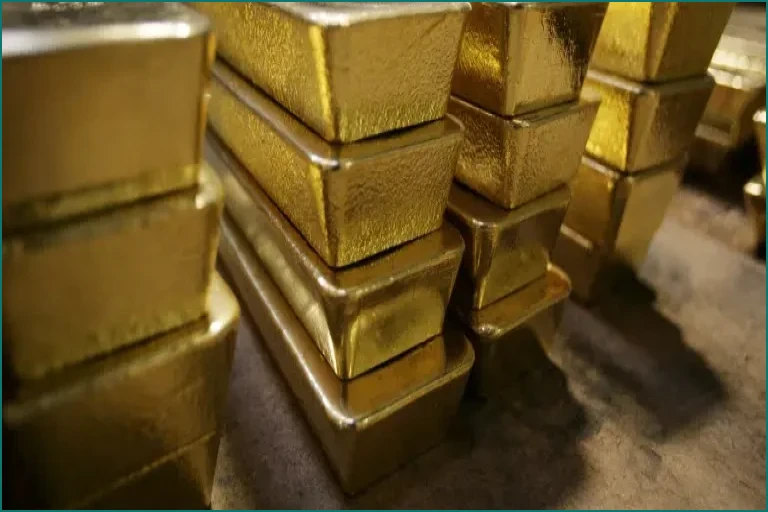
The Bank of Spain has disclosed the locations of its national gold reserves for the first time, revealing that the vast majority of its wealth is actually stored outside of the country. Out of a total stockpile of 281 tonnes—currently valued at approximately €33 billion—only about one-third of the gold is kept in Madrid.
According to Spain's national central bank and financial supervisor, only 94 of a total of 281 bars are currently held in the capital. Even these ingots are not presently resting in the legendary underground vault situated 35 meters beneath the Bank of Spain's headquarters at Plaza de Cibeles. Due to ongoing renovation works, this portion of the reserve has been temporarily relocated to another section of the building.
The remaining 22,500 bars are stored in major international financial hubs rather than on Spanish soil. Approximately one-third of Spain's total gold is held at the Bank of England in London, while other portions are secured at global sites including the Federal Reserve Bank in New York.
Spain's gold reserves have long captured the public imagination, from stories of their relocation to Russia during the Spanish Civil War to the vault's high-tech defense system, which is designed to flood with water from two natural streams in the event of an attempted heist. José Luis Escrivá, the Governor of El Banco de España, acknowledged the widespread fascination with the buried treasure but emphasized that the underground vault remains impenetrable. Escrivá noted that during a visit to the vault with Álex Pina, the creator of the popular television series Money Heist, the showrunner admitted that robbing the facility would be "completely impossible."
The financial history of the reserve includes a major sell-off in 2007, just before the onset of the global financial crisis, when Spain sold 32 percent of its reserves, totaling 134 tonnes. At the time of that transaction, one metric tonne of gold was valued at €16 billion, whereas today its value has risen to €120 billion.
In the politically turbulent 2020s, the location of these reserves has also become a matter of geopolitical debate. Columnist Miguel Moreno Mendieta recently raised concerns in the Spanish daily El País, questioning whether Spain's gold is truly safe in American vaults amid deteriorating relations between the United States and its European partners. With the White House imposing tariffs and trade restrictions, and former President Donald Trump openly criticizing Spain's defense spending, some have questioned whether the assets could face seizure. Other European nations have already acted on similar concerns; the Dutch government recently relocated a portion of its gold reserves from the United States and Canada to the United Kingdom, following similar repatriation efforts by France and Germany. However, Escrivá has ruled out any such move for Spain, stating at a recent financial event, "We are not planning to take any such action."
While Spain keeps much of its processed gold abroad, the country also sits on Europe's largest untapped gold reserve. In the northern region of Asturias, near the Cantabrian Sea, experts estimate there are up to 480 gold deposits. The largest and most controversial of these is the Salave mine, located in the municipality of Tapia de Casariego, where geological studies suggest up to 300,000 kilograms—or 300 tonnes—of gold remain buried underground.