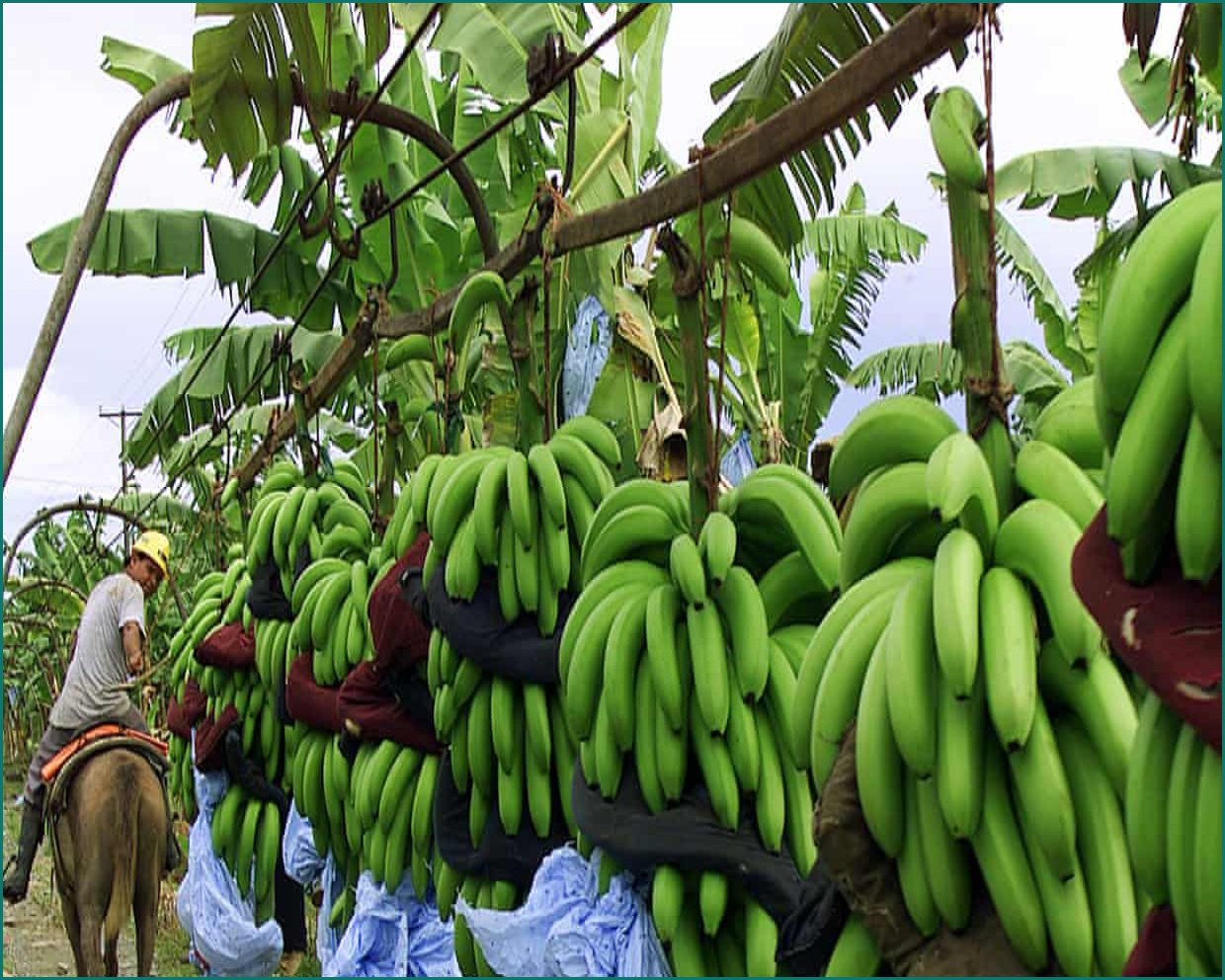
Banana producers across Latin America are urgently calling for improved pay to help them navigate the severe impacts of the climate crisis. Farmers are currently reporting significant declines in production caused by extreme weather patterns linked to this year’s super El Niño event.
According to the ethical trade body Fairtrade Foundation, the agricultural sector is facing severe pressure. High winds are impacting production in Colombia, a major supplier to the UK market, while regions in that country are also bracing for predicted droughts. Meanwhile, farmers in Peru and Ecuador are dealing with the consequences of heavy rainfall, and those in the Dominican Republic are facing forecasts of warmer and drier conditions than usual.
Data from Fairtrade indicates that productivity often suffers during El Niño cycles. Research shows that during the previous cycle, production dropped by 13% in the Dominican Republic, 22% in Ecuador, and 6% in Peru. Historical data from the 1983 El Niño event, one of the strongest on record, illustrates the potential for catastrophe, as it affected 15% of Ecuador’s total planted banana area and led to a 36% reduction in exports.
Dr. Carley-Jane Stanton, a climate and environment lead at Fairtrade, warned that the current El Niño is expected to trigger even more severe weather, including stronger winds and heavier rainfall, with impacts on producers likely exceeding those seen in the 2023-2024 cycle. Evidence is already emerging to support these concerns; the Association of Banana Growers of Magdalena and La Guajira reported that exports from the Colombian Caribbean region fell 32% to $122m (£91m) between July and September this year. In September alone, shipments dropped 42% year-on-year, with earnings nearly halving from $70m to $40m.
The association has appealed to international markets to foster commercial conditions that recognize actual production costs and support the sector’s sustainability. Ever Antonio Flores Muños, a worker at the Agrosiete producer in Colombia, noted that the climate has become much hotter and more intense over the past decade. He warned that flooding and strong winds are putting workers, colleagues, and wages at significant risk.
Fairtrade is pushing for UK legislation to address unfair trading practices, such as late or low payments and contracts that shift risk onto farmers. While some retailers like Sainsbury’s, the Co-op, and Waitrose have taken voluntary steps by sourcing Fairtrade bananas, which include a guaranteed minimum price, the organization emphasizes that more work is required. Eleanor Harrison, the chief executive of Fairtrade, stated that the UK’s supply depends on growers having the resources to adapt to climate change and invest in their future.
Despite rising costs for fertilizer, fuel, and labor, supermarket prices for bananas have remained largely unchanged for nearly 40 years. Caoimhe Buckley, chief corporate affairs officer at supplier Fyffes, argued that the long-term sustainability of the sector requires purchasing practices that reflect the real cost of production, including decent wages and environmental management. Recent research by the Ethical Trading Initiative found that in 2026, the prices paid to 66.7% of suppliers failed to cover basic production costs. Furthermore, research for the Inter-American Development Bank suggests that suitable land for banana cultivation could shrink by an average of 61% across Latin America and the Caribbean by 2050 due to climate change.