Japan has officially enacted a controversial new law that prohibits the desecration of its national flag, known as the "hinomaru." The legislation, which represents a key victory for the right-wing agenda championed by Prime Minister Sanae Takaichi, imposes penalties on those who publicly damage, deface, or remove the flag. Under the new rules, violators could face up to two years in prison or a maximum fine of 200,000 yen, which is approximately $1,230. The law specifically targets actions that cause "extreme discomfort or a sense of disgust to others," including the livestreaming or uploading of footage depicting the burning or cutting of the flag, even if such acts occur in private spaces.
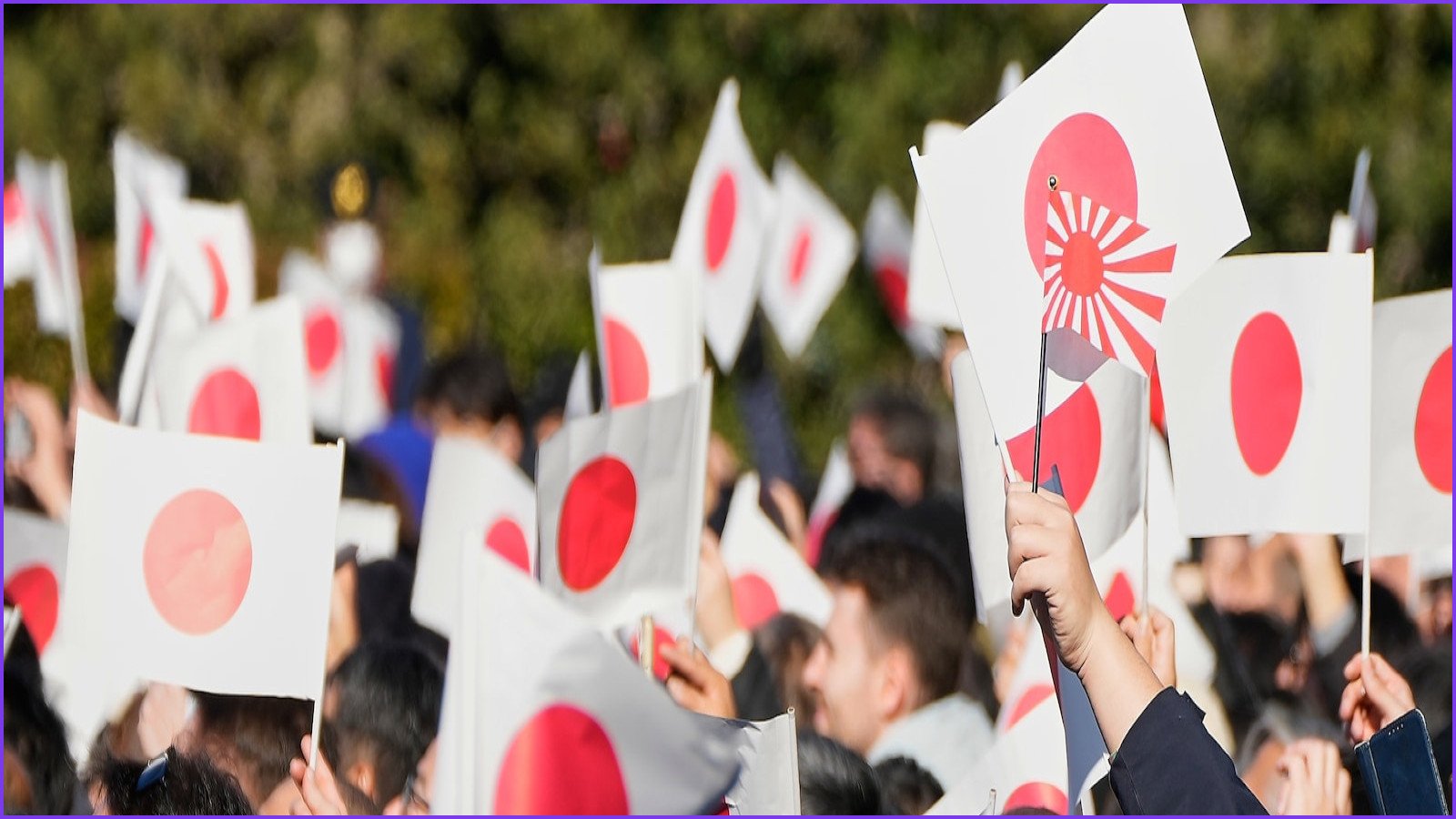
While Japan previously maintained laws to punish the vandalism of foreign flags—primarily to prevent diplomatic disputes at diplomatic facilities—the nation previously lacked similar criminal statutes for its own national symbol. Takaichi has long maintained that this absence of legal protection for the hinomaru was a fundamental wrong. The government states the law is intended to protect the people's respect for the flag, which is currently a common sight at government offices, athletic events, and international gatherings. At Imperial Palace events, well-wishers often wave small versions of the flag to cheer the emperor and his family.
Critics, however, have voiced strong opposition, arguing that the legislation is an attempt to intimidate the public and suppress criticism of the government. Legal experts, including Motohiro Hashimoto, a constitutional law professor at Chuo University, warned during a recent parliamentary hearing that the law effectively prohibits criticism of the state. Opponents fear that the ambiguous wording of the legislation grants authorities broad power to act arbitrarily, potentially infringing upon constitutional rights to freedom of speech and expression in art or protests. Many experts have noted that while other countries, including the U.S. and various European nations, have laws targeting flag vandals, they typically come with clearer criteria and greater protections for freedom of speech.
The legislative process highlighted significant uncertainty regarding how the law will be applied. During parliamentary sessions, opposition lawmaker Ayaka Shiomura, noting that flags with historical backgrounds are often used at political rallies, repeatedly asked if crossing out the flag would be subject to punishment. In response, Liberal Democratic Party lawmaker Akihisa Shiozaki stated that such determinations are difficult to standardize and would depend on the specific circumstances of the event, noting, "It all depends."
Government officials have clarified that certain uses of the flag remain exempt from punishment. For instance, the use of flag imagery in anime, cartoons, or AI-generated content is permitted because these do not take a tangible form. Additionally, flag motifs integrated into paintings or small, miniature hinomaru flags used as food decorations will not be subject to criminal charges. The Liberal Democratic Party clarified that violations would include pulling down and discarding a flag at a municipal building, or stepping on or covering a flag with mud in public.
The hinomaru, featuring a red disc on a white background, has a complex history rooted in ancient sun worship. It was recognized for commercial shipping in 1870 and later served as a symbol for soldiers during World War II, who carried flags signed by family members. It did not gain official status as the national flag until 1999, following decades of controversy and resistance from educators who opposed its use in schools. This historical sensitivity is compounded by the existence of the "kyokujitsuki," or rising sun flag, which remains a source of tension with neighboring countries due to its association with Japan's imperial navy during the colonization of the Korean Peninsula and the invasion of China and other Asian countries until 1945. The 1999 adoption of the flag was marked by significant social friction, including the suicide of a school principal in Hiroshima who was caught between protesting teachers and local education authorities.
At Imperial Palace events, well-wishers wave small versions of the flag to cheer their beloved emperor and his family.Another well-known Japanese flag, called “kyokujitsuki,” with a red disc surrounded by 16 rays extending outward has repeatedly led to vehement protests from some of Japan's neighbors because of its use
The government began promoting the flag and the anthem “Kimigayo,” which means the Emperor's reign, at public schools from around the 1980s but often faced protests from teachers who opposed using the flag and the anthem for patriotic education.In 1999, a school principal in Hiroshima killed himself the day before a gr