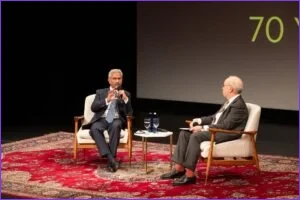
In a notable departure from its traditional preference for quiet, behind-the-scenes diplomacy, India has begun airing its grievances with the United States publicly. This shift was underscored last week during a visit to the United States by India’s Minister of External Affairs, Dr. S. Jaishankar. Speaking at an event hosted by the Asia Society in New York on September 29, 2026, alongside Daniel Russel, the vice president for International Security and Diplomacy at the Asia Society Policy Institute, Jaishankar did not hold back in expressing his frustration. He highlighted Washington’s persistent lack of “understanding or appreciation or empathy” for India’s core sensitivities, specifically regarding the U.S. government’s ongoing courtship of Pakistan despite that country’s support for anti-India terrorism. Although he did not explicitly name the United States, his target was clear, as he noted that when a primary concern is not fully appreciated by a partner, it inevitably impacts the relationship. You have reached the limit of 2 free articles this month.
This public stance follows a recent, lackluster interaction between the two nations' leaders. On September 28, Prime Minister Narendra Modi spoke with U.S. President Donald Trump via telephone. However, Trump 2.0 has not been good for the partnership. Within weeks of the inauguration of Trump’s second presidential term, ties began unravelling not only over tariffs and immigration but also Washington’s cozying up to Pakistan on a raft of issues, including terrorism, an issue that Delhi is highly sensitive about. While Modi described the call as “productive” in a post on X, noting that they reviewed cooperation in trade, defense, energy, and critical technologies, the tone was notably detached. Observers pointed out that this description lacked the warmth of previous years, marking a transition from a “good friend” dynamic to a formal, cold exchange. This cooling comes at a time when the broader bilateral relationship is experiencing significant strain.
Economic tensions have been a major driver of this downturn. Ten days prior to the call, President Trump signed the Lindsey O. Graham Sanctioning Russia and Iran Act (SRIA) of 2026, which grants the U.S. president the power to impose tariffs of up to 100 percent on nations that continue purchasing Russian energy. As one of the world's largest buyers of Russian oil, India faces a direct threat to its energy security. This follows previous friction caused by Trump’s “reciprocal tariffs” and a 25 percent “punitive tariff” levied against India specifically for its Russian oil imports, a stark contrast to the relative stability seen in 1979 or the pre-2022 era.
Concerns are mounting that this decline may not be a temporary phase. As the U.S.-China relationship shifts toward competitive coexistence, some experts suggest that India’s utility in America’s containment strategy against Beijing may be diminishing. Furthermore, the structural issues in U.S. politics—including economic nationalism and a disregard for international norms—are seen as trends that will likely outlast the current administration. As India’s Minister of Commerce and Industry Piyush Goyal continues his visit to the U.S. in hopes of finalizing a long-elusive bilateral trade agreement, the mood in Delhi remains increasingly pessimistic about the future of the partnership.