Germany’s political center is locked in a critical fight for relevance following recent electoral surges by both the far-right and the far-left. The rise of political fragmentation, unstable coalitions, and a struggling economy have left many German voters feeling uneasy, drawing uncomfortable historical parallels to the national conditions that enabled the rise of fascism nearly a century ago.
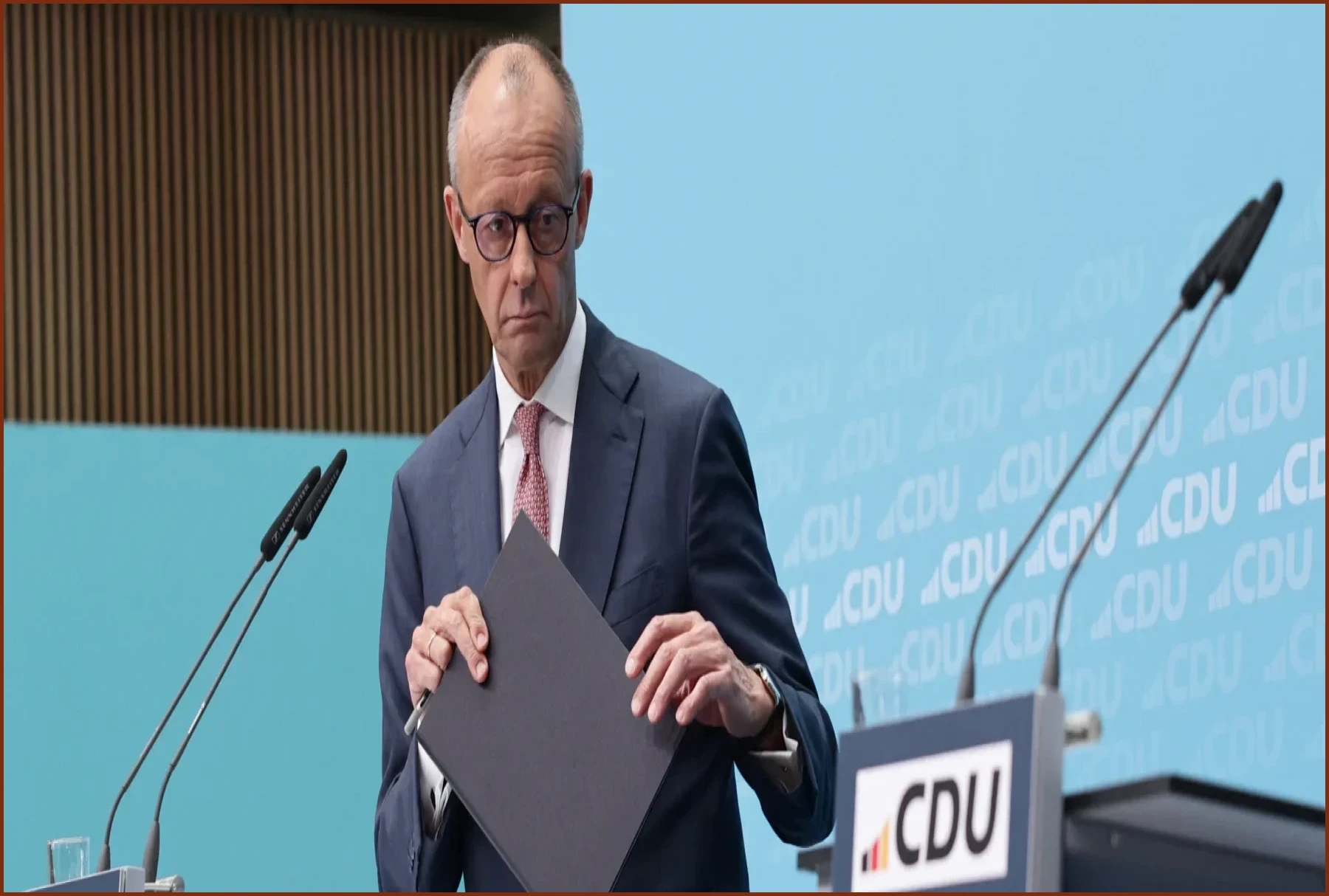
The shift is directly impacting Chancellor Friedrich Merz, leader of the center-right Christian Democratic Union (CDU). On September 21, the day after state elections in Berlin and Mecklenburg-Western Pomerania, Merz departed the CDU headquarters in Berlin facing the reality of a severe political blow. The CDU was trounced in the Berlin elections and suffered its worst-ever result in Mecklenburg-Western Pomerania on the same day. "Trust in state institutions is declining," Merz warned shortly after exit polls were released, adding that "radical parties on both the left and the right are exploiting this."
Mainstream political dominance has eroded as the CDU governs in a national coalition with the center-left Social Democrats (SPD). Once considered the country’s two dominant "big-tent" parties, they now rely on each other to maintain increasingly slim majorities, a partnership that has made their distinct political identities harder for voters to distinguish. Disillusioned voters like Istock explain that they are turning to radical alternatives because the establishment feels out of touch. Voting for the far-left Die Linke party for the first time, Istock noted that "voting has become tricky" because "it's no longer clear how a party will end up governing effectively because there are too many parties and forming viable majorities is becoming impossible." She added, "Voters no longer feel represented by the political center. This is why we're voting in such a confrontational way."
This polarization has severely constrained legislative work. Following a landslide victory for the far-right Alternative for Germany (AfD) in state elections in Saxony-Anhalt, prominent Social Democrat Matthias Mirsch addressed the Bundestag to lament the reductive nature of modern political discourse. "It's damn difficult to govern in these times," Mirsch said, "where things quickly boil down to yes or no, black or white, and the middle ground doesn't count."
Maximilian Flügge, a Berlin-based communications adviser, points to modern media structures as a primary driver of this political shrinking. "Algorithms are simply not made for the political center. Algorithms are trained to promote outrage," Flügge explained, noting that the compromise and nuance central to moderate politics do not perform well on social media. Flügge also observed that Merz's centrist government relies on overly negative messaging regarding its reform agenda, whereas the AfD capitalizes on optimism, promising voters that "everything is possible!"
However, the AfD's platform includes highly controversial proposals such as "remigration"—a policy advocating for the mass deportation of individuals, including immigrants who hold German citizenship. Merz has strongly condemned the terminology, telling lawmakers in the Bundestag that "the word 'remigration' is nothing more than a synonym for ethnic cleansing based on origin and skin color." While his remarks drew applause from mainstream lawmakers, they also prompted jeers from the substantial AfD opposition. AfD leader Alice Weidel has counter-claimed that her party has now surpassed the traditional establishment to become Germany's true new big-tent party.
Despite the electoral setbacks and ongoing speculation regarding his leadership, Merz remains defiant. He has pledged to press forward with tax and welfare reforms intended to revitalize the German economy. Acknowledging the need for a strategic shift, Merz recently admitted to journalists that statistics alone are insufficient to win back support. "We must try — I myself included — to reach people on an emotional level," he said.