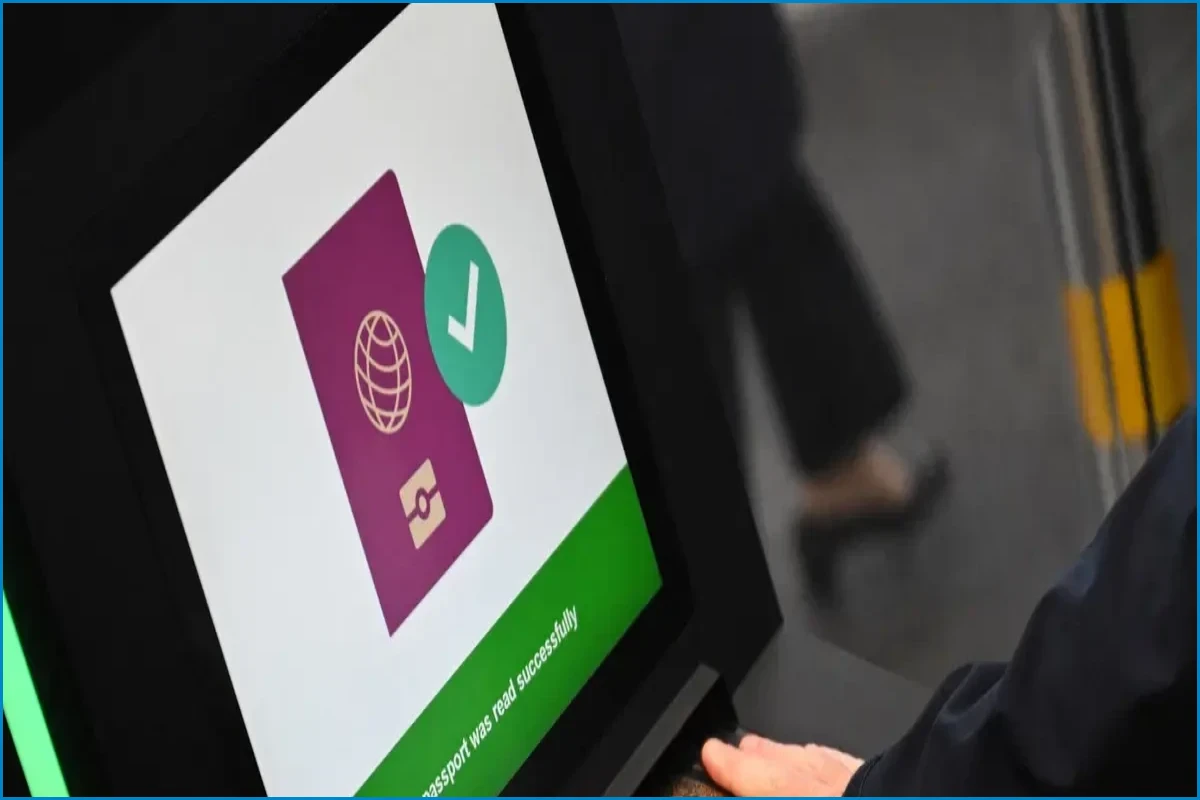
Following the launch of the European Union's biometric Entry & Exit System (EES) in April 2026, operational teething troubles have resulted in incorrect 90-day allowance calculations for several non-EU travellers and residents in France. The system was designed to automate and tighten enforcement of the 90-day rule, which allows citizens from non-EU countries—such as the UK, US, Canada, Australia, New Zealand, Brazil, and Japan—to remain in the Schengen zone for up to 90 days within any 180-day period without requiring a visa. While replacing physical passport stamps with digital tracking was intended to improve efficiency, implementation disruptions have led to faulty records.
High-profile errors have already emerged during border checks. British author Jojo Moyes recounted to the consumer group Which? that French border officials in Marseille accused her of overstaying her permitted duration while she was departing from her second home in France. The discrepancy occurred because border control had failed to log her exit from the Bloc following a prior visit to Portugal. Similarly, non-EU residents in France who hold a carte de séjour have been inadvertently caught up in the digital system despite being legally exempt. In one instance, a resident reported that the EES interface displayed an remaining allowance of only 16 days.
To assist travellers in verifying their status, the European Commission has launched an online EES calculator where users enter their passport details and itinerary to check their remaining days. However, official guidance highlights major limitations during the initial transition period. The calculator does not account for any time spent in the Schengen area for visits that started prior to April 10, 2026, regardless of whether those trips ended before or continued past that date. Additionally, up to and including October 6, 2026, an 'OK' response on the platform may be unreliable for holders of single or double-entry visas who used permitted entries between October 12, 2025, and April 9, 2026, as those movements were not logged in the EES. Because full biometric checks are not yet fully operational across all French border points—with locations like Eurostar terminal points and the Port of Dover running only partial checks—unregistered entries and departures since April are also excluded from the system's count.
The system's inaccuracies stem from a few common technical and operational failures. The primary cause is unrecorded exits; if a traveller's entry is registered but their departure is missed during a chaotic border crossing, the system assumes the individual remained inside the Schengen zone continuously, triggering an artificial overstay flag. Another issue involves long-stay visa and residency permit holders. Under standard protocol, residents should bypass EES registration entirely by presenting their passport alongside their residency card or visa at manned border control desks. In practice, launch disruptions have led to some residents being misregistered as standard visitors and subsequently flagged for overstaying. In rare instances, computational errors have also linked travel records to the wrong passport numbers, particularly involving twins.
To process a correction, applicants must supply a clear passport scan, documentary evidence of their actual exit—such as a train ticket, ferry pass, or airline boarding pass—and a explicit request to amend their travel log. Visa or residency permit holders must also attach a copy of their permit. Data officers may request additional documentation before updating the database. Until official records are rectified, individuals heading to Europe are advised to maintain independent travel logs and carry physical proof of all recent border crossings to resolve potential disputes. For valid carte de séjour or long-stay visa holders, European law establishes that residency rights supersede passport stamping rules, meaning their right to reside in and travel to France remains legally protected even if flagged by an EES software error.