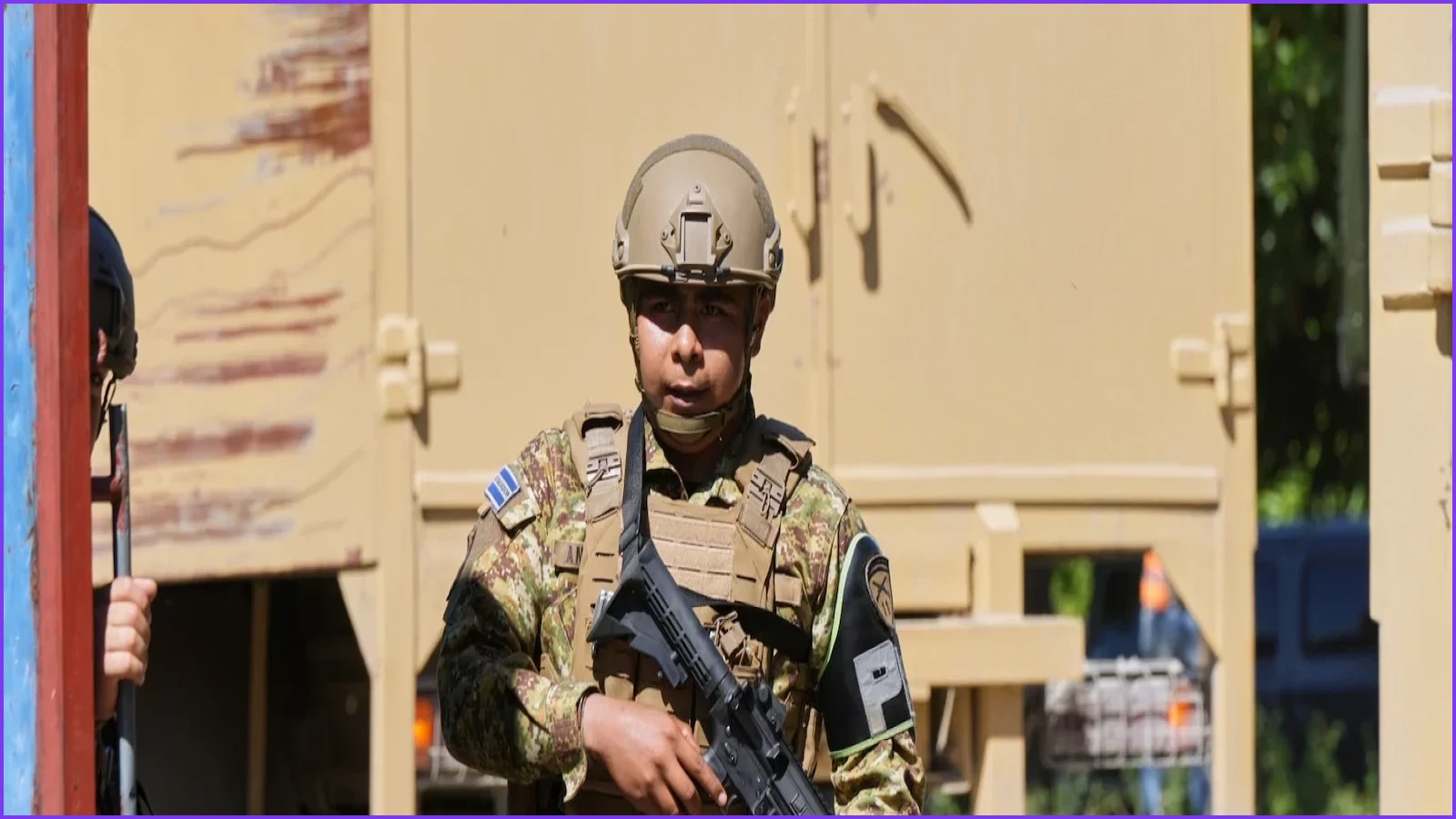
Dominican President Luis Abinader announced Tuesday that his administration is actively providing intelligence and logistical backing to El Salvador as approximately 2,500 Salvadoran soldiers carry out operations against armed street gangs in Haiti. The declaration comes amid growing international attention regarding the Salvadoran deployment, which is operating largely outside the framework of the United Nations-backed multinational gang suppression mission.
Abinader called on the U.N.-supported force to coordinate directly with the Salvadoran troops and to "decisively support the Salvadoran military and the attitude of President Bukele." He emphasized that the Dominican Republic, which shares the Caribbean island of Hispaniola with Haiti, intends to sustain its assistance for Bukele. According to Abinader, El Salvador's defense minister maintains nearly daily contact with his Dominican counterpart, though a spokesperson for the Dominican presidency declined to disclose specific operational details of the aid.
Addressing questions surrounding international oversight, Igor Rugwiza, a spokesperson for the U.N.-backed mission, stated Tuesday that the force is communicating closely with Haitian officials and relevant international partners "in support of shared security objectives." Rugwiza noted that the mission considers effective coordination and deconfliction among all security actors operating in Haiti essential to achieving sustainable security outcomes. He added that all actions taken by the multinational force are conducted in accordance with its mandate, established command and control arrangements, rules of engagement, and applicable human rights law obligations.
El Salvador dispatched its armed forces to Haiti after four Salvadoran aviation technicians were attacked deep inside gang-dominated territory on Oct. 18. Those technicians remain missing. The deployment gained further prominence following a recent joint assault by Haitian police and Salvadoran forces targeting the home of Wilson Joseph, the leader of the notorious 400 Mawozo gang who is widely known as Lanmò San Jou. While Joseph survived Sunday's strike on his residence, Salvadoran President Nayib Bukele celebrated the destruction of the property publicly.
"We kept our promise," Bukele posted on X on Tuesday, referring to the strike on the gang leader's headquarters. "Most of them ran away without even trying to fight. What cowards!"
Political and security discussions regarding the troops are set to deepen next week when Haitian Prime Minister Alix Didier Fils-Aimé travels to El Salvador to confer with Bukele's government about the future of the Salvadoran forces on Haitian soil. Meanwhile, Abinader affirmed that the Dominican Republic will maintain strict security along its land border, employing soldiers, armored vehicles, and surveillance drones to respond to any developments that might threaten his nation's stability.
The independent deployment has also drawn scrutiny from human rights monitors. Amnesty International urged both Bukele and Fils-Aimé to ensure all Salvadoran military operations adhere strictly to international human rights standards. Ana Piquer, the organization's Americas director, stressed the need for full transparency regarding the deployment's legal framework.
"Both governments must make public the agreement governing the deployment and explain how they oversee the deployed forces, what rules govern the use of force, to whom they are accountable, and how people can report possible violations without fear of reprisals," Piquer stated on Monday.
Security analysts have voiced additional concerns regarding the complex security environment in Haiti. Speaking during a virtual conference on Tuesday, Sophie Rutenbar, a senior expert with the Global Initiative Against Transnational Organized Crime, described the theater in Haiti as "extremely crowded" with distinct armed entities. Haitian police and military units are currently operating alongside the U.N.-backed suppression force, Salvadoran troops, and personnel from a private security firm founded by Erik Prince, the former U.S. Navy SEAL and Blackwater founder.
"We don't know very much about the coordination mechanisms right now," Rutenbar said, describing the current arrangement as complex. She pointed out that because the various forces operate from different points of view, establishing unified operations remains difficult.
Rutenbar observed that public sentiment in Haiti toward the Salvadoran military has been "largely positive," noting that after prolonged turmoil, the arrival of external security support is appealing to local residents. However, she highlighted that civilians have been killed during attacks targeting gangs and questioned how long El Salvador can maintain its current pace without broader international financial backing, describing independent military actions as a very expensive proposition.
"Bukele is being hailed as a savior right now," Rutenbar noted, adding that reality will likely set in over time as forces face practical operational challenges. She suggested that if Salvadoran troops worked directly with the U.N.-backed gang suppression force, they would benefit from additional international resources.
Wolf Pamphile, founder and CEO of the U.S.-based think tank Haiti Policy House, emphasized during Tuesday's panel that 400 Mawozo remains the primary security challenge for both the Haitian government and international security missions. Pamphile suggested that despite the initial impact of Salvadoran operations, long-term stability will require Central American troops to align with the multilateral structure.
"It would have been better if the Haitian government steered Salvadoran soldiers within a structure that already exists," Pamphile said. "It's hard to pull that back."
Associated Press reporter Martín Adames in Santo Domingo, Dominican Republic, contributed.