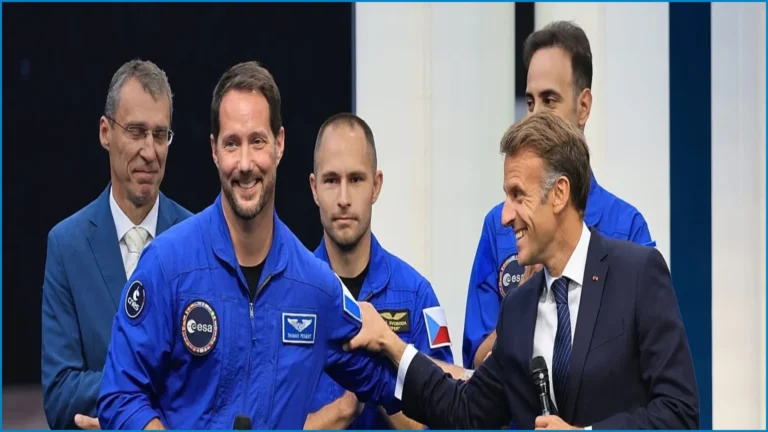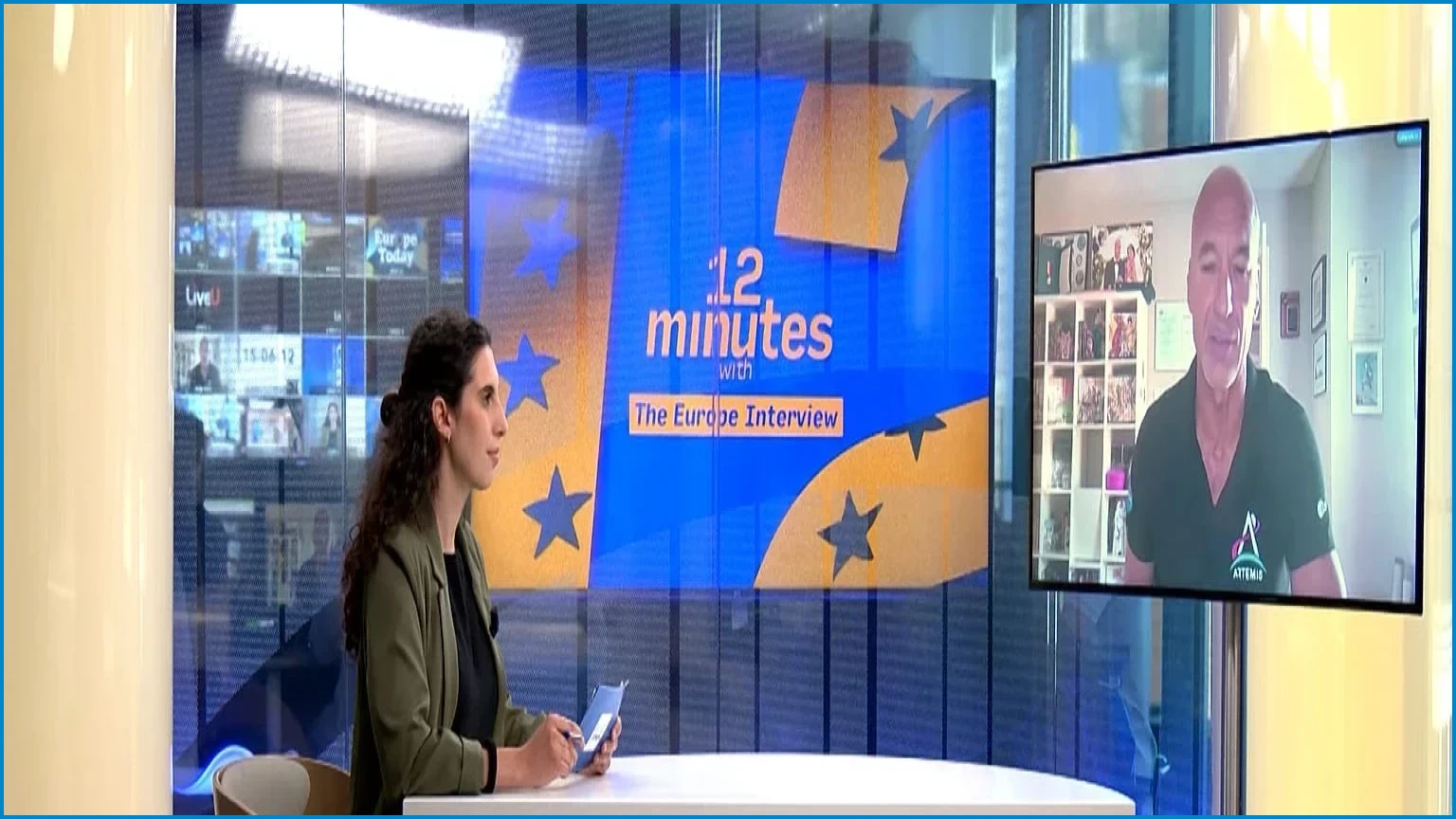
European Space Agency (ESA) astronaut Luca Parmitano has expressed a clear vision for the future of space exploration, emphasizing that Europe and Italy are eager to serve as robust partners to the United States in the current race to return to the Moon. Parmitano, an Italian astronaut, was selected by NASA to participate in the Artemis III mission, a pivotal test flight for the agency's broader lunar landing program. Reflecting on his selection, Parmitano admitted he was initially left speechless, noting that the mission was not on his horizon, yet he remains deeply grateful for the opportunity.
The Artemis III mission, currently slated for a 2027 launch, will transport three NASA astronauts and Parmitano into low-Earth orbit aboard the Orion spacecraft. Once in orbit, the crew is scheduled to dock with two distinct lunar landers, which are being developed by Elon Musk’s SpaceX and Jeff Bezos’ Blue Origin. Parmitano, who previously served as the first Italian commander of the International Space Station, brings extensive experience to the mission. Having spent over 366 days in space across the Volare mission in 2013 and the Beyond mission between 2019 and 2020, he was also the first Italian to perform a spacewalk. He is now set to become the first European to enter orbit as part of the Artemis program.
During the official crew presentation held on June 9 at the Johnson Space Center in Houston, Texas, Parmitano delivered an emotional address. He described Italy as his personal “launch pad” and the ESA as his “launch tower.” He credited the Italian public education system for his success and stated his intention to carry the spirit of determination—a trait he identifies as central to European identity—into orbit. Parmitano noted that his generation, which became European by choice rather than birth, views this identity as a hard-won goal.
The mission presents significant technical hurdles, as Parmitano is well aware. He explained that the success of Artemis III relies on three separate launches occurring in close proximity, utilizing very different spacecraft. Success will depend on the readiness of the lunar landers, the performance of NASA’s Orion spacecraft, and the execution of critical orbital maneuvers. Furthermore, the crew will face the challenge of living within the Orion spacecraft, which provides a habitable volume of only 8 to 9 cubic metres and is engineered for the harsh conditions of deep space, which differ significantly from those found in low-Earth orbit.
To prepare for this complex journey, Parmitano is undergoing an intense training schedule alongside his NASA crew members: Randy Bresnik, Frank Rubio, and Andre Douglas. The training involves practicing essential skills, running simulations, and preparing for various potential malfunction scenarios. Parmitano described the training as wonderfully varied and complex.
Addressing the geopolitical climate, Parmitano insisted that while relations between the EU and the US may be tense on Earth, the situation in space is different. He emphasized that the crew members act as operators, ignoring political friction to focus on the common goal of the betterment of humankind. The ESA continues to play a vital role in the mission architecture, notably by building the European Service Module, which provides electricity, thermal control, oxygen, nitrogen, and water to the Orion spacecraft. While NASA’s decision earlier this year to pause work on the Lunar Gateway—a project for which Europe was building key modules—did alter the ESA’s contribution, Parmitano remains optimistic. Regarding the 2027 deadline, which some experts have criticized as overly ambitious, he argued that one must be ambitious and push hard to achieve complex objectives.