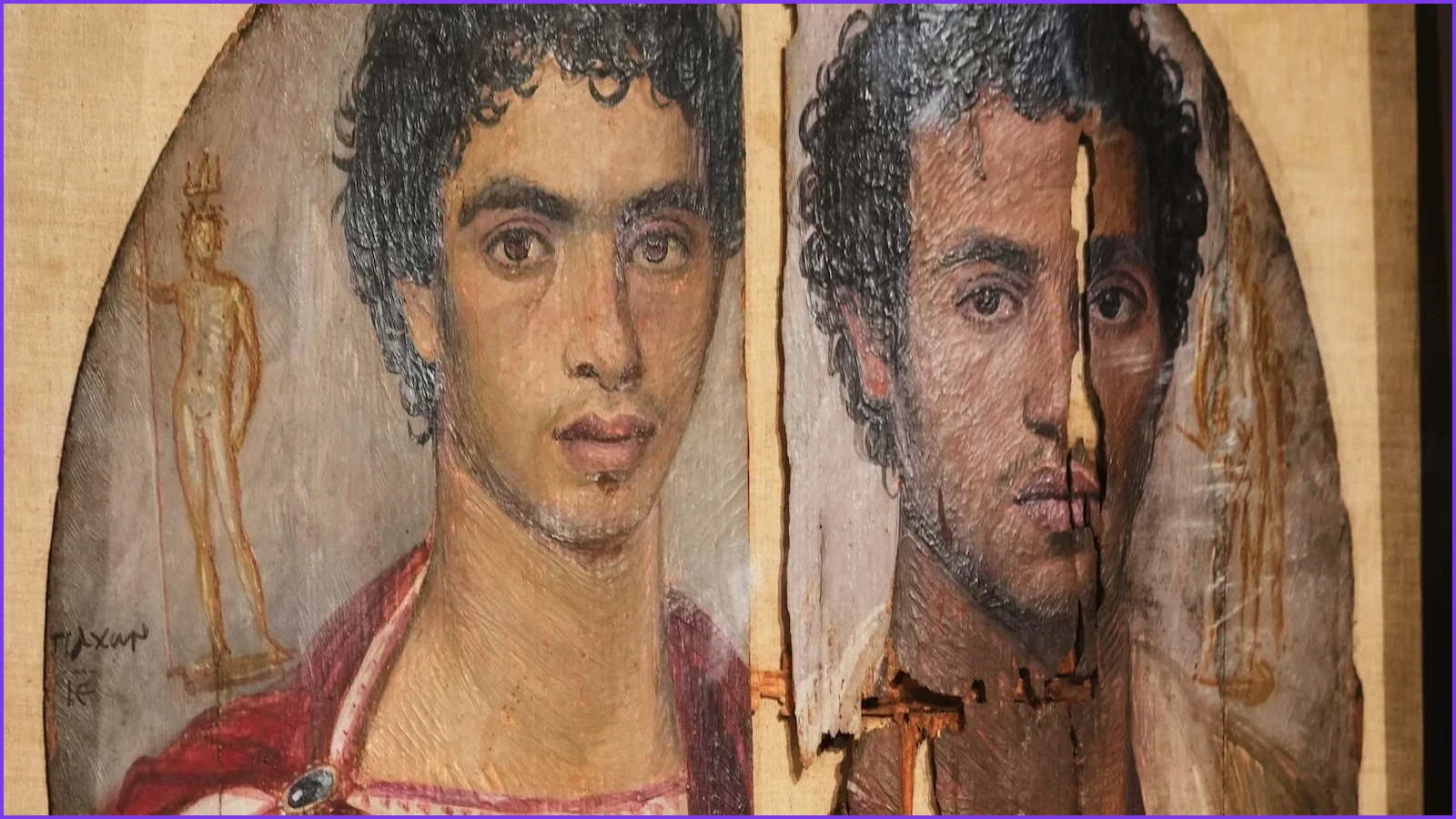
Egypt has unveiled a newly restored 2nd-century artwork known as the “Tondo of the Two Brothers,” a standout piece from the famous collection of Fayoum mummy portraits. The restoration project, which lasted three weeks, involved a collaborative effort between specialists from Rome and conservators based at the Egyptian Museum in Tahrir, where the collection is typically housed.
The “Tondo of the Two Brothers” is considered highly unusual by experts due to its circular shape and the fact that it features two individuals rather than one. It is regarded as one of the most vivid portraits remaining from Egypt's Roman era. The artwork was created using a technique that involves mixing pigments with molten wax. During the restoration, experts successfully recovered the facial features of the brother depicted on the right side of the painting.
Aly Abdel Halim, the director general of the Egyptian Museum in Tahrir, noted that the conservation process required delicate intervention. The painting was particularly fragile, as the wooden support had suffered damage from termites and the painted surface itself was in a delicate state.
This unveiling serves as a precursor to a significant international milestone: Egypt is set to loan a major portion of its Fayoum collection for a temporary exhibition in Rome. This marks the first time these historical artifacts will travel abroad. The exhibition, scheduled to run from November until May 2027, will be organized by MondoMostre. According to the organization's chairman, Tomaso Radaelli, the showcase will feature more than 110 objects, including masks, funerary shrouds, painted panels, marble portraits, ancient jewelry, and plaster casts.
Fayoum mummy portraits are historically significant for their fusion of Egyptian funerary traditions with the artistic aesthetics of the wider Greco-Roman world. These portraits were primarily painted on thin wooden panels and placed over the faces of the deceased within their mummy wrappings.