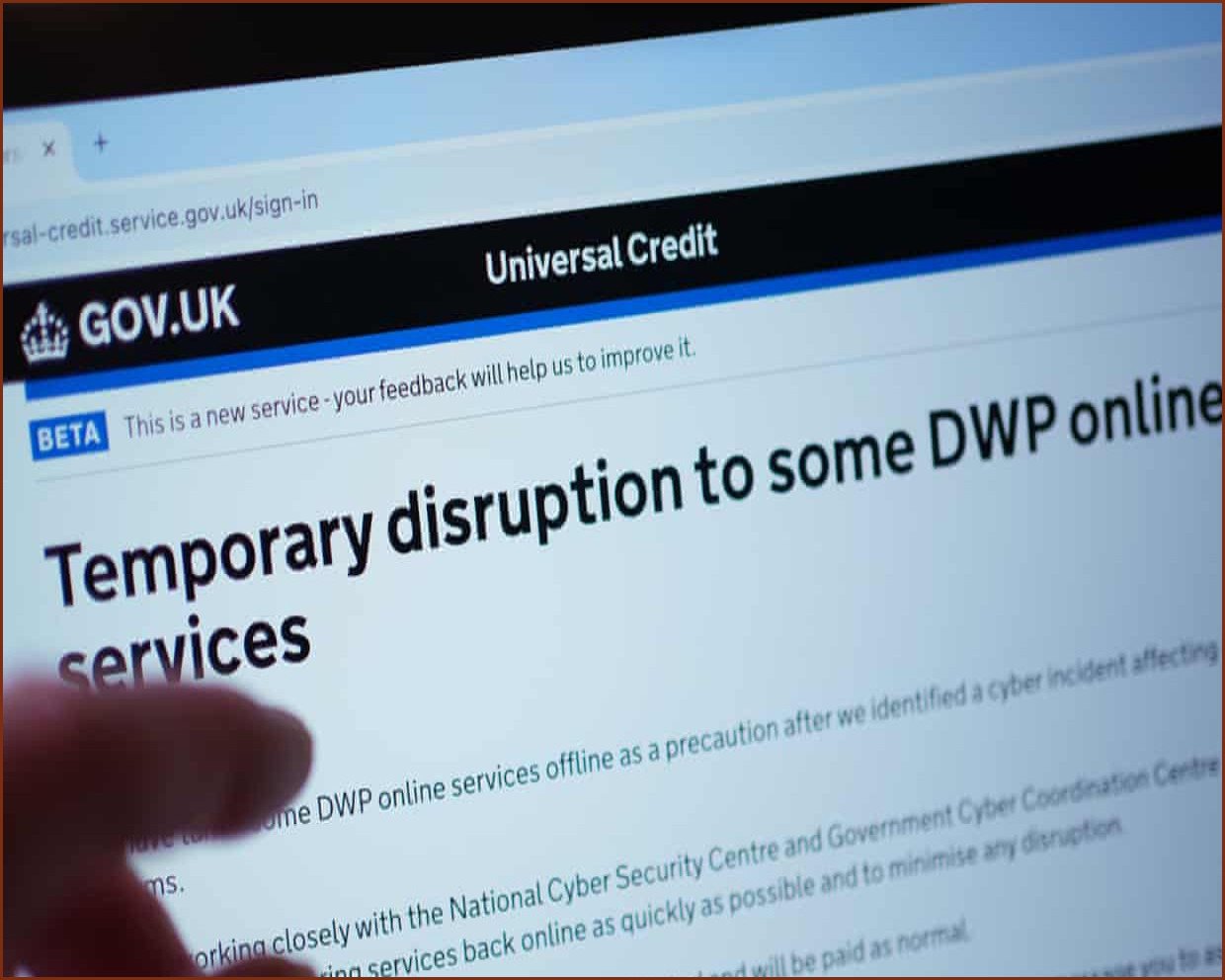
The UK Department for Work and Pensions (DWP) has taken its online portal offline following a serious cyber incident, causing significant disruption for individuals attempting to manage their state pensions, disability benefits, or universal credit applications. The government initiated the shutdown late on Thursday after detecting what it described as “unusual activity” within its systems. The department is now asking the public: have you been affected by the DWP ‘cyber incident’?
Work and Pensions Secretary Pat McFadden confirmed that while regular benefit payments are continuing as scheduled, the outage has left many claimants unable to access their accounts, check their status, or submit new applications. There are growing concerns regarding potential delays for emergency payments and the cancellation of scheduled appointments at JobCentres. Internal DWP systems were restored on Friday, allowing staff to resume work, though the public-facing portal remained unavailable. DWP insiders noted that while Friday's payments were already processed earlier in the week, there could be a backlog of tens of thousands of manual payments needing processing over the weekend.
Downing Street has stated that there is currently no evidence of customer data loss or that other government departments have been targeted, though they have not ruled out a “malicious” actor. The incident follows a recent government warning regarding an increased risk of Russian sabotage attacks in the UK, particularly against businesses supporting Ukraine. The cause remains under investigation by GCHQ’s National Cyber Security Centre.
The disruption has caused significant anxiety among the public. One mother of two told BBC Radio 4 that she was concerned about covering bills due on 1 December, noting: “My weekly shop is on a Sunday so I am having to go into Christmas savings, which I have been saving for the last six or seven months. I am having to pull money out of them to make up for what I don’t have and there are bills coming out also next week.” She added that the DWP could only confirm her payment would be made by Monday.
Sarah Merritt, a 23-year-old graduate, reported that her JobCentre appointment was cancelled without notice. “I get to my appointment only to hear all appointments are cancelled because of the cyber-attacks – as all services went offline, people with appointments were not able to be informed. This means I had to walk there and back in the rain for no reason. Although I know it’s not the staff’s fault, you would hope that these situations would be better prevented.” Another claimant, 64-year-old Wilf Frith, said he could not access a video call for a standard work search review after he requested to cancel his claim due to finding more work, noting that his job search could be slowed by the incident.
The DWP issued a statement confirming the precautionary shutdown and emphasized that it is working with the National Cyber Security Centre to restore services as quickly as possible. The department reiterated that it would never message users to request bank details or ask them to click on links.
The incident has drawn sharp criticism from senior MPs. Dame Chi Onwurah, the Labour MP who chairs the Commons science and technology committee, described the outage as a “wake-up call” regarding the security of digital infrastructure. She argued that the government cannot pursue digital transformation without addressing fundamental weaknesses in data hygiene and security standards. Conservative shadow AI minister Ben Spencer also voiced concern, stating that the incident highlights why the security of government systems cannot be taken for granted and called for greater transparency regarding efforts to modernize outdated technology.
This event occurs against a backdrop of heightened concern over national digital resilience. Sarah Healey, the DWP permanent secretary, recently told a committee of MPs that cybersecurity remains a primary concern for the department. Meanwhile, international attention has been focused on recent cyber-attacks elsewhere, including the malfunction of supermarket refrigeration systems across seven European countries, which was blamed on malicious activity intended to disrupt food supply chains.
The disruption caused concern among the public, with some reporting problems. One woman who has two young children told BBC Radio 4 that she normally received a universal credit payment on the 27th day of each month and, like others, was concerned about not having enough money to cover bills due to be paid on 1 Decembe
Supermarket fridges and freezers in seven European countries malfunctioned earlier this month, with thermostats remotely cranked up in some cases to 50C (122F), in what was blamed on a cyber-attack. The EU condemned the “deliberate attempt to disrupt our food supply chain and undermine consumers’ confidence in it”.