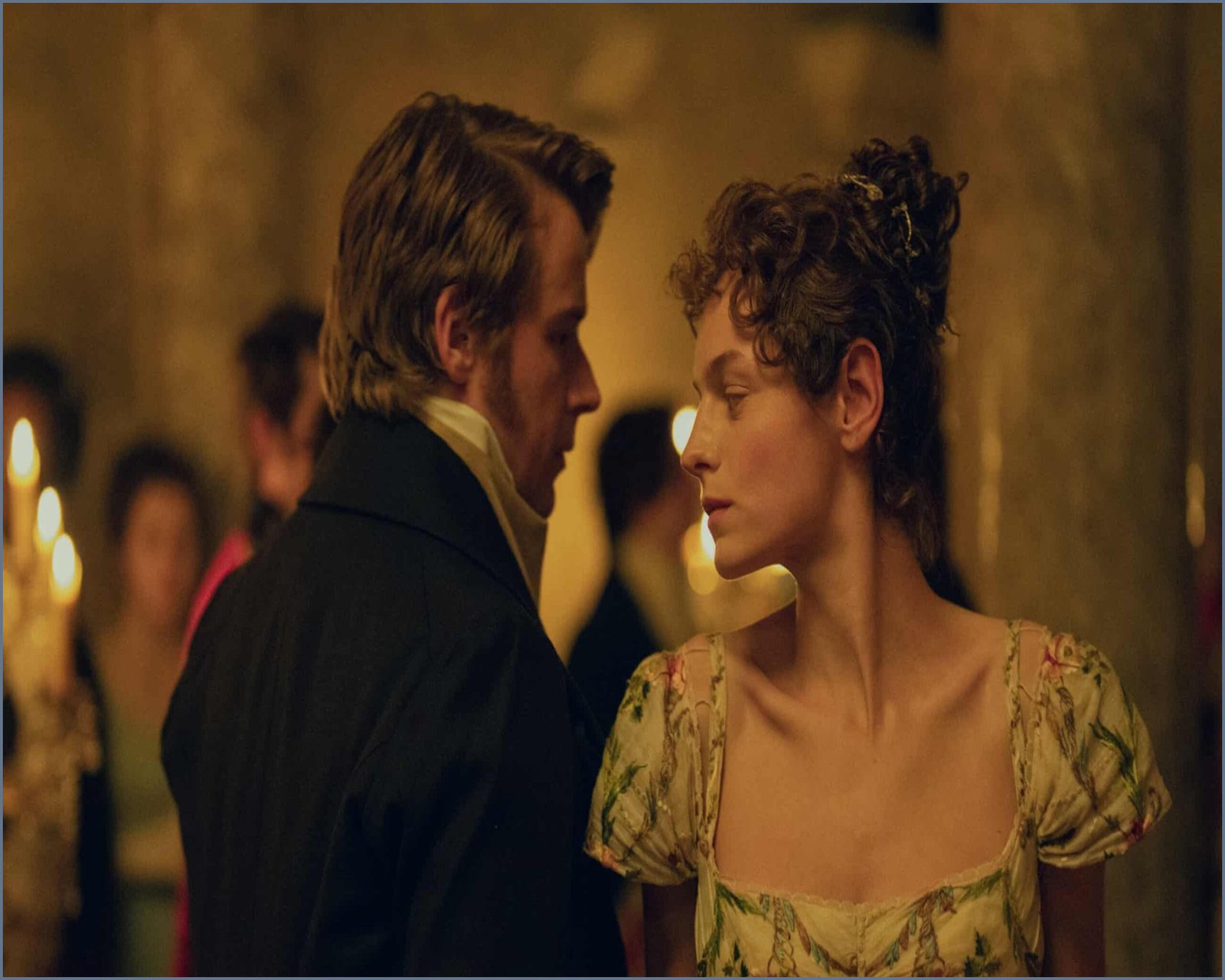
A new television retelling of Jane Austen's classic romance Pride and Prejudice is bringing costume drama back into the spotlight. Written by Dolly Alderton for Netflix, the upcoming production stars Emma Corrin as Elizabeth Bennet alongside Jack Lowden, who has described himself as the "first ginger Mr Darcy." The announcement highlights how period drama continues to evolve across decades of television history, defined by shifting production standards, memorable performances, and bold literary adaptations.
The modern template for lavish costume drama was established in 1981 with Granada's 11-episode adaptation of Evelyn Waugh's novel Brideshead Revisited. Moving past the stage-bound, wobbly-set format of earlier historical shows like I, Claudius, Brideshead Introduced cinematic scope and expansive location shooting. Centered on an Oxford student who forms a complex friendship with an eccentric aristocrat carrying a teddy bear named Aloysius, the big-budget series featured lead actors Jeremy Irons and Anthony Andrews alongside prominent stage icons Laurence Olivier and John Gielgud.
Fourteen years later, Andrew Davies adapted Pride and Prejudice for the BBC in 1995, capturing the harsh economic pressures facing the five Bennet sisters who needed advantageous marriages to avoid genteel poverty. Starring Jennifer Ehle and Colin Firth, the series generated immense popular impact, highlighted by Ehle's emotive performance and Firth's iconic scene emerging from a lake in a wet shirt. The lead actors also engaged in a brief off-screen romantic relationship during and after production.
Literary adaptations achieved further critical acclaim through writer Peter Straughan and director Peter Kosminsky's screen version of Hilary Mantel's Thomas Cromwell trilogy. Condensing over 1,000 pages of intricate prose into Wolf Hall, the production detailed Cromwell's political ascent, Henry VIII's historic split from Rome, the marriage to Anne Boleyn, and Cromwell's ultimate execution at dawn, earning widespread praise for its visual delicate handling of historical tragedy.
Davies achieved another landmark adaptation with Charles Dickens' Bleak House for the BBC. Structuring the drama into 15 half-hour episodes following an initial one-hour premiere, the twice-weekly broadcast schedule reinstated the serial cliffhanger format of Victorian publication. The cast included Anna Maxwell Martin in her breakthrough lead role as Esther Summerson, Gillian Anderson as Lady Dedlock, Charles Dance as the menacing lawyer Tulkinghorn, and Burn Gorman as Mr Guppy, as viewers tuned in to follow the catastrophic legal dispute of Jarndyce and Jarndyce.
Expanding the definition of the genre, creator Matt Weiner's American advertising drama Mad Men captured the transition of its chosen age, as the buttoned-down late 50s gave way to the charged, chaotic 60s. Beyond its meticulous corporate costuming and Sterling Cooper pocket squares, the series explored early corporate capitalism alongside widespread sexism and racism. Its central character, Don Draper, famously reminded us in the show's most memorable sales pitch that nostalgia translates as "the pain from an old wound."
Darker historical themes were further explored in Lucinda Coxon's 2011 four-part television adaptation of Michel Faber's novel The Crimson Petal and the White. The production starred Romola Garai as Sugar, a Victorian sex worker driven by resentment against abusive men, and Chris O'Dowd as William Rackham, an uninspired wealthy heir with a mentally ill wife who employs Sugar as his daughter's governess, depicting the harsh economic realities of the era.
In To Walk Invisible, writer and director Sally Wainwright brought the lives of Charlotte, Emily, and Anne Brontë to the screen alongside their brother Branwell, whose severe alcoholism profoundly affected the family. Filmed at Penistone Hill Country Park and inside a replica of the Brontë parsonage in Haworth, the production featured Finn Atkins, Chloe Pirrie, and Charlie Murphy, emphasizing the sisters' financial urgency and their decision to publish under male pseudonyms.
Queer history in period television was highlighted by Davies' adaptation of Sarah Waters' debut novel Tipping the Velvet. It has been almost 25 years since it aired on BBC Two, telling the story of fictional Victorian music hall star and male impersonator Nan Astley, whose lesbian awakening dragged her through the highs and lows of London. The drama featured early screen roles for Benedict Cumberbatch, Sally Hawkins, and Monica Dolan, while notably featuring the bold inclusion of "Monsieur Dildo."
Gritty 20th-century history was examined in Red Riding, a three-part adaptation of David Peace's crime novel trilogy set in 1970s Britain. Inspired by the search for the Yorkshire Ripper, the claustrophobic narrative focused on systemic police corruption and moral degradation. The ensemble cast featured Andrew Garfield, Rebecca Hall, Sean Harris, Daniel Mays, Maxine Peake, and Paddy Considine.
World War I military and social history took center stage in Tom Stoppard's BBC Two adaptation of Ford Madox Ford's novel quartet Parade's End, a sumptuous adaptation that aired on BBC Two when viewers were 16. Benedict Cumberbatch starred as righteous aristocrat officer Christopher Tietjens, with Adelaide Clemens playing suffragette Valentine Wannop, supported by Anne-Marie Duff, Stephen Graham, and Rebecca Hall, who earned acclaim as Tietjens' calculating wife Sylvia.
Finally, the BBC's police procedural Life on Mars reimagined the period genre through a time-travel concept. Philip Glenister starred as 1973 DCI Gene Hunt opposite John Simm as 2006 DI Sam Tyler, who wakes up in 1973 after an accident without knowing if he has traveled back in time or remains in a coma, creating a postmodern critique of 1970s nostalgia and reality.