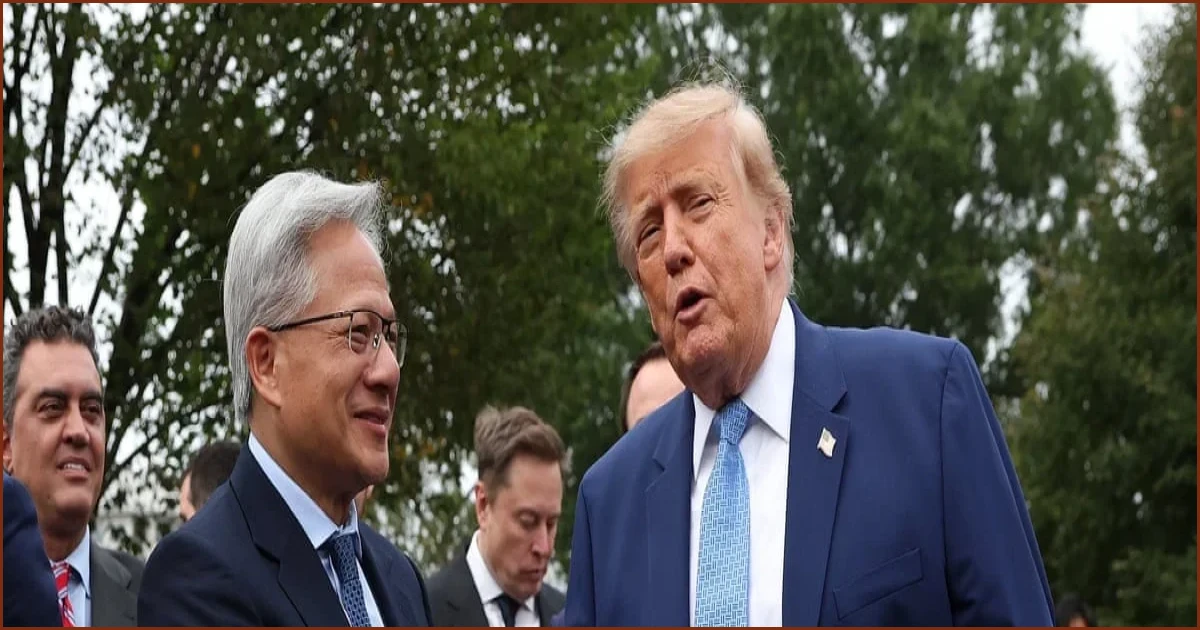
The recent events surrounding Jensen Huang’s return to Nvidia have prompted significant concern regarding the state of the rule of law in the United States. President Donald Trump, who urged the board to reconsider Huang’s status following his ouster, has been accused of prioritizing his personal interests and the tech industry over the established norms of the American justice system. This intervention, which resulted in a swift rise in Nvidia’s market value and a reported $15 million gain for the president, highlights a departure from traditional presidential conduct. Unlike his predecessors, who typically placed their stock holdings in blind trusts to avoid conflicts of interest, Trump continues to engage in stock transactions involving companies influenced by his administration.
The situation gained further complexity due to the circumstances surrounding Huang's initial departure, which followed reports of an affair with Alice Huang, an individual allegedly linked to Chinese intelligence. Despite warnings from Secretary of State Marco Rubio regarding national security risks, Trump maintained a close association with the CEO. Critics point out that under Huang’s leadership, Nvidia’s high-value AI chips were reportedly being exported to China via intermediary routes in Thailand and Singapore, a practice that seemingly contradicts the president’s stated goal of maintaining U.S. supremacy in the artificial intelligence race. Trump’s social media posts, including an AI-generated image of a bloodied Trump with Huang holding a red bra, have further fueled controversy, with observers questioning whether the imagery reflects casual misogyny or a symbolic message regarding the CEO's relationship with Chinese intelligence.
Beyond the economic and national security implications, the core of the controversy lies in the perceived erosion of prosecutorial independence. Trump claimed that his officials had been studying the case and provided assurances that Huang would not face criminal charges, effectively granting him a form of immunity. This move stands in stark contrast to the long-standing post-Watergate tradition of keeping the Department of Justice independent from executive interference. The president’s actions suggest a belief that he, along with favored corporate leaders, operates above legal constraints. Reports indicate that Huang faced allegations not only of compromising national security but also of bullying, humiliating staff, and threatening violence and torture.
The administration’s stance reflects a broader view that tech leaders are indispensable, leading to a hands-off approach regarding the regulation of the AI industry. With the Supreme Court’s 2024 ruling granting broad immunity for official presidential actions and the unlikelihood of a Senate vote to remove him from office, Trump appears confident in his ability to wield power without traditional checks. Democrats in Congress are expected to launch investigations and issue subpoenas, including one for Huang, but the effectiveness of these measures remains uncertain given the current political climate and the president’s potential use of the pardon power. Ultimately, the affair underscores a shift in how the U.S. government interacts with corporate giants, treating them as entities exempt from the rules that govern the rest of the country.