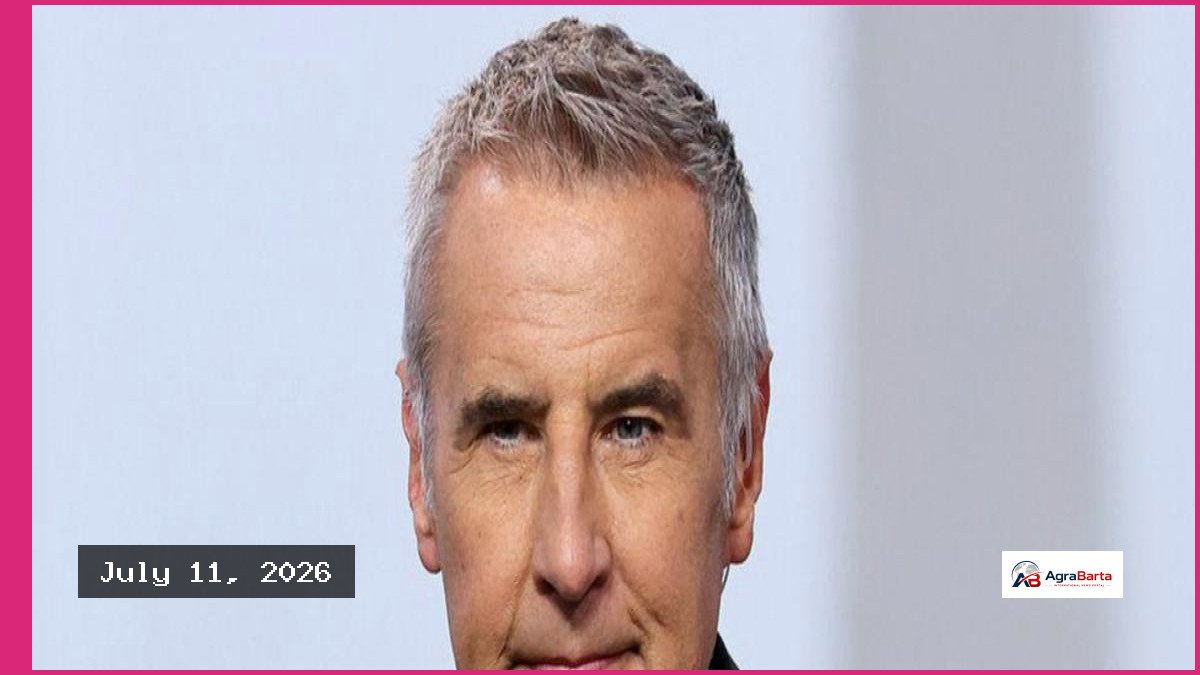
Dermot Murnaghan, a prominent figure in British television news for five decades, has died at the age of 68. His passing comes exactly one year after he publicly shared his diagnosis of stage four prostate cancer.
The news of his death was confirmed by his family in a statement shared on his X account. The family noted that he passed away peacefully at his home in North London earlier this morning with his loved ones by his side. They also expressed gratitude to the public for the overwhelming support and messages of goodwill received since he began sharing his health journey and campaigning for better screening awareness.
Murnaghan enjoyed a distinguished career across the BBC, ITV, and Sky News. His resume included leading roles on the ITV Evening News and the BBC News at Six and Ten. From September 2002 until December 2007, he served as a main presenter for BBC Breakfast, often appearing alongside Sophie Raworth. Additionally, he was the face of the quiz show Eggheads for 11 years starting in 2003 and remained a key presence on Sky News from 2007 to 2023.
His early career began at Channel 4 News, followed by a tenure fronting ITV’s The Big Story and News at 10 between 1993 and 1997, and the channel’s Evening and Nightly News from 1999 to 2001. Beyond traditional news, he hosted crime documentaries including Crimes That Shook Britain for Channel 5 and Killer Britain for the Crime + Investigation UK channel, and later launched the podcast Legends of News.
When he first disclosed his stage four prostate cancer diagnosis last summer, Murnaghan described himself as feeling well and responding positively to treatment. He subsequently became a vocal advocate for men’s health, urging those over 50 or in high-risk groups to seek testing. He emphasized that early detection is critical, noting that the disease can progress rapidly without obvious symptoms. He actively campaigned for the NHS to implement routine prostate screening.
Medical guidance highlights that common symptoms of prostate cancer include difficulty starting urination, a weak flow, the need to urinate frequently—especially at night—and the presence of blood in semen or urine.
"Needless to say my message to all men over 50, in high risk groups, or displaying symptoms, is get yourself tested and campaign for routine prostate screening by the NHS," he said.
He moved to the BBC in 2002, as one of the main hosts of BBC Breakfast, the Six O'Clock News and the Ten O'Clock News.