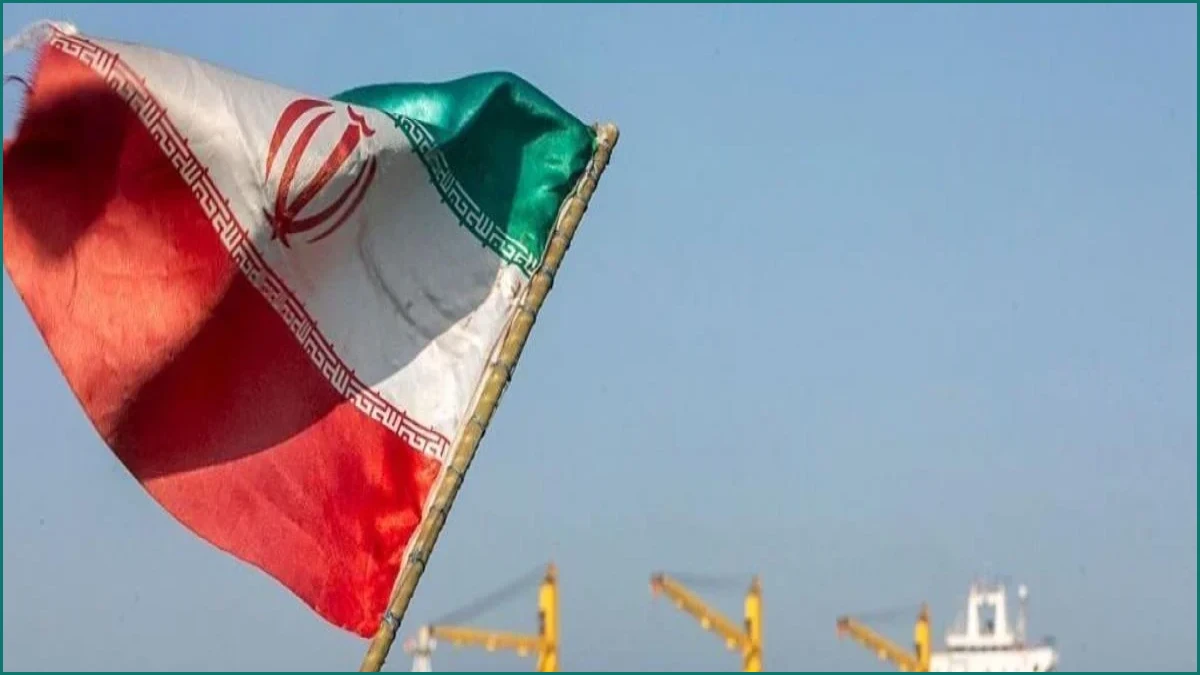
The United States has announced what it describes as the "single greatest financial offensive ever" in an attempt to assist Israel in ending its ongoing war with Iran. While Washington intends to tighten the noose on Iranian revenue, Tehran remains accustomed to such pressures, having faced nearly continuous US sanctions since the 1979 Islamic Revolution.
Consequently, the regime has cultivated robust trade relationships with nations that either possess a history of resisting US economic influence or find it economically unviable to cease commerce with the country.
China stands as the primary buyer of Iranian goods, accounting for 26.9% of its exports in 2025, according to data from the International Trade Centre (ITC). However, experts note several caveats regarding this data, which predates the current conflict. Many economists believe that Iranian oil sales to China were significantly underreported for political reasons even before the war.
Furthermore, the ITC relies heavily on import figures reported by trading partners due to the difficulty of obtaining accurate export data from Iran, and import data for countries such as Iraq remains incomplete.
Beijing has responded to the "economic D-Day" announcement by declaring its firm opposition to "illegal unilateral sanctions," asserting that such pressure tactics are ineffective and that it will prioritize safeguarding its own interests.
Turkey represents another significant trading partner, though it maintains a friendlier diplomatic relationship with the US than China does. This creates a difficult dilemma for Ankara, as the US has threatened to penalize nations that continue to trade with Iran.
Economists suggest that Turkey cannot easily cut ties with Iran without incurring severe damage to its own economy, which is currently grappling with inflation at 31.8%, according to official data.
Pakistan, which shares a border with Iran, is also among its largest export partners. While Islamabad is keen to preserve good relations with the US—its top export partner—it faces more to lose from American economic punishment. The situation is further complicated by Pakistan's role as a mediator in peace talks, as a breakdown in relations could impede conflict resolution.
Additionally, the Pakistani government struggles to control all trade with Iran; evidence suggests that oil is being smuggled across the 900km border on a massive scale by bikers, some as young as 15.
This practice has reportedly increased since the war began, and while US and Pakistani oil firms have pressured the government to clamp down, it has struggled to police remote border regions. The Iranian government did not respond to requests for comment regarding these fuel smuggling allegations.
Armenia also remains a major trading partner of Iran. Notably, Armenia's top export partner is Russia, which accounts for 34.9% of all goods sold by Armenia in 2025. This trade persists despite the fact that Russia has faced sanctions from the US and its allies since its full-scale invasion of Ukraine in 2022, suggesting that Armenia may remain willing to continue trade with Iran despite American pressure.
While US Treasury Secretary Scott Bessent claims the sanctions will block every potential revenue source, many experts remain skeptical. Advisory firm Oxford Economics described the potential impact on Iranian revenues as "somewhat of a damp squib." Ali Vaez, deputy director at the International Crisis Group, argued that because Iranian entities are already heavily sanctioned, the real challenge is enforcement.
He noted that the US previously initiated an economic war with China only to back away from it. Former state department advisor Aya Ibrahim warned that overreliance on the US financial system encourages countries to circumvent it, and expressed concern that sanctions often harm ordinary citizens by denying them basic necessities.
Global markets have so far shown a muted reaction to the announcement. While oil prices fell following the news, they remain well above pre-war levels, and major stock indexes in the US, Europe, and Asia have seen little movement. The US faces a significant challenge in convincing international partners and investors that its latest threat of economic consequences is to be taken seriously.