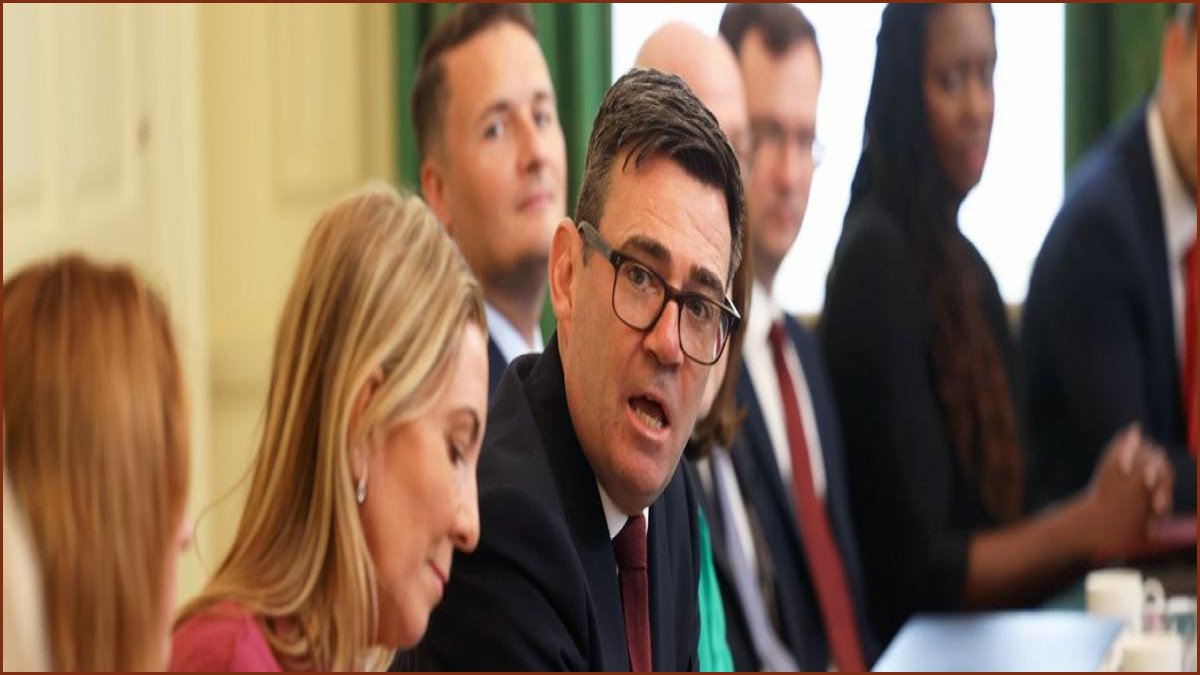
Prime Minister Andy Burnham has pledged to lead a "cost of living government" as he chaired his inaugural cabinet meeting, marking the beginning of his administration. During the session, he urged his newly appointed ministers to prioritize household expenses, aiming to provide citizens with a tangible "sense that help is coming" regarding rising costs.
This focus on economic relief follows Burnham's first major policy announcement since taking office: a cut to VAT on household energy bills scheduled to take effect in October. To finance this initiative, Downing Street plans to utilize £850 million of the estimated costs from £1.8 billion previously earmarked by the outgoing government for a digital ID scheme over the next three years.
However, this decision has prompted immediate criticism. Former cabinet member Darren Jones, a loyalist to Sir Keir Starmer who was removed from his post on Monday, argued that the digital ID programme was "unfunded" and that Burnham must clarify the source of the capital.
Opposition figures, including Conservative shadow chancellor Sir Mel Stride, accused the new government of playing "fast and loose with the public finances," noting that budget watchdogs had previously indicated the digital ID funding would need to be sourced from existing budgets.
The PM's spokesman insisted the policy would be funded by redirecting "savings" identified by departments to cover the cost of the ID scheme. During the cabinet meeting, which was attended by broadcasters, Burnham received a round of applause from his senior ministers.
Speaking at the start of the cabinet meeting attended by broadcasters, Burnham said the cost of living would be an early priority, with further measures to be announced in the coming days.
He encouraged ministers to propose "big and small" solutions to lower household expenses, while insisting that his government would maintain strict fiscal discipline and clearly explain how every policy is funded. He acknowledged that ahead of his first budget, where major tax decisions are solidified, ministers must be prepared to reprioritize their departmental budgets.
In a separate announcement on Monday, Burnham allocated £340 million to tackle rough sleeping over the next five years, which is expected to be funded from uncommitted spending within the housing department. Meanwhile, the reshuffle of the cabinet continues, with appointments below cabinet rank anticipated for Tuesday evening.
This includes the expected appointment of Scottish Labour leader Anas Sarwar as a business minister, a move that would require him to join the House of Lords and vacate his seat in the Scottish Parliament.
Energy Secretary Miatta Fahnbulleh, an ally of the Prime Minister, denied that the recent cabinet changes constituted a purge of Starmer supporters, asserting that the cabinet reflects a "diversity of views" and that "no one has a right" to a cabinet position.
New Chancellor John Healey addressed Treasury staff, affirming that fiscal discipline regarding tax and spending remains his "first duty," while committing to the rules set by his predecessor.
He noted that the government aims to maximize public investment alongside private and international funding.
In a separate development on Tuesday, Burnham confirmed that the government will continue the policy established under Sir Keir Starmer of allowing British military bases to be used for US defensive strikes against Iran. Officials clarified that the use of bases, such as Diego Garcia and RAF Fairford, would be restricted to operations deemed defensive by the United Kingdom.