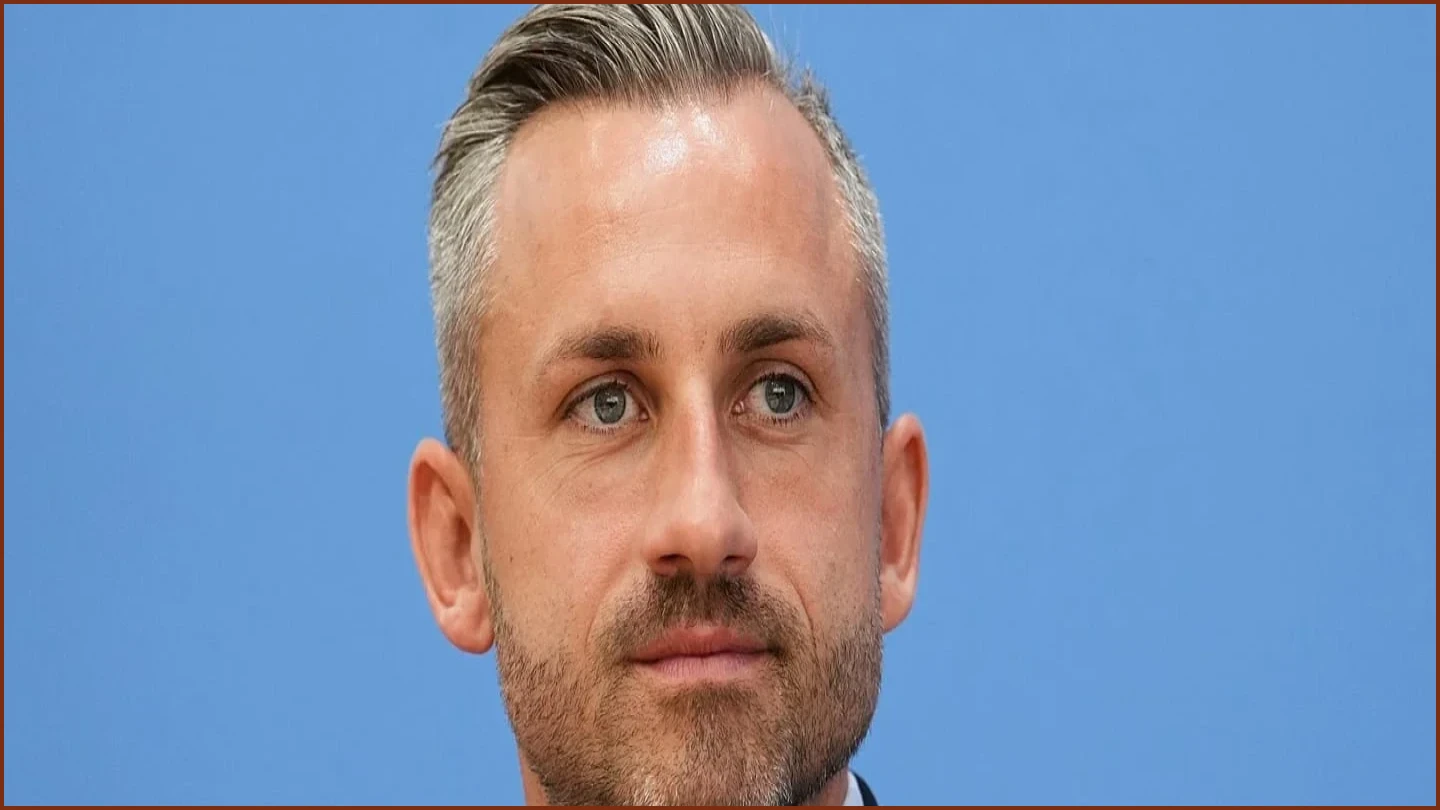
Ulrich Siegmund, the lead candidate for the AfD in the German state of Saxony-Anhalt, has ignited a fierce political controversy following remarks that linked the potential production of military equipment to future “remigration and deportation offensives.” The comments were made during a press conference addressing the possible establishment of a production site by the Israeli defence firm Elbit Systems in the town of Sangerhausen.
Siegmund initially stated that his party does not fundamentally oppose arms production, noting that such manufacturing could be vital for domestic security, national stability, and defense.
However, he transitioned the discussion to the party's migration objectives, asserting that “suitable means would be needed later for remigration and deportation offensives.” He argued that the production of military equipment was not being demonized because such technology could be utilized for these specific migration policies.
Following an immediate wave of backlash, the AfD politician sought to clarify his position. He explained that the arms industry is a broad sector encompassing not only weapons but also vehicles, protective technology, and security equipment essential for the Bundeswehr, police, and security agencies.
He maintained that strengthening these areas is necessary to enforce the law and carry out consistent deportations. He further claimed that if a facility were to serve national defense and law and order, it would be a state duty.
Simultaneously, Siegmund emphasized that his party rejects the supply of military equipment for “foreign wars,” distinguishing between domestic production and international conflict involvement. He noted that the party intends to closely examine the conditions of any potential production in Sangerhausen.
The prospect of an Elbit Systems factory in Sangerhausen has been a point of contention for some time, with local protests supported by the Sahra Wagenknecht Alliance (BSW). Elbit Systems, based in Haifa, manufactures drones, howitzers, and communication systems. Its best-known products include the Hermes and Skylark drone models.
In Germany, the company's headquarters are in Ulm, and it already works for the Bundeswehr, supplying self-protection systems for aircraft. An industrial site of around 130 hectares has been earmarked for the potential factory in Sangerhausen.
The town's mayor, Torsten Schweiger, recently stated that neither final assembly of drones nor of shells or ammunition was planned there. A final decision on the plant has not yet been taken. Siegmund also said that his party had not yet adopted a definitive position, noting that in addition to security and foreign policy issues, the economic impact on the region also has to be taken into account.
The reaction from political opponents has been sharp. Katja Pähle, the SPD parliamentary group leader in the Saxony-Anhalt state parliament, labeled the comments a “political threat,” stating that “anyone who brings military equipment into play in connection with a planned mass expulsion of people is talking about violence as a means of politics.” Pähle also called on the BSW to clarify its stance on the rhetoric.
Fabio De Masi, the federal co-chair of the BSW, expressed critical views, accusing the AfD of prioritizing rearmament and using the prospect of the Israeli firm as a justification for “remigration” technology. He suggested the comments indicate the AfD has no real intention of governing and is instead seeking a way out through provocation.
These tensions are particularly significant because the BSW is the only party in the new Saxony-Anhalt state parliament that is fundamentally willing to hold talks with the AfD. No decision on cooperation has been taken yet, though the BSW has signaled it is prepared to discuss cooperation on specific projects. The CDU, SPD, Greens, and Left Party continue to rule out working with the AfD.
In the state election, the AfD emerged as the strongest party with 43.8 percent of the vote, falling short of an absolute majority. Siegmund has reaffirmed his party's claim to form a government, aiming for a stable administration even with an extremely narrow majority.