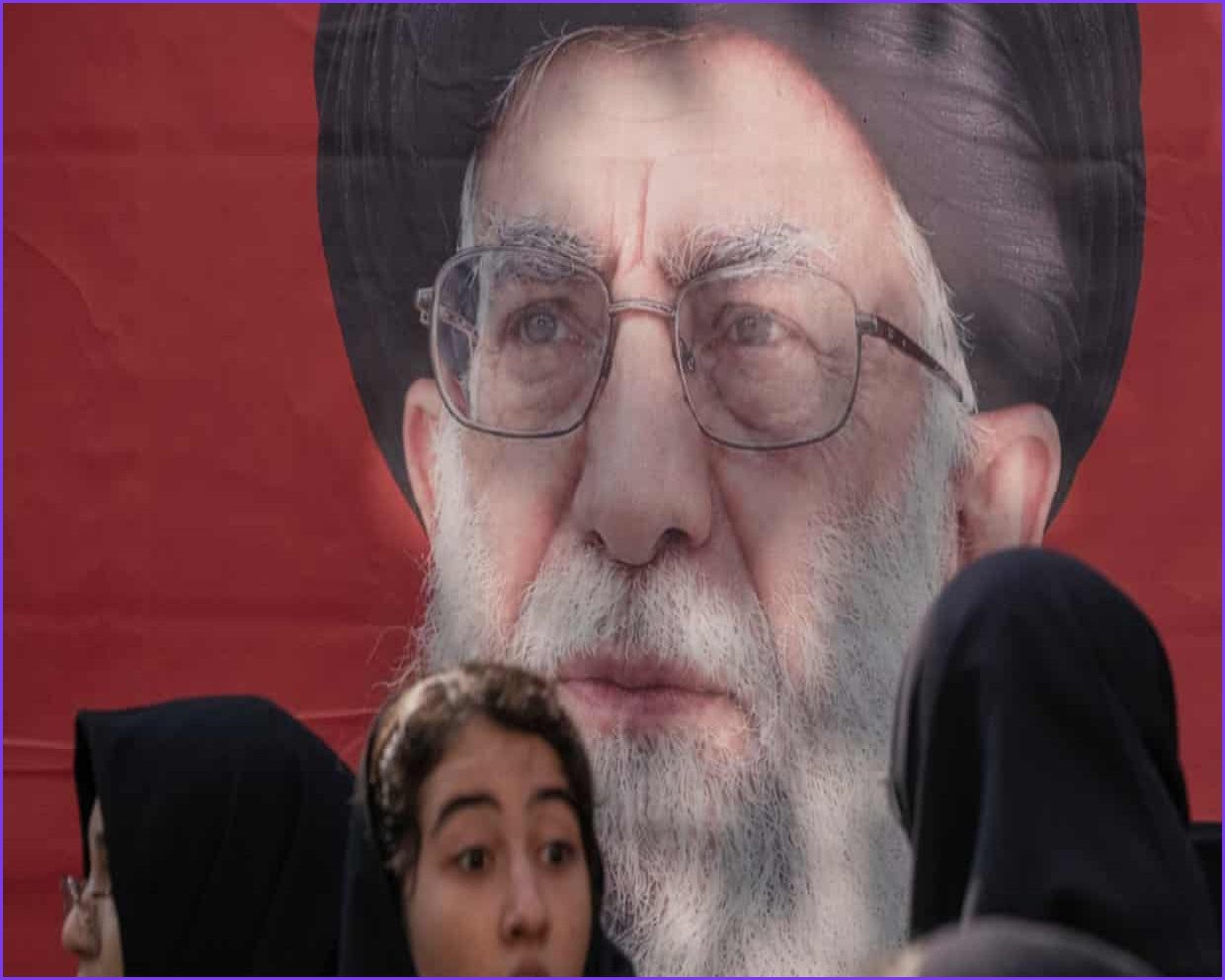
In the hours following the US midterm election results, which delivered a crushing defeat to the Republican party, pro-regime crowds gathered in Tehran’s Enghelab Square. The demonstrators set fire to a giant banner depicting Donald Trump, his vice-president JD Vance, US envoy Steve Witkoff, and Israeli prime minister Benjamin Netanyahu. Iranian officials have since issued defiant statements celebrating the Republican losses, portraying the outcome as a clear rejection of Donald Trump’s war against Iran. Mojtaba Khamenei, the supreme leader whose father and predecessor Ali Khamenei was killed in February strikes, stated that the process of the US’s collapse has accelerated. In a further display, Iranian state television broadcast footage of a mock hanging of the US president in Tajrish Square, featuring an actor wearing a mask of Donald Trump and an orange prison uniform.
Inside the country, however, the mood is defined by apprehension rather than celebration. Many Iranians are struggling to make sense of the worsening economic situation and the uncertainty surrounding what the political setback in the US could mean for their future. Mehnaz, a journalist based in Tehran, described a sense of hopelessness. She noted that while some people had hoped the US and Israel might bring change, the current scenario feels strange and fearful. Some individuals she spoke with worry that because this is Trump’s second term and he does not need to be re-elected, he might continue the war. Others, like 36-year-old writer Alborz, believe the likelihood of a full-scale war has actually diminished, though he noted that no one is certain.
The daily reality for Iranians remains increasingly precarious. According to the Oslo-based NGO Iran Human Rights (IHR), authorities have executed at least 696 people this year. Alborz described how the appearance of ordinary life masks a difficult reality, noting that while people still browse shops, actual purchases have become rare. He explained that a single T-shirt now costs what a full suit did a year ago. Amidst everyday chatter, residents are debating whether a kerosene heater is better than a wood-burning one, preparing for the possibility that infrastructure may be destroyed. He described this as a resilience born of compulsion, adding that there is nothing noble in it.
For many, the fear of continued domestic repression outweighs concerns about foreign conflict. Noor, a 24-year-old resident of Karaj who spent three weeks in prison after participating in January protests, said the repression mechanism is like a well-oiled machine that will not stop working regardless of external circumstances. She noted that she and others have been preparing for the worst all year, emphasizing that the repression will not end. Moein, a medic in central Iran, expressed frustration with the international community, noting that the US and the West underestimate the strength and loyalty of the Islamic Revolutionary Guard Corps (IRGC). He lamented that a state capable of enduring decades of sanctions and confronting the world’s most powerful military is still willing to turn its coercive machinery against its own population, including killing young girls in the streets. As the situation remains volatile, Mehnaz noted that the celebrations by pro-government crowds only feel more outrageous, as the IRGC has found a new hope for survival.
Asked whether he expected world leaders to react to the continuing repression in Iran, he said he had fewer and fewer expectations of the European leaders.