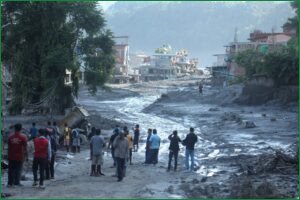
The World Bank has officially ended its 45 percent climate finance target, a move that critics warn could diminish accountability and redirect funding away from the communities that need it most. For India, a nation where more than 80 percent of the population resides in districts highly vulnerable to cyclones, droughts, and floods, this policy shift could have dire consequences. Data from the Council on Energy, Environment and Water’s Climate Vulnerability Index highlights the severity of the situation, with states including Andhra Pradesh, Assam, Bihar, Karnataka, and Maharashtra already suffering from recurrent displacement, road damage, and agricultural disruption.
While local officials recognize the urgent need for basic infrastructure—such as stronger embankments, higher roads, and early-warning systems—the barrier remains a lack of consistent funding. Without a binding climate finance target, observers fear that international capital will naturally gravitate toward large, easy-to-package projects like solar parks, grid upgrades, and metro lines. While these initiatives are valuable, they often fail to address the immediate survival needs of rural, climate-exposed districts. The risk is that these large-scale projects will be categorized as climate work, effectively masking the lack of support for life-saving adaptation efforts in villages.
India requires an estimated $160 billion to $288 billion annually through 2030 to address climate change. Currently, however, adaptation work remains significantly underfunded. States are often left to navigate strained budgets and borrowing limits without a reliable pipeline of support. The absence of a clear benchmark makes it increasingly difficult for stakeholders to verify whether climate finance is reaching the most marginalized populations, including Dalit and Adivasi communities, as well as landless laborers who typically lack the influence to shape public spending priorities.
The World Bank maintains that it is transitioning toward measuring climate outcomes across its broader portfolio, describing projects with climate co-benefits as a form of “smart development.” However, critics argue that in an unequal system, abandoning a firm floor for climate spending will likely lead to the deprioritization of essential, smaller-scale projects. For a local government office in a flooded region like Bihar, the new era of flexibility may simply translate to critical infrastructure—such as cooling centers, water systems, and shelters—being pushed further out of reach.
You have reached the limit of 2 free articles this month.