A relentless summer heatwave and drought gripping Europe has sparked devastating wildfires in France, Spain, Portugal, and Crete, while sending the Danube and Rhine rivers to record-low levels. In the Netherlands and Germany, the severe dry spell is presenting unique crises, threatening the low-lying Dutch nation's famous water defenses and crippling major inland shipping routes.
In the agricultural fields near Waddinxveen, east of The Hague, dike inspectors Jeroen Wouda and Dirk Boom can be seen walking slowly along a parched levee. Prodding the bone-dry surface with metal rods, they search for patches of green grass that might indicate a hidden leak. While the scene recalls the classic story of the Dutch boy plugging a hole in a dike with his finger, these modern patrols use a mobile app to map potential problems and send the data to authorities for swift repairs.
The barrier near Waddinxveen sits in one of the lowest points of the Netherlands, roughly 5 meters (16 feet) below sea level. Like many of the country's inland defenses, it is constructed from peat, a material that must remain damp to retain its structural strength. Peter van Duijvendijk, a flood defense manager at the Schieland en de Krimpenerwaard water corporation, explained that the extreme dry weather causes the peat to lose its moisture. As the peat weakens, there is a risk that water will seep through the dike and drain directly into the polder, the reclaimed land behind it.
Van Duijvendijk oversees a dedicated team of 140 volunteers. The volunteers “are our eyes and ears on the dike,” Van Duijvendijk told The Associated Press, as they monitor about 100 kilometers (60 miles) of these critical barriers. His organization is one of 21 water corporations across the Netherlands responsible for flood control and water management. Although the volunteers have not discovered any major structural failures so far this summer, they remain on high alert as the dry conditions are expected to persist into the fall.
Across the border in Germany, Europe's major rivers face a lack of water flow, causing severe disruptions to trade. In Cologne, the water level of the Rhine River recently plunged below the previous record low set in October 2018, leaving parts of the riverbed completely exposed. The Rhine is a vital transport highway for European freight, and its shallow channels are making navigation increasingly hazardous.
Marcel Beck, a manager at the port and freight transport company RheinCargo, which operates in the western German ports of Neuss, Düsseldorf, and Cologne, described the situation as having a devastating impact on shipping operations. According to Beck, cargo vessels that would normally carry between 2,000 and 2,500 metric tons of freight are currently restricted to carrying just 400 to 600 metric tons, depending on their design, to avoid running aground. This dramatic reduction has placed an immense burden on the entire logistics chain to reorganize transport and ensure goods still reach inland destinations.
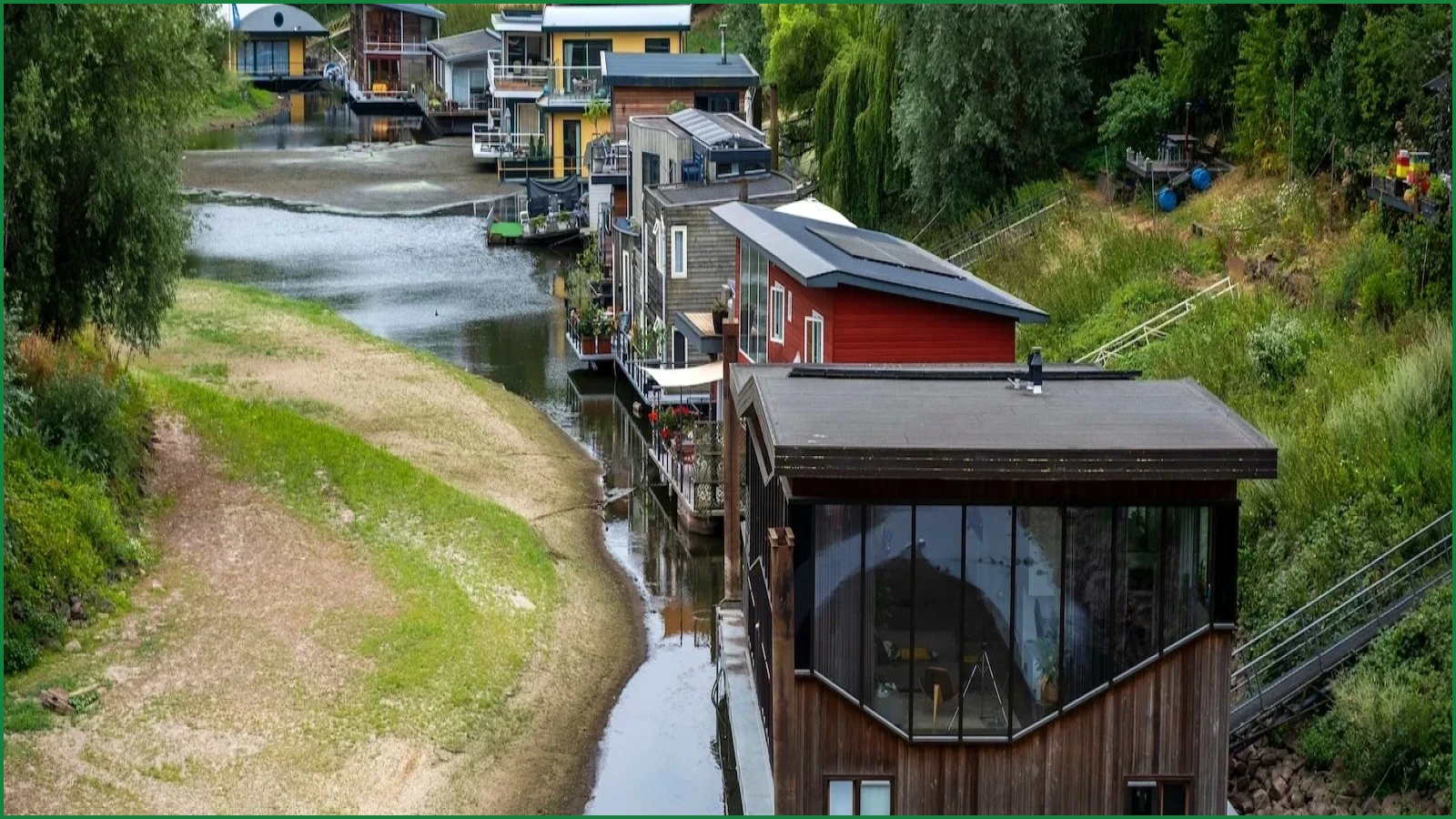
For locals, the changing river dynamics are highly visible. Houseboat owner Frans Schilte has watched the periods of low water levels grow progressively longer. While these dry spells used to last for about a month, Schilte noted they now persist for around three months. His steel-bottomed houseboat currently rests directly on the sandy riverbed. Though he remarked that his home being slightly out of level is not a major issue, he pointed to the drought as a clear negative consequence of climate change.
The Netherlands, where about one-third of the land lies below sea level, faces a constant balancing act between preventing winter flooding and maintaining sufficient water supplies for canals and agriculture during the summer. Vince Kaandorp, a groundwater hydrologist at the independent Dutch water research institute Deltares, noted that while the country receives enough water over the course of the year, it is not distributed evenly. In the winter, water is quickly drained away to keep the land dry, but Kaandorp emphasizes the need to slow down this process to allow water to sink into the soil.
Such measures don’t have to be high-tech, Kaandorp said. Adding something as simple as a hedge near a river slows down water and gives it time to seep deep into the ground. Authorities are studying how to turn soil into “sponges” to better hold water throughout the year.
Meanwhile, the low-lying reclaimed lands of the western Netherlands are suffering from increased salinity due to the drought, creating severe difficulties for farmers growing fruits and vegetables in the region's fertile soil. In response, water authorities trying to preserve fresh water supplies have prohibited farmers in certain regions from pumping water out of canals for crop irrigation. John Kusters, the chair of the Netherlands Fruit Growers' Organization, warned that these restrictions, along with the dry conditions, are leading to smaller fruit harvests and rising prices, calling it an extremely challenging year for growers.