Thailand’s government is currently navigating a complex political landscape as Prime Minister Anutin Charnvirakul considers reversing the country's landmark cannabis decriminalization policy. Once a champion of the initiative, Anutin is now distancing himself from the move as his public support has waned, dropping from 29.4 percent in a January NIDA poll to 21.7 percent by early July. This pivot comes amid mounting international pressure and a noticeable increase in cannabis smuggling incidents that could jeopardize Thailand’s bid for OECD membership.
The international community, particularly European partners, has raised alarms over the rise in illicit exports. Germany recently reported two significant seizures totaling 1.2 tonnes of cannabis with a street value of $13 million, both originating from Thailand. Data from the Thai Customs Department highlights the scale of the issue, revealing that between October 1, 2025, and June 30, 2026, authorities intercepted over 3,300 illegal shipments, seizing more than 37,000 kilograms of cannabis valued at $14 million.
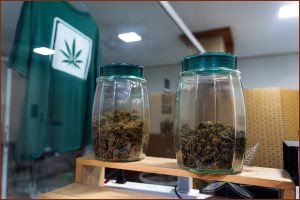
Critics argue that the government’s response—threatening a total industry shutdown—is misguided. The domestic market has struggled under a patchwork of regulations introduced between late 2025 and mid-2026, which restricted cannabis to medical use. These measures caused approximately 7,000 shops to close due to high compliance costs but failed to curb trafficking. Instead, observers suggest the regulations effectively forced the market into an underground ring of smuggling.
Despite these challenges, the industry remains a significant economic prospect. Anutin’s original vision for legalization was rooted in reducing prison overcrowding and fostering a hemp industry projected to reach $9.6 billion by 2030, a goal intended to alleviate rural poverty. Reversing course would devastate farmers, hill communities, and patients reliant on medicinal cannabis.
Legislative efforts to pass a comprehensive Cannabis and Hemp Act have been stalled by institutional hurdles and inconsistent ministerial decrees. The current regulatory environment is fragmented across agencies like the Department of Thai Traditional and Alternative Medicine and the Office of the Narcotics Control Board. While a draft Act proposes restricting cannabis to medical, research, and industrial use and reclassifying high-THC extracts as Category 5 narcotics, it has yet to be finalized.
Recent government efforts have begun to address smuggling more directly, including the implementation of digital licensing and severe customs penalties of 30,000 baht per kilogram for illicit exports. Earlier efforts, such as a partnership between the U.K. Border Force and Thai customs, already saw a 90 percent decline in cannabis arrivals by mail from Thailand in the first three months of 2025. Given these ongoing adjustments, critics suggest that discarding the entire industry would be a short-sighted political move rather than a sound policy solution to criminality.
You have reached the limit of 2 free articles this month.
However, as things stand, these issues cannot easily be solved in one fell swoop. Sending the entire cannabis industry to its doom would be less an act of mature public policymaking than the act of a center-right politician confronting public criticism with only short-term gains in mind.