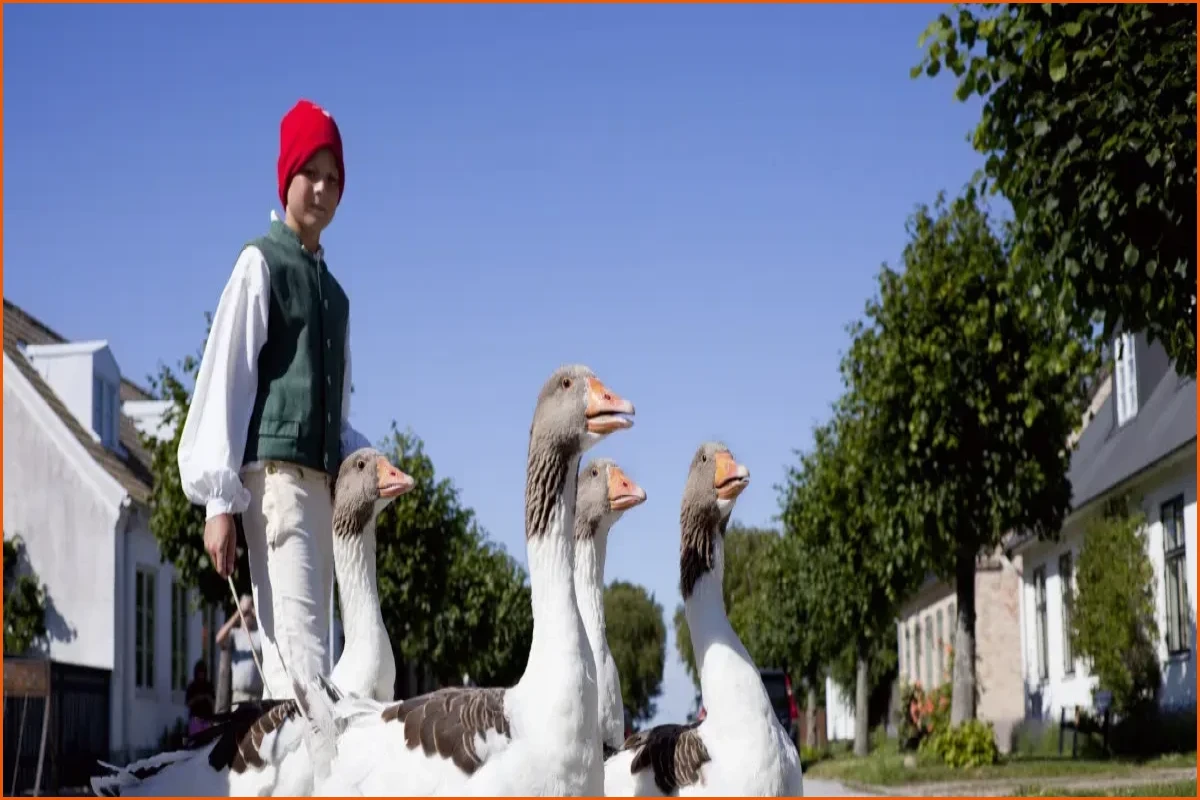
On November 10th, some families in the southern Swedish region of Skåne continue to observe the tradition of Mårtensafton, also known as Mårtensgås or St Martin's Eve. While the celebration is becoming less common, many older generations still mark the occasion with a specific three-course supper that has become synonymous with the region.
The traditional menu for the evening consists of three distinct courses: a starter of black soup, or svartsoppa, which is made from goose blood; a main course of roast goose; and a dessert of Scanian apple cake. This specific sequence of dishes was reportedly established by a Stockholm restaurateur during the 1850s. The soup itself is prepared using blood—ideally from a goose, though pigs' blood is sometimes used as a substitute—and is seasoned with a blend of syrup, wine, cognac, vinegar, cloves, ginger, and allspice. As one observer noted, the dish is surprisingly spicy and evokes a festive, Christmassy flavor, despite the unconventional nature of the primary ingredient. Because it is blood-based, the soup congeals as it cools.
The roots of the celebration trace back to Saint Martin of Tours, a Roman soldier born around the year 316. After converting to Christianity, he deserted the Roman army and founded the first monastery in Gaul before being canonized. Legend suggests that when he attempted to avoid being elected as a bishop, he hid in a goose pen; the birds' honking revealed his location. In a display of what is often described as revenge, he allegedly requested that the townspeople slaughter a goose annually to be eaten in his honor.
While St Martin's Day is observed globally on November 11th, Swedes traditionally mark such holidays on the evening prior. READ ALSO: 17 dialect words you need to survive in southern Sweden. Secondly, to answer your question, eating goose on Mårtensafton in Sweden can be traced back to the 16th century, but it did not become a staple food on most tables until hundreds of years later. The reason it stayed a tradition in southern Sweden had to do with a 19th century agricultural land reform making it hard for geese to find food anywhere but the rich and fertile soil of Skåne. For those without a local connection to a Scanian family, the tradition is often kept alive at local inns, known as gästgivaregård, which frequently host special Mårtensgås dinners.
St Martin is said to have resisted his election as bishop by hiding in a goose pen. The honk of the birds eventually revealed his location and forced him to take the bishop's office. Logically, he asked the townspeople to slaughter a goose once a year and eat it as a form of revenge. As you do.