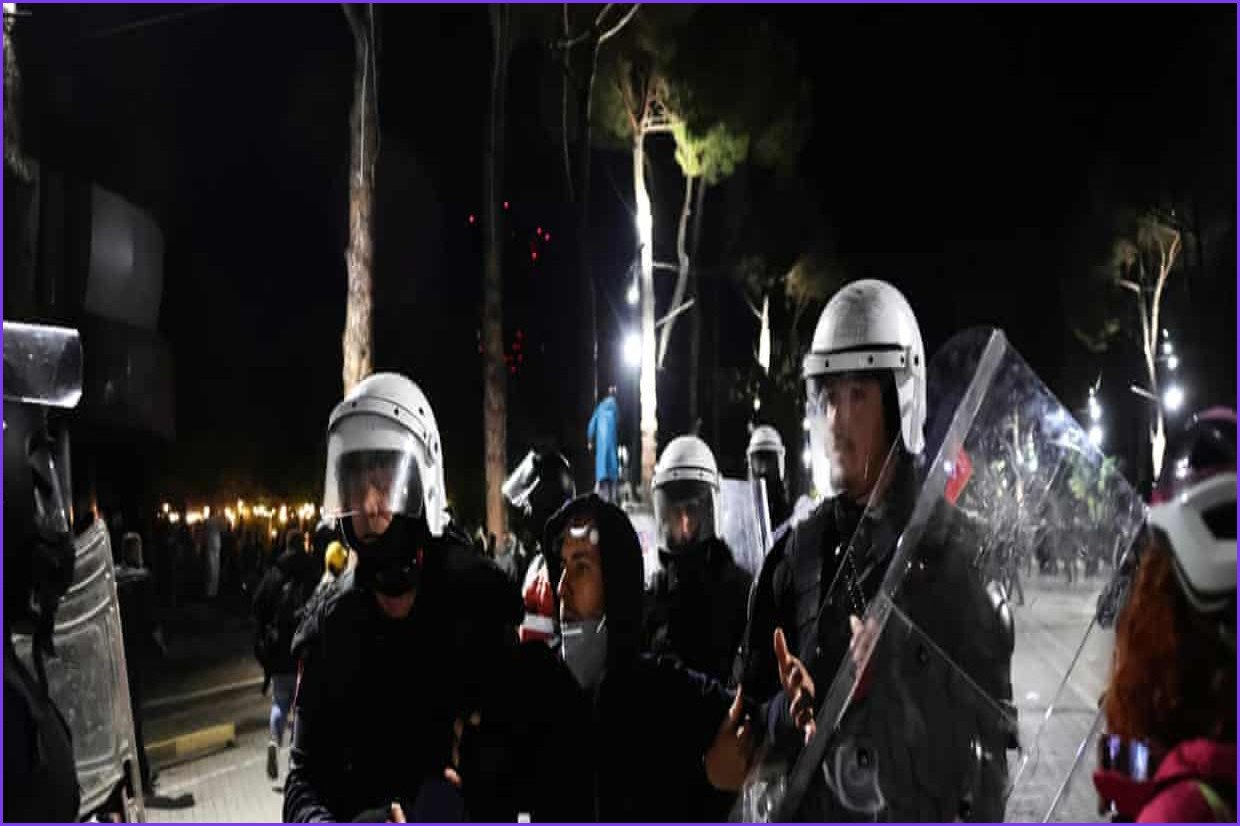
The Albanian government has enacted new legislative measures that impose fines of up to 500,000 leks—approximately €5,500 or US$6,130—on individuals who remain in a crowd that engages in looting or violence. These fines, which represent six times the average monthly salary in Albania, apply to any demonstrator present at the scene, even if they do not personally commit any violent acts. The legislation also targets individuals who choose to conceal their identity while participating in such gatherings.
These measures, which take immediate effect, are subject to parliamentary approval within 45 days to remain in force. Under the new rules, police are granted the authority to temporarily restrict gatherings in specific areas, particularly near government, educational, and healthcare institutions, if there is a perceived risk of violence. Additionally, the government has introduced sanctions against the online incitement of violence and established provisions for compensating small businesses that suffer damages during protests.
Prime Minister Edi Rama stated on Sunday that his government was inspired by a French bill, recently passed by the upper house of parliament, which holds protesters financially liable for property damage occurring during demonstrations. Rama has consistently called for "dialogue" while blaming "foreign actors" for the unrest, specifically accusing Russia and Iran of spreading online misinformation.
The capital, Tirana, has experienced a series of anti-government protests over the past several months, which have increasingly resulted in confrontations between security forces and demonstrators. The movement originally began in May as a peaceful protest against a luxury hotel project in a nature reserve, an initiative involving Jared Kushner, the son-in-law of US President Donald Trump. By mid-October, the nature of these rallies shifted, evolving into a student-led movement focused on concerns regarding the health system, systemic corruption, and a lack of future opportunities for the youth of the nation, which has a population of 2.3 million people.